
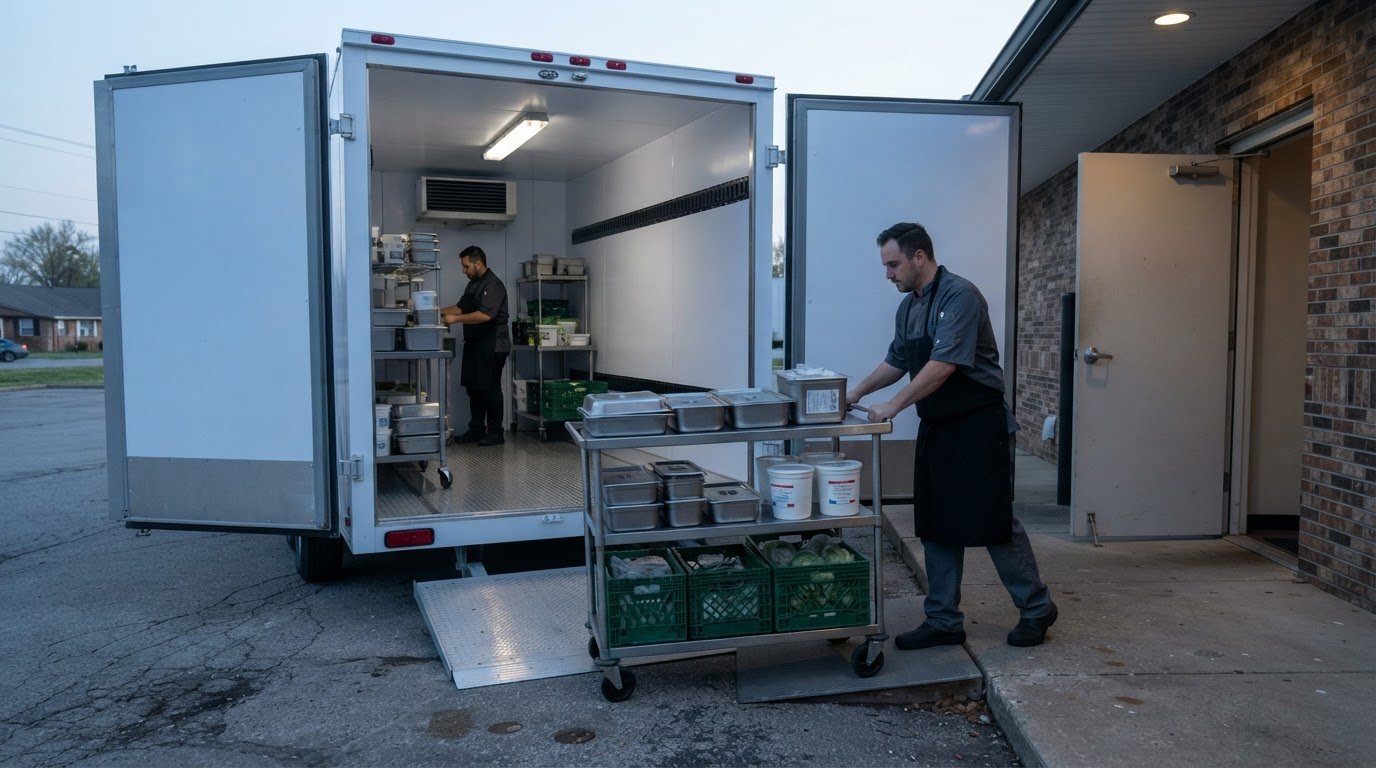
The biggest unit isn’t automatically the right choice. For temporary cold storage in Blue Springs, start by deciding whether your goods need chilled or frozen conditions, then consider where the storage should be placed and how often you’ll need access. The right setup depends on what you’re storing and how your team will use it.
Keeping food and other temperature-sensitive goods cold is only part of the decision. Location, access, and rental duration matter too. This guide explains how on-site cold storage differs from off-site storage, when refrigerated or frozen storage is appropriate, and what to consider for a restaurant, catering job, wedding, or festival. Use these practical factors to match the setup to your plans without adding unnecessary handling.
Key Takeaways
- Match the storage setup to what you’re protecting: chilled or frozen goods call for different equipment than belongings needing steadier temperature and humidity.
- Weigh easy on-site access against the convenience of storing items away from your property.
- For an online reservation, have your storage needs, location, and timing ready so you can narrow down the right arrangement.
- Learn which temperature-sensitive belongings may benefit from more consistent conditions, including furniture, paperwork, photographs, and electronics.
- For event or business cold storage in Blue Springs, KC Frost Wagon offers refrigerated trailer rentals in 12×6 and 16×6 cooler/freezer options.
Online rental and reservation
Online booking can simplify temporary storage planning when the rental terms fit the goods, location, and access schedule. Before reserving space, separate items that need chilled or frozen conditions from belongings suited to ordinary self storage.
Rental Requirements and Offers
Start by identifying where the cold storage needs to serve your team, when it should be ready, and how long you expect to need it. A Blue Springs restaurant preparing for a delivery, for example, should specify whether the goods need chilled or frozen conditions. This helps distinguish refrigerated storage from a standard storage unit.
Review the rental terms before booking. Check the reservation steps, payment schedule, cancellation terms, access arrangements, and any listed supplies. Online bill pay can simplify account management, but it doesn’t replace reading the terms. If an offer applies only to certain dates or unit types, compare it with your selected option and the final checkout details rather than assuming it applies to every rental.
Month-to-Month Terms and Storage Capacity
A flexible rental period can suit plans that may change, while a defined period can work for a scheduled move or event. Choose a rental duration that covers the full storage window, and select capacity based on the volume and type of goods. For temporary refrigeration, also confirm that the equipment supports the chilled or frozen conditions your products require.
Capacity isn’t just about fitting everything inside. Leave a practical path for retrieving items, and consider whether staff will need frequent access during service. A caterer storing trays for a changing event schedule may need a different layout from a business holding boxed inventory. List the items, how they’re packed, and how often staff need to reach them before choosing a setup.
Delivery, Pickup, and Loading
How can I arrange delivery, pickup, and loading for temporary cold storage in Blue Springs? Select the delivery address and timing during reservation, then coordinate pickup around the end of the storage period. Share access details, including a location near Highway 40, and plan how goods will move between the drop-off point and the storage area.
Make loading part of the schedule, not an afterthought. Group items by destination or use, keep frequently needed goods accessible, and stage supplies before delivery arrives. What insurance, security, and power-outage protections do local facilities provide? These protections depend on the facility and rental terms, so review the written coverage, access controls, and outage procedures before booking.
For a business, coordinate the rental with receiving, service, and restocking. A restaurant facing a refrigeration disruption needs cold storage ready before transferring goods; an event planner can align delivery with venue access. Clear timing and loading plans help reduce handling delays and keep the rental period focused on the actual need.
On-site and warehouse storage
Decide whether cold storage should be placed at your property or whether goods can be kept at a separate facility. The right fit depends on access frequency, how goods move, and whether staff can work around the unit. A Blue Springs caterer staging supplies near a service area has different priorities from a business clearing space during renovation.
On-site storage keeps goods close to the people using them, which can simplify receiving, restocking, and loading when deliveries arrive throughout the day. It also uses valuable working space. Before choosing a location, map how staff, delivery vehicles, and customers move. Keep the unit clear of kitchen workflow, entrances, and supply-unloading routes.
An off-site facility keeps stored goods away from the daily work area. That can suit a restaurant remodeling or an event that needs supplies held away from a busy venue. The trade-off is an extra trip whenever staff need items. Plan who will retrieve them, how transport fits the schedule, and whether access hours match service needs.
Consider the route and placement, not just the address. A site near a highway may simplify scheduled transport, while an entrance on an outer road may be easier for delivery vehicles to approach. In either case, consider turning space, unloading access, and the path from the vehicle to storage. A wedding team moving supplies between a storage location and venue should account for setup and cleanup times.
Choose storage capacity based on the goods and handling plan, not just available floor space. Separate frequently accessed items from goods that can stay packed. Keep walkways clear and group supplies by their next use. A cramped setup can slow retrieval, while more space than needed may be inefficient. Think through the largest load and the layout staff need to move it.
Outdoor conditions can affect an on-site setup. Exposure to severe weather can complicate access and handling, while a sheltered loading point may make work easier. For goods that need cold conditions, distinguish a general storage unit from refrigerated or frozen equipment. They serve different purposes.
For Blue Springs event planning, decide first whether goods must stay beside the venue or can be retrieved from a separate location. Then coordinate the storage position with vehicle access, staff movement, and the event schedule. If cold storage needs to fit an upcoming event, share your event storage needs to discuss the setup.
Temperature-controlled storage options
Match the storage system to what needs protection: food and commercial goods that need chilled or frozen conditions require cold storage, while household belongings may call for climate control. In Blue Springs, compare equipment type, required conditions, access, and travel distance before choosing.
Available Cold Storage Facilities
Temporary options include refrigerated containers, mobile coolers, and walk-in coolers. Each format serves a different site layout. A restaurant receiving extra ingredients may value storage near its loading area, while an event venue may need a unit positioned beside its service space.
Are there temporary refrigerated container or walk-in cooler rentals in Blue Springs? These are distinct storage formats, and the right choice depends on the site, goods, and access plan. Climate-controlled storage is different: it helps maintain steadier temperature and humidity for belongings such as furniture, rather than replacing cold storage for food.
Temperature Ranges and Monitoring
What temperature conditions and monitoring methods do local options provide? Requirements depend on whether goods need chilled or frozen storage, while monitoring depends on the equipment. Compare whether the unit supports the required conditions and how staff can observe them during use.
A caterer holding chilled ingredients has different needs from a business storing frozen inventory. Identify the required product condition, storage period, and person responsible for checking the unit. Monitoring may involve reading an on-unit display or using equipment with remote monitoring. These approaches differ, so include the monitoring method in your comparison.
Nearby Kansas City Options
How do Blue Springs temporary cold storage options compare with providers elsewhere in the Kansas City metro? Compare travel time, delivery access, and how easily the unit can be placed at the destination. A nearby option can simplify loading and service coordination, while a provider serving the wider metro may better fit an event or business operating across the area.
For a venue near a busy road, delivery access and placement may matter more than the provider’s address. For a restaurant serving Blue Springs, positioning a unit near receiving can reduce extra handling. Keep the comparison practical: match storage type to the goods, confirm the location, and account for loading, staff access, and the operating schedule.
Personal belongings call for a separate decision. Climate-controlled storage helps maintain steadier temperature and humidity than standard storage units. It may suit furniture, clothing, paperwork, photographs, artwork, and electronics. A household storing photographs during a renovation, for example, should consider climate control rather than a refrigerated trailer.
Before choosing storage, list what you’ll store and the conditions it needs. Then distinguish cold storage for food or commercial goods from climate-controlled storage for belongings. That helps Blue Springs businesses and households select a suitable option without confusing refrigerated equipment with general temperature-controlled space.
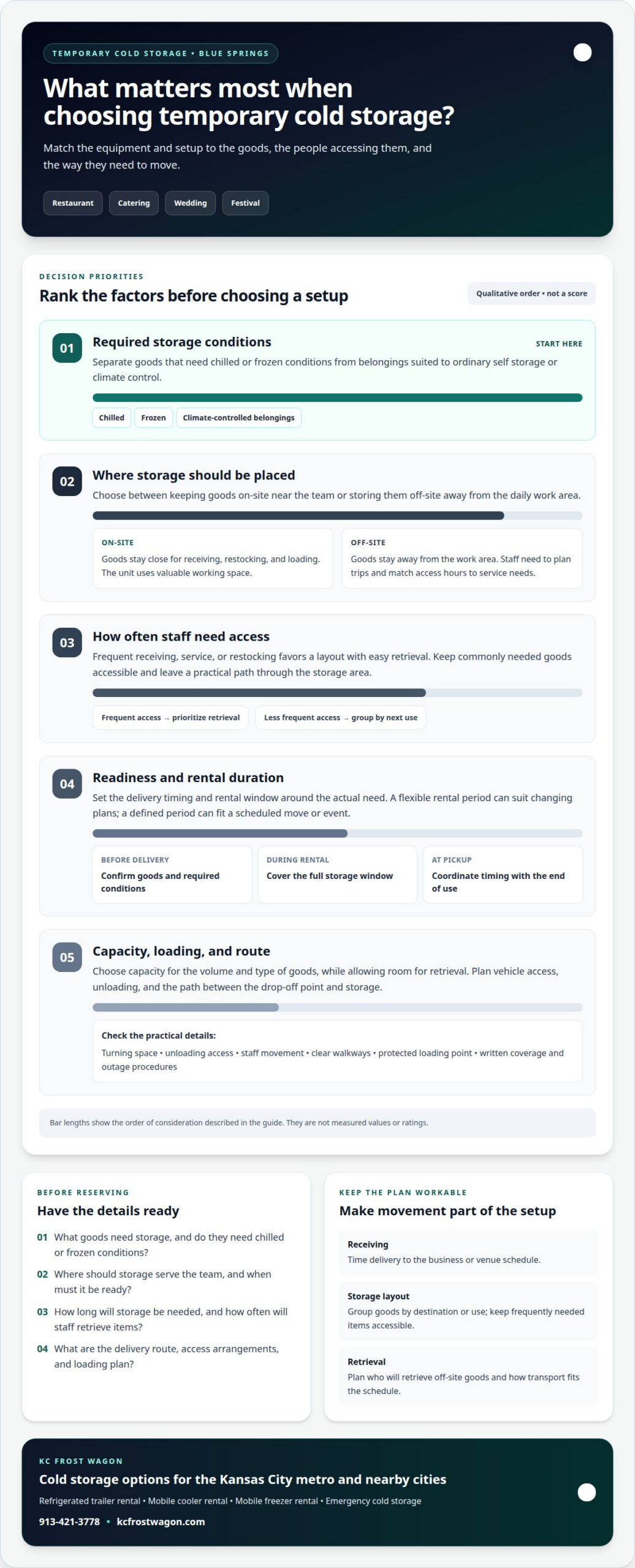
Temperature-sensitive belongings
Not every item affected by weather belongs in cold storage. Furniture, clothing, paperwork, photographs, artwork, and electronics may suit climate-controlled storage, which helps maintain steadier temperature and humidity than standard storage units. Refrigerated space serves another purpose: it holds goods that need chilled or frozen conditions.
Sort goods by storage needs before choosing a unit. A household moving from a Blue Springs home might place furniture, family photographs, and electronics in climate-controlled storage, while a caterer may need refrigerated space for ingredients. Keeping these needs separate avoids a common mismatch: choosing cold storage for belongings that need steadier climate conditions instead.
Plan seasonal storage deliberately. Group clothing, decorations, and household equipment by when you’ll use them. Put the next-needed items where they’re easy to reach, and label containers by room or season. For electronics and paperwork, choose a storage environment based on temperature and humidity consistency, not simply the coldest available space.
Loading affects how easily you can retrieve belongings later. Pack similar items together, protect photographs and artwork during moving, and avoid placing electronics beneath heavier boxes. Leave a clear path to frequently used items. A family storing furniture during a renovation, for example, may still need access to tools or household essentials.
Standard self storage and climate-controlled storage aren’t interchangeable. Standard storage may suit items that don’t need more consistent environmental conditions. Climate-controlled storage helps limit exposure to changing heat, cold, and excess moisture for sensitive belongings. For items with special handling needs, follow their care instructions when choosing storage.
Use this quick sorting process before renting:
- Group belongings by type. Separate furniture, clothing, paperwork, photographs, artwork, and electronics.
- Identify the need. Decide whether an item needs cold conditions or more consistent temperature and humidity.
- Plan retrieval. Place seasonal or frequently accessed items where loading and unloading won’t disturb fragile goods.
For Blue Springs households, choose based on the belongings, not the unit label. Use refrigerated storage for goods that need cold conditions; use climate-controlled storage when steadier temperature and humidity matter. This distinction helps protect household items during a move, renovation, or seasonal storage without treating every sensitive belonging as refrigerated cargo.
What temporary cold storage facilities are available in Blue Springs, Missouri?
Blue Springs businesses can consider refrigerated trailers, mobile coolers, mobile freezers, and fixed cold-storage spaces. The right option depends on whether goods need chilled or frozen conditions, where staff need access, and how long storage must support operations. A restaurant receiving extra ingredients has different needs from a wedding venue storing catering items.
Mobile cold storage places capacity near a restaurant, event site, or commercial property. A refrigerated trailer can support larger storage needs, while a mobile cooler or freezer can suit a focused use. Festival organizers might place cold storage near food service. If restaurant refrigeration fails, a nearby trailer can help support operations while the usual equipment is unavailable.
A separate storage facility is another option when goods can be transported away from the business. This can suit inventory that doesn’t need frequent on-site access. Account for each trip, the loading point, and retrieval timing. A caterer moving supplies between storage and a Blue Springs venue should plan transport around setup and service schedules.
Choose equipment according to the goods’ required condition. Chilled and frozen products need different storage arrangements, so identify which applies before selecting a unit. Climate-controlled self storage is not a substitute for food refrigeration. It helps maintain steadier temperature and humidity for belongings such as furniture, photographs, and electronics.
Before arranging temporary cold storage, map the location and workflow. Identify where a unit can be placed, how deliveries will reach it, and how staff will move goods between the unit and work area. For an event, include the service entrance and setup timing. For a business, consider receiving routines and the paths staff use during a shift.
- For chilled goods: Select refrigerated storage suited to the intended use.
- For frozen goods: Choose freezer storage rather than general climate control.
- For belongings: Consider climate-controlled space for steadier temperature and humidity.
- For frequent access: Place storage near the staff or event area using it.
Blue Springs businesses planning weddings, catering, or festivals can compare these options by goods, site layout, and access needs. KC Frost Wagon serves the Kansas City metro and nearby cities with event cold storage. Discuss cold-storage needs for your Blue Springs event and request a quote.
KC Frost Wagon: Event cold storage
KC Frost Wagon provides event cold storage for Blue Springs weddings, catering, festivals, and business needs. The 12×6 and 16×6 refrigerated trailers can be used for cooler or freezer storage, matching the setup to whether goods need chilled or frozen conditions.
Trailers arrive pre-chilled, with delivery, setup, and plug-in coordinated for your site, followed by pickup after the event. Each trailer is available with or without a generator and can plug into a dedicated 120 V outlet. KC Frost Wagon serves the Kansas City metro and nearby cities, with emergency refrigeration response for business breakdowns.
Contact KC Frost Wagon at (913) 421-3778 to discuss your event or business storage needs and request a quote.
Plan the cold-storage handoff
Turn your storage decision into a clear plan for receiving, access, and pickup. For temporary cold storage in Blue Springs, decide what needs to stay chilled or frozen, where the unit should be placed, and how it fits your schedule. A practical handoff plan helps staff, caterers, and event crews know where goods belong and how to retrieve them.
KC Frost Wagon offers refrigerated trailer rental with 12×6 and 16×6 cooler/freezer trailer options. Share your event or business needs, location, and timing to discuss a setup that fits. KC Frost Wagon serves the Kansas City metro and nearby cities, including Blue Springs.
Contact KC Frost Wagon about storage to discuss your cold-storage plans and request a quote. With the right arrangement in place, you can focus on serving guests and keeping your operation moving.
Frequently Asked Questions
What kind of unit should I get?
Choose a cooler for goods that need chilled storage and a freezer for goods that must stay frozen. For a Blue Springs restaurant managing a temporary equipment outage, consider the amount of inventory and the space available at the site. A 12×6 or 16×6 cooler/freezer refrigerated trailer may fit commercial needs. Each trailer can use a dedicated 120 V outlet or an optional generator.
Which Blue Springs cold storage providers offer short-term or temporary rentals?
KC Frost Wagon provides refrigerated trailer rentals for temporary commercial and event storage in the Kansas City metro. Service includes Blue Springs and nearby communities such as Kansas City, Overland Park, Olathe, Lenexa, Shawnee, Leawood, Lee’s Summit, Independence, Liberty, and Prairie Village. Delivery, setup, and pickup can be coordinated for an event or business need. Call (913) 421-3778 to discuss your requirements and request a quote.
What types of refrigerated and frozen storage are available near Blue Springs?
Temporary cold storage options include refrigerated trailers, mobile coolers, and mobile freezers. Choose according to whether goods need chilled or frozen conditions, then consider where staff will access them. A caterer serving a Blue Springs wedding may need a mobile cooler near food preparation, while a business storing frozen inventory needs freezer capacity. Climate-controlled storage for belongings serves a different purpose.
Do Blue Springs cold storage facilities accept food, pharmaceuticals, or other temperature-sensitive goods?
Commercial and event cold storage can support food storage for restaurants, caterers, and event organizers. Pharmaceuticals have product-specific storage requirements, so don’t assume general cold storage is suitable. Before planning storage for any sensitive item, identify its required conditions and handling instructions. A catering team, for example, should distinguish chilled ingredients from frozen goods rather than treating them as interchangeable.
What permits or food safety rules apply to temporary cold storage in Missouri?
Requirements depend on the goods, the site, and how food is handled in the business. Having temporary equipment does not determine which rules apply. Missouri restaurants and caterers should follow their existing food-handling procedures and the storage instructions for the products involved. For a specific event or facility, identify the activity and location, then consult the relevant local or state health authority about applicable requirements.

