
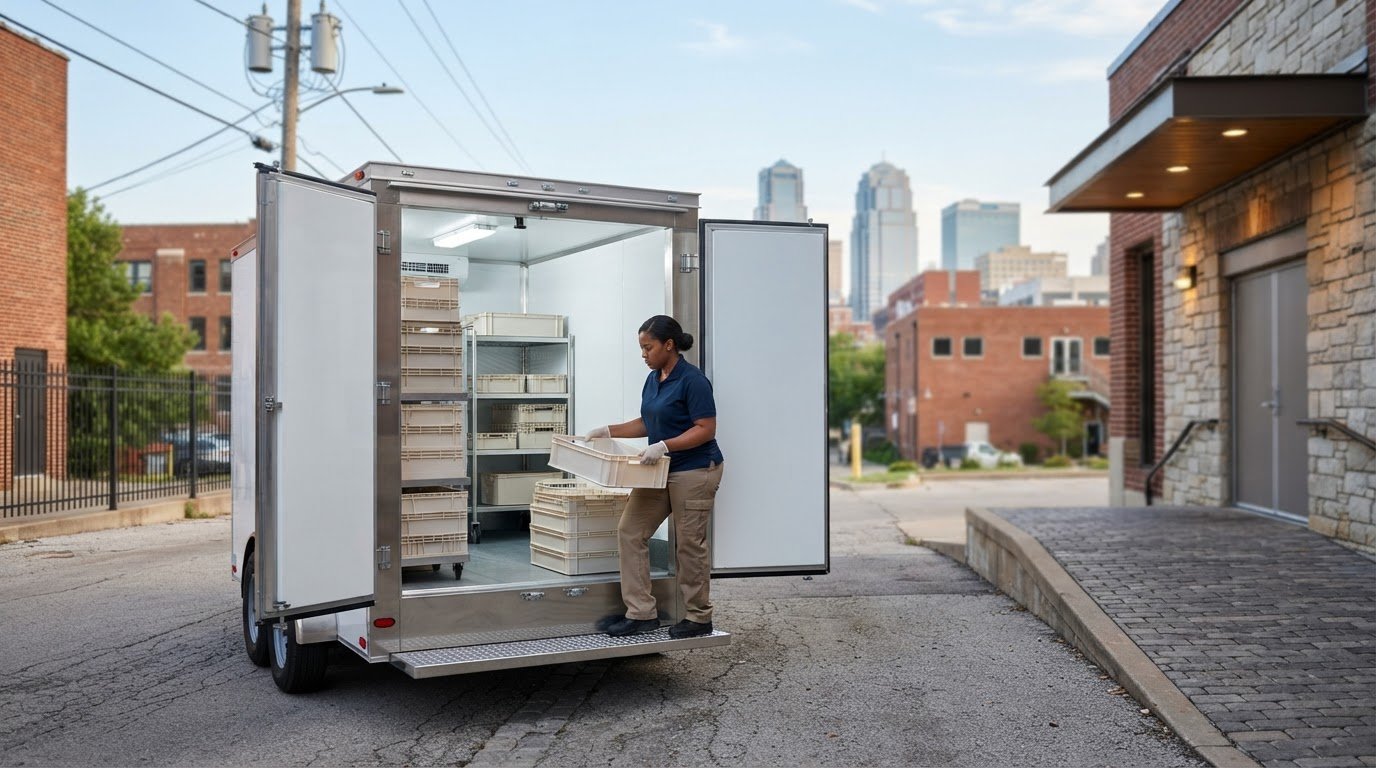
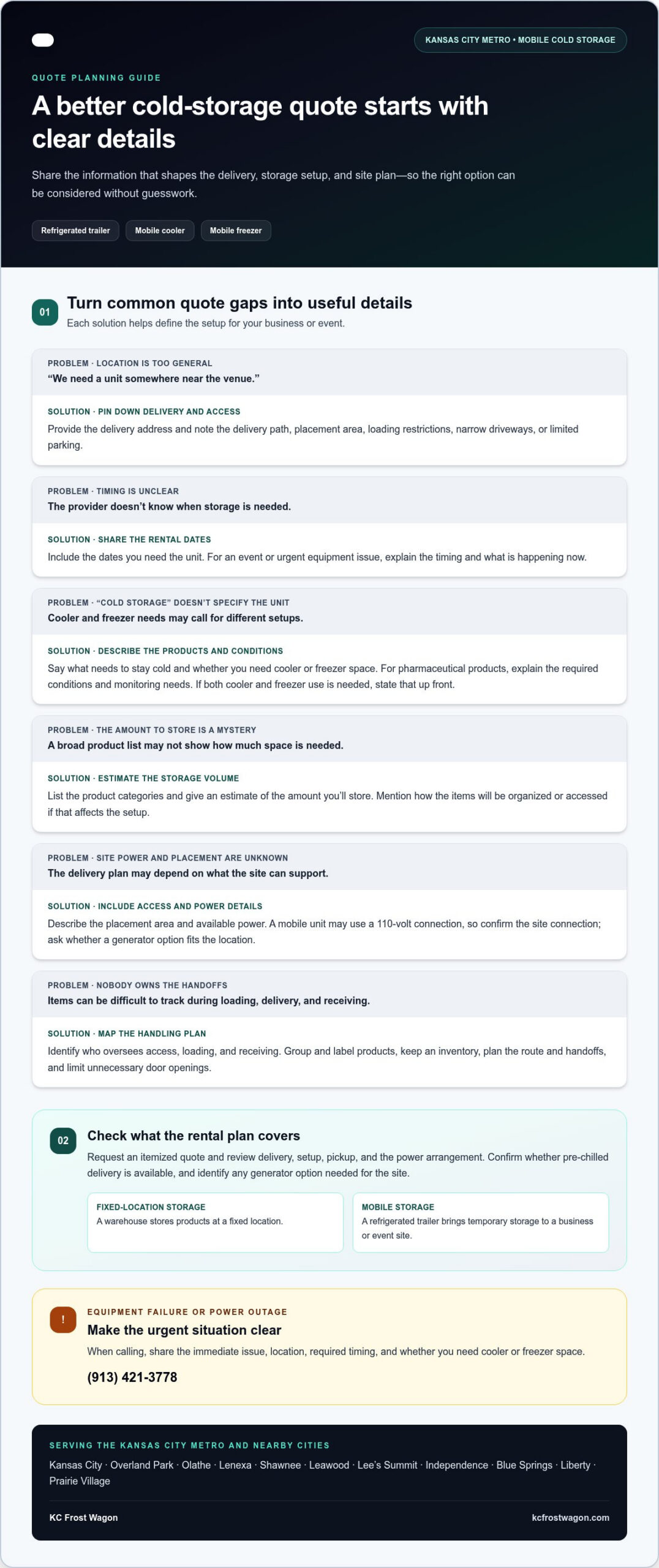
A useful cold-storage quote starts with the details that shape the setup. For Kansas City businesses searching for mobile cold storage companies near me, share the delivery address, rental dates, what needs to stay cold, and whether you need cooler or freezer space. Include an estimate of the amount you’ll store and any site access or power details you know.
It’s understandable to need a clear answer quickly, especially when a refrigeration failure or event deadline is approaching. The right setup depends on what needs storage, the timing, location, and site conditions. Sharing specific details helps identify a suitable option without guesswork.
This guide explains what to include in a quote request and how to think through mobile cold storage for restaurants, catering, weddings, festivals, pharmaceutical needs, and other cold-chain situations around Kansas City, Overland Park, Olathe, Lee’s Summit, and nearby cities. You’ll also learn what affects the setup and where refrigerated trailer rental, mobile cooler rental, or mobile freezer rental can fit.
Key Takeaways
- Make quote requests more useful by sharing the delivery address, dates, storage needs, and site access or power details.
- Match the storage setup to what you need to keep cold, from restaurant and catering supplies to event overflow and pharmaceutical products.
- Plan how items will move into and out of storage to help maintain an orderly cold chain.
- For a refrigeration breakdown or power outage, share the immediate situation and location when calling (913) 421-3778.
- Explore how refrigerated trailer rental or mobile cooler rental can support operations and events across the Kansas City metro and nearby cities.
Cold storage for restaurants, caterers, florists, and medical facilities
Restaurants may need temporary refrigerated space when deliveries exceed kitchen capacity or existing equipment fails. Caterers often need storage near a venue, while florists may need a cool place for arrangements before setup. Medical facilities handle different products and processes. Start by identifying what you’ll store, the required conditions, and who will oversee access. This makes the use case clear before you choose a mobile setup.
For a quote, share the Kansas City-area delivery address, rental dates, cooler or freezer need, and site access details. Describe the product categories and estimate the amount of space needed. Mention practical obstacles, such as a narrow driveway, restricted loading area, or limited parking. Kansas City operators comparing mobile cold storage companies near me can use these details to explain their actual setup, rather than relying on a broad description of the business.
A temperature-controlled warehouse and a mobile trailer serve different needs. A warehouse provides storage at a fixed location; a refrigerated trailer brings temporary storage to your business or event site. KC Frost Wagon delivers within the Kansas City metro, including Kansas City, Overland Park, Olathe, Lenexa, Shawnee, Leawood, Lee’s Summit, Independence, Blue Springs, Liberty, and Prairie Village. Share the site address and intended use when planning a rental.
How do local mobile cold storage providers compare by reviews, availability, and contract terms? Compare feedback relevant to your use, then review rental dates, delivery and pickup arrangements, power options, and extension terms. Businesses comparing mobile cold storage companies near me should also evaluate whether the proposed setup fits their address, schedule, and storage needs.
What permits, site access, or electrical requirements apply to mobile cold storage rentals? Site access and local requirements depend on the placement location. Identify a suitable delivery path and placement area, then plan the power arrangement, including whether a generator option fits the site.
Are delivery, setup, pickup, and electricity included in the rental price? Rental terms explain what is included. Request an itemized quote that identifies delivery, setup, pickup, and the power arrangement, so you can see what the rental covers.
What mobile cold storage companies serve my location? Coverage depends on the provider and exact address. Share your location in the Kansas City metro, such as Olathe or Lee’s Summit, along with access details and intended use.
What temperature ranges and monitoring features do nearby units offer? Match the unit’s stated range and monitoring features to the products and handling process. For pharmaceutical storage, describe the required conditions and monitoring needs before arranging the unit.
Food safety and maintaining the cold chain
A cold chain is the planned movement of temperature-sensitive goods from storage through transport to their destination. For a Kansas City caterer, that may mean moving prepared dishes from a kitchen into temporary refrigerated storage, then loading them for delivery. Plan who handles each transfer, where items wait, and how staff will limit unnecessary door openings.
Before loading, group products by their handling needs and label them clearly. Keep an inventory of what enters storage and where staff can find it. A restaurant can separate prepared ingredients from items awaiting service; a caterer can organize menu components by event or delivery route. These steps reduce searching and help staff work efficiently.
Cold-chain logistics involve more than the vehicle. The route, loading sequence, delivery schedule, and receiving location all affect how products move. For a delivery between Kansas City and Olathe, identify pickup and drop-off points, expected loading activity, and time-sensitive handoffs. At the destination, assign someone to receive the load and move it into the intended storage area.
For a caterer serving Kansas City and Lee’s Summit, map every handoff between the kitchen, event site, and receiving team. Name the person responsible at each stop, and decide how staff will communicate schedule changes. A practical cold-chain plan reflects the products, route, site access, and handling steps instead of applying one workflow to every delivery.
Digital records and checklists can help teams coordinate repeated tasks, but they don’t replace clear handling procedures. For example, a business may use digital inventory records alongside a written loading checklist. Staff still need to know which products go in each area, who checks the shipment at handoff, and what action to take if a problem appears. Match each tool to a specific task.
How quickly can local providers deliver a mobile cold storage unit? Delivery timing depends on the requested location, unit type, scheduling, and site access. Give the provider your address, required dates, cooler or freezer need, and placement details so the delivery plan can be established.
For a Kansas City restaurant, caterer, or event, share the route and handling plan when arranging temporary cold storage. You can discuss your cold storage needs or call (913) 421-3778.
A mobile food truck cold storage trailer may use 110-volt power, so confirm the available connection at the site before delivery and include it in the placement plan.
Seasonal overflow and equipment emergencies
Seasonal demand can outgrow a restaurant’s walk-in or a caterer’s regular storage space. A Kansas City festival, wedding weekend, or busy restaurant service may bring extra ingredients and prepared food onsite. Estimate the added volume, identify whether products need cooler or freezer conditions, and choose a clear staging area before deliveries arrive. That preparation helps keep overflow organized and kitchen access clear.
For planned events in Overland Park, Olathe, or Lee’s Summit, map storage around the work. List delivery windows, prep periods, service times, and pickup plans. Then decide which items staff will access most often and arrange the load for easy retrieval. Keep food for separate events or service periods identified. A well-planned setup helps crews work efficiently during a busy schedule.
A refrigeration failure needs a different response. First, identify which equipment stopped working and what products it contains. Keep doors closed where practical, note the affected inventory, and contact the person responsible for food handling. Next, prepare the delivery address, site access instructions, cooler or freezer need, and a power plan. These details help a response team assess the immediate storage setup.
Power outages can also disrupt refrigeration at a restaurant, event site, or commercial kitchen. Identify whether backup power is available and where a temporary unit could be placed. Share obstacles such as a locked gate, narrow service lane, or active loading zone. Generator options may help address power needs, while a dual cooler/freezer arrangement can support different storage requirements onsite.
- Planned overflow: Estimate what needs extra space and when staff will access it.
- Equipment breakdown: Report the affected products, site address, and access conditions.
- Power interruption: Describe available power and the location for temporary storage.
Pre-chilled delivery, setup, and pickup can simplify an event plan or urgent transition. Prepare the placement area, keep the route clear, and assign a staff member to coordinate arrival. A festival organizer, for example, can reserve a service-side location away from guest traffic. A restaurant can choose a spot near its receiving area while keeping daily operations moving. The trailers require no permanent installation.
For emergency cold-storage needs in the Kansas City metro and nearby cities, call (913) 421-3778. Share the location, the immediate issue, and whether cooler or freezer capacity is needed. Clear details help move the conversation directly to the next practical step.
Storage for food and pharmaceuticals
A Kansas City restaurant and a medical facility can both need temporary refrigerated space, but their handling plans differ. Identify each product, its required storage conditions, and who is responsible for it. Food teams can group items by menu or service period. Medical teams should follow product labels and their facility’s existing procedures. KC Frost Wagon’s trailers are designed for commercial and event use, so match the rental to your specific storage needs.
For food, plan where each category will go and how staff will retrieve it. A caterer preparing a wedding in Olathe, for example, can separate ingredients from ready-to-serve dishes and mark each group clearly. Keep an inventory of what enters and leaves storage. Assign a staff member to manage access, so workers aren’t repeatedly opening the trailer to search for supplies.
Pharmaceutical products require a process based on their own handling instructions. Before storage, read the product information and document the required conditions. Identify the person responsible for receiving, placing, and removing each item. Record its location in storage and organize products by type or destination. A medical facility’s plan should follow its established procedures for handling those products.
Consider the full route, not only the time items spend in storage. A product might move from a clinic receiving area to temporary storage, then to a treatment room. Food might move from a restaurant kitchen to a festival serving area. In either case, name each handoff, assign responsibility, and plan how items will be transported between locations.
- Identify: List products, storage needs, and intended use.
- Organize: Group items by category, destination, or service period.
- Assign: Name the person managing access and handoffs.
- Document: Track what is placed in storage and what is removed.
Location affects the practical setup. If a temporary trailer is beside a Kansas City kitchen, staff may have a short transfer route. At an event site in Lee’s Summit, plan the path from the delivery point to the work area. Account for vehicle access, loading activity, and where staff will stage items before use.
When requesting a quote, describe whether the need is for food, pharmaceuticals, or both. Include the site address, dates, product categories, required storage conditions, and handling plan. This gives the provider a clearer picture of the use case and helps distinguish routine event storage from a specialized medical workflow.
Cold storage and distribution services
Cold storage and distribution solve different parts of a delivery plan. Storage holds products at a site; distribution moves them between locations. A Kansas City caterer may need temporary space at a venue, while a restaurant supplier may coordinate deliveries across several kitchens. Define whether your need is onsite storage, transportation, or both before arranging service.
Map each movement from origin to destination. For a wedding in Overland Park, list where food is prepared, where it will be stored, and where staff will serve it. Name the person responsible at each handoff. Include delivery windows and vehicle access details. This outline helps identify where a temporary trailer rental fits without confusing storage with a full distribution service.
For a festival in Kansas City, delivery planning should account for load order and site access. Products needed first should be easy to reach, while later deliveries can be staged separately. Give the driver a precise drop-off location, site contact, and directions to the storage area. Include any restricted vehicle access or active setup work in the plan.
Restaurants coordinating deliveries across Olathe and Lee’s Summit can use a simple receiving log. Record the product, arrival time, destination, and person accepting the handoff. A shared schedule helps kitchen teams see which items are onsite and which remain in transit. Keep distribution plans separate from storage records, so staff can trace a product’s movement without relying on memory.
- Define the service: Identify whether you need onsite storage, transportation, or both.
- Map the route: List origin, destination, handoffs, and access instructions.
- Coordinate receiving: Assign a contact at each stop and record arrivals.
- Plan storage: Organize products by destination, delivery order, or service period.
Request a quote with the practical details that shape the setup: address, dates, product type, estimated load, and site access. Explain whether you need storage for a single event or commercial backup. For deliveries involving multiple stops, provide the route and receiving schedule. Clear information helps define the storage need separately from transportation tasks.
Kansas City businesses can use temporary cold storage as part of an event or catering logistics plan, especially when a kitchen or venue lacks room for the full load. For wedding and catering cold storage that fits your operation, request a cold storage quote and describe the location, schedule, and intended use.
KC Frost Wagon: 12×6 cooler/freezer refrigerated trailer
KC Frost Wagon provides refrigerated trailer rental for Kansas City metro restaurants, caterers, and event teams. The 12×6 cooler/freezer refrigerated trailer can support temporary cooler or freezer storage, while the 16×6 option offers another size choice for commercial and event needs.
For a wedding in Olathe or a festival in Lee’s Summit, share the delivery location, schedule, storage type, and site access details when requesting a quote. KC Frost Wagon delivers, sets up, and picks up its pre-chilled trailers within the Kansas City metro. A mobile cooler rental can provide practical overflow space when kitchen or venue capacity is tight.
KC Frost Wagon serves the Kansas City metro and nearby cities. Contact KC Frost Wagon at (913) 421-3778 to discuss your cold storage needs and request a quote.
Turn your cold-storage plan into the next step
Give your team a clear decision point for arranging temporary storage. A refrigeration interruption, upcoming event, or change in expected inventory can prompt a review of the plan. Naming that trigger ahead of time helps staff act deliberately instead of debating next steps during a busy shift.
As you compare mobile cold storage companies near me, consider how each arrangement fits your team’s responsibilities and daily workflow. Decide who coordinates internally and who can approve the plan, then share those roles with the people affected.
KC Frost Wagon serves Kansas City metro businesses and events. Contact KC Frost Wagon to discuss your needs and request a quote. A little clarity now can make the next operational decision easier.
Frequently Asked Questions
What information should I provide when requesting a quote?
Along with your location and dates, explain who will receive the trailer and coordinate access on arrival. Note whether the setup supports one service period, several event stages, or a business operation. For a wedding, identify the planner or caterer who will manage deliveries onsite. A clear point of contact helps keep arrival, loading, and event-day coordination organized.
Which nearby companies rent refrigerated trailers or mobile cold rooms?
KC Frost Wagon serves the Kansas City metro, including Kansas City, Overland Park, Olathe, and Lee’s Summit. Its portable rentals are intended for commercial and event use. Share your exact delivery address and intended use to discuss a local rental. Service is limited to the Kansas City metro area, so the site address matters when establishing whether the service fits your location.
What types and sizes of mobile cold storage units are available?
Available options include refrigerated trailers for cooler or freezer use. KC Frost Wagon’s trailers can be rented with or without a generator, and they can plug into a dedicated 120 V outlet. They require no permanent installation. When choosing, consider how staff will load products, whether they need separate cooler and freezer conditions, and which power arrangement works at your site.
Do mobile cold storage companies provide backup power and emergency support?
KC Frost Wagon offers generator options and 24/7 emergency refrigeration for businesses facing equipment breakdowns or power outages. For urgent help, call (913) 421-3778 and describe the location, outage or equipment issue, and whether cooler or freezer storage is needed. If the site has a dedicated 120 V outlet, mention its location so the power setup can be planned.
What insurance, food-safety, or temperature-control requirements should I consider?
Review your organization’s insurance terms and established handling procedures before placing products in temporary storage. Assign someone to manage access and follow product handling instructions. Food businesses can continue their usual receiving and inventory process. For pharmaceutical products, follow facility procedures and product documentation rather than assuming food-handling practices apply in the same way.
What questions should I ask before booking a mobile cold storage company?
Ask how the rental period is defined, how extensions are handled, and who coordinates delivery and pickup. Clarify the power arrangement, site access needs, and who should be present for setup. For an event, confirm the venue contact knows where the unit will be placed and how staff will reach it. These details help prevent scheduling and access confusion on arrival day.
How do local mobile cold storage providers compare by reviews, availability, and contract terms?
Compare feedback relevant to your use, then review rental dates, delivery and pickup arrangements, power options, and extension terms. Check that the proposed setup fits your address, schedule, and storage needs.

