
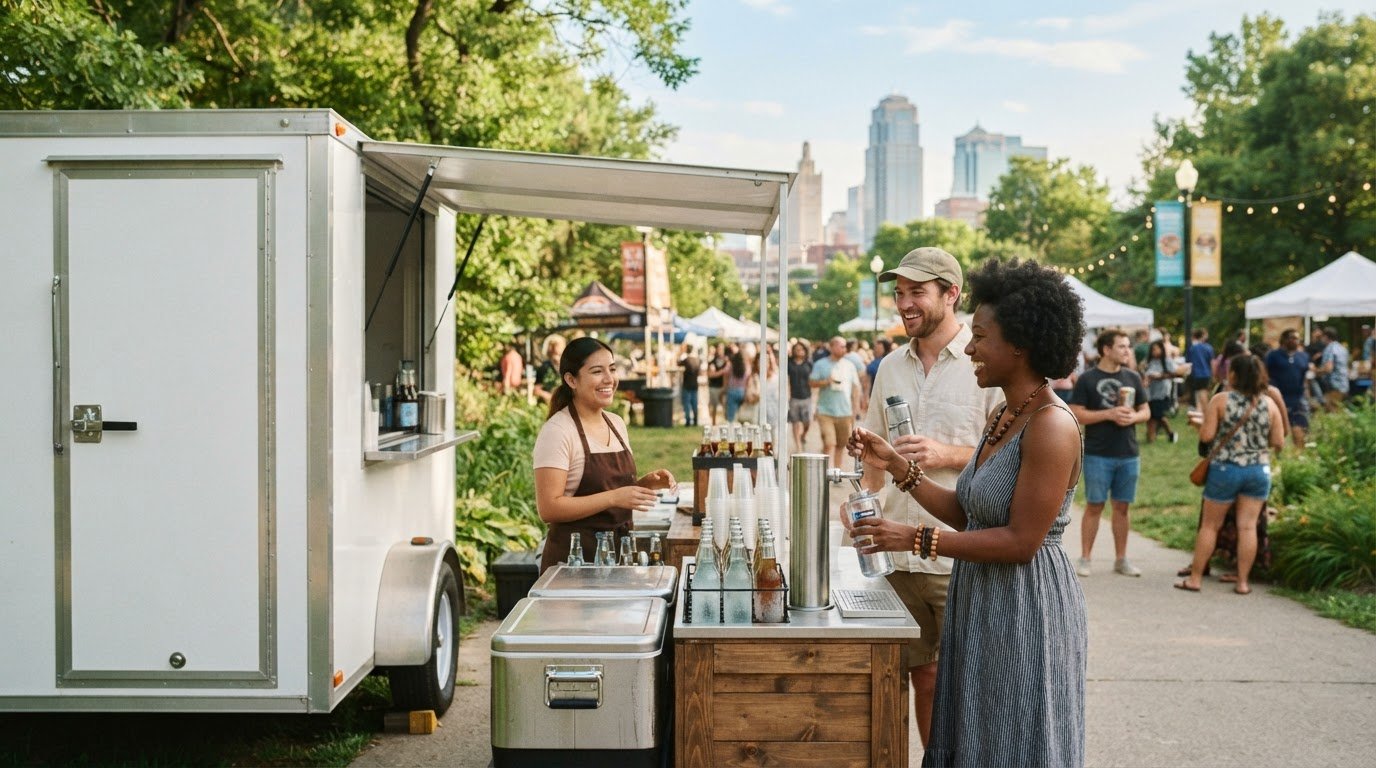
A cold drink at an outdoor festival takes a little planning. For effective outdoor festival beverage cooling, pre-chill drinks, carry them in a reusable insulated bottle, and refill water at festival water points. Keep drinks out of direct sun whenever possible.
It’s easy to focus on what to bring and overlook how heat, walking, and long waits between refills can affect your plans. A reusable bottle lets you carry water and refill it on site, while a simple cooling plan helps keep other drinks refreshing.
This guide covers how to use festival water points, prepare beverages before you leave, and plan hydration throughout the day. It also explains what to consider when organizing cold storage for an event, so drinks are ready to serve and logistics stay manageable.
Key Takeaways
- Choose insulated containers that suit the event layout, and keep lids closed between service periods to slow heat gain.
- Arrange beverage stations so guests can queue and collect drinks without blocking restocking or other event operations.
- Keep drinks and supplies organized, and use clean handling practices to support safe, smooth service.
- For events without powered cooling, plan shaded storage and limit how often containers are opened.
- Estimate beverage demand and restocking needs before the festival begins to reduce service delays during busy periods.
3. What are the best ways to keep beverages cold at an outdoor festival?
A practical outdoor festival beverage cooling plan starts before you leave home. Chill bottled drinks in your refrigerator, then pack them together in an insulated bag or cooler. Grouping cold drinks limits warm air entering when someone opens the container. Keep the cooler shaded and away from hot pavement or direct sun. For a personal supply, choose a reusable insulated bottle that’s easy to carry and refill.
Plan for water separately from the drinks you bring. Check the festival website before travelling to find out whether water points, free water, or standpipes are available on site. Take a reusable bottle and refill it at designated points. This reduces how much water you need to carry from the start and keeps it close as you move between stages or activities.
- Before leaving: Chill drinks, pack them together, and close the cooler promptly.
- At the festival: Keep your bottle accessible and use the event’s designated water points.
- Between stops: Store your bottle in shade rather than leaving it in direct sunlight.
- For a group: Set aside drinking water separately from drinks intended for serving.
Keep hydration in the plan, especially if alcohol is part of the day. When drinking alcohol, alternating with water is a practical way to keep hydration in mind. A glass of water between alcoholic drinks is advised. Refill at a water point when available, and don’t rely on a small personal bottle to supply a whole group. For example, a festival party can designate one person to locate water stations before settling near a stage.
Cold drinks and cooling the body are related, but they aren’t interchangeable. Festival staff may offer water points and sprays to help people cool down. Wetting clothing can help the body lose heat through evaporation. If someone feels overheated, move them out of direct sun and seek help from festival staff. A drink can support hydration, but it doesn’t replace responding to signs of heat illness.
For organizers, make water easy to find rather than assuming guests will discover it. Mark water-point locations on event maps or signs, and post clear directions near high-traffic areas. A visible station gives attendees a practical refill option without requiring them to leave the event site. If water access is limited or unfamiliar, explain the arrangements before guests arrive.
Avoid repeatedly opening a shared cooler to look for one drink. Organize beverages by type or serving order, then take out only what’s needed. Keep the lid closed between service periods and return the cooler to shade after each use. These simple steps help preserve the chill, keep water accessible, and make the festival day easier to manage.
If your festival setup includes a tent, consider airflow as a separate way to stay comfortable, not a replacement for chilled drinks. Pointing a tent door toward the wind and using a battery-powered fan can help keep air moving. Decide where the tent will face as you arrange the space, then position the fan where its airflow will reach people taking a break. Keep the drinks plan separate: the tent arrangement moves air, while the insulated container holds beverages you want to keep cold. This way, comfort doesn’t depend on just one measure.
Before settling in, check whether the tent door can face the wind and adjust its position if practical. Include the fan in your setup, and keep it available while you’re in the tent. These choices add airflow alongside shade, careful cooler use, and water access. They don’t replace storing chilled drinks appropriately or seeking festival staff if someone feels overheated. Use the tent and fan to support comfort while treating beverage storage and hydration as separate needs.
4. How do you keep drinks cold without electricity at a festival?
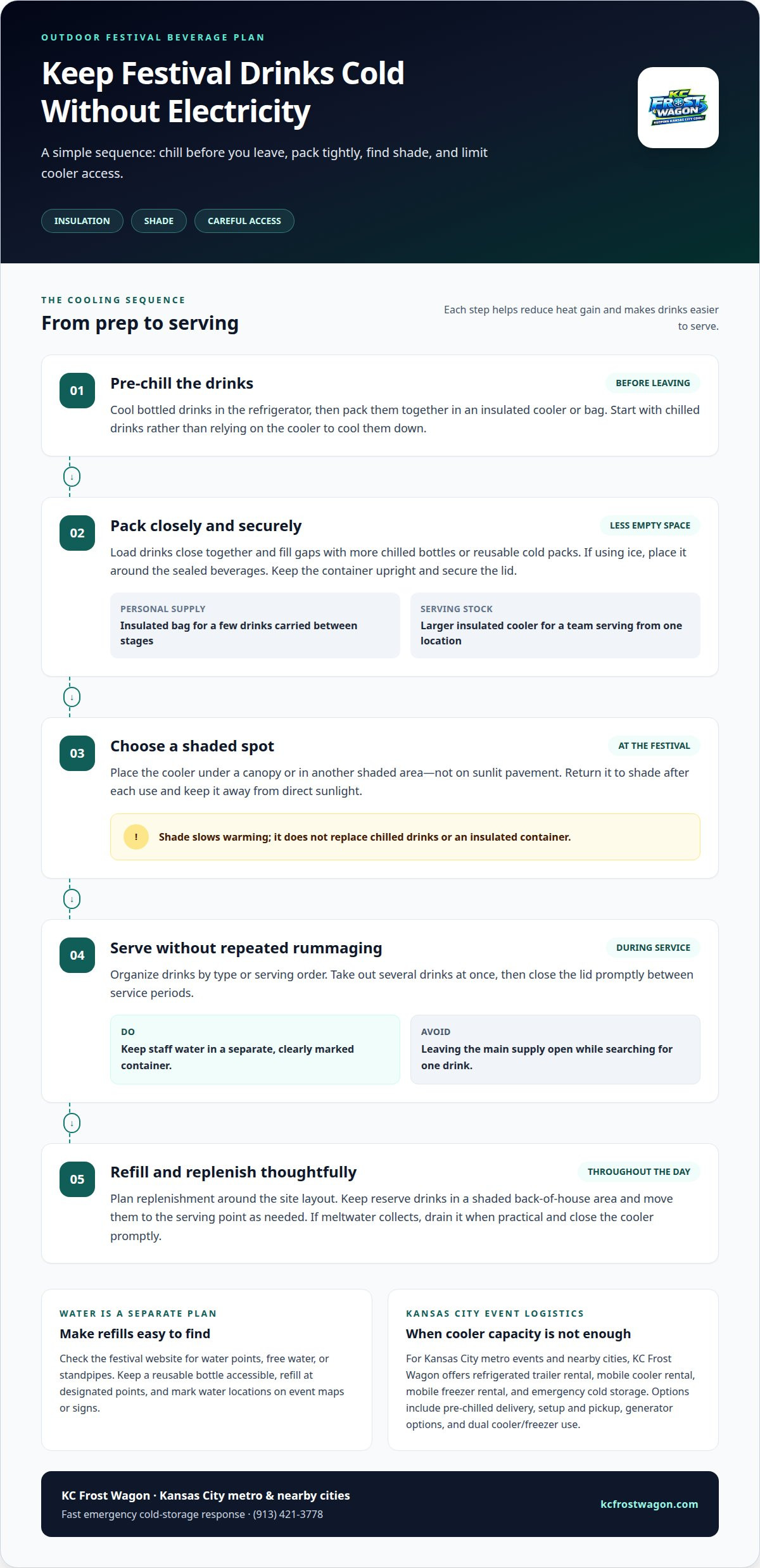
Use insulation, shade, and careful access. Chill drinks before packing, then load them closely into an insulated cooler. Fill empty gaps with more chilled bottles or reusable cold packs. Less empty space means less warm air enters when someone opens the lid. At a Kansas City festival, put the cooler under a canopy or in another shaded spot, not on sunlit pavement.
Choose a container that suits the amount of stock and the service setup. A personal insulated bag works for a few drinks carried between stages. A larger, well-insulated cooler is more practical for a volunteer team serving guests from one location. Keep the container upright, secure the lid, and position it where staff can reach it without leaving it open during busy periods.
Ice can help keep sealed beverages cool in a passive cooler. Pack drinks closely, then place ice around them rather than leaving bottles exposed above the load. Keep the lid closed between service runs. If meltwater collects, drain it when practical and close the cooler promptly. A shaded, insulated container slows warming, but frequent opening lets heat in and reduces its effectiveness.
- Pre-chill: Cool drinks before loading the cooler.
- Pack closely: Reduce empty space and keep the load stable.
- Find shade: Keep the container away from direct sun and hot ground.
- Limit access: Take out several drinks at once instead of opening the lid repeatedly.
- Separate supplies: Use one cooler for service stock and another for personal drinks.
That step also helps a volunteer team avoid rummaging through the supply. For example, keep staff water in a separate container beside the serving station. Mark each cooler clearly so helpers can find the right drinks quickly. During a busy set change, one person can serve while another retrieves stock, keeping the main container closed as much as possible.
Plan replenishment around the site layout. Place reserve drinks in a shaded back-of-house area, then move a smaller batch to the serving point as needed. Don’t leave reserve stock beside a generator, food-preparation equipment, or a sun-heated tent wall. At a festival spread across a large field, assign a runner to bring refills along a planned route instead of carrying every drink to the front at once.
Passive cooling has limits. A small cooler may work for personal drinks, but a long service period or large crowd requires more stock, more frequent replenishment, and reliable cold storage. Estimate demand from the event schedule and serving plan, then decide how much can stay in portable coolers. For a larger Kansas City event, discuss your event’s cooling plan or call (913) 421-3778.
Keep the setup simple and consistent: shade the cooler, close it between uses, and refill from protected reserve stock. These steps help preserve chilled drinks without electricity and make service easier to manage when the festival gets busy.
5. How should beverage stations be set up for fast service and food safety?
Build the station around a clear path: guests approach, choose a drink, then leave without crossing the restocking route. At a Kansas City festival, place the serving table near the main footpath but away from entrances, exits, and food-preparation work. Keep the queue clear of water points and nearby activity areas. A simple layout reduces crowding and gives staff room to serve.
Separate guest-facing service from back-of-house supplies. Set out drinks for immediate service, then keep reserve stock in a protected, chilled area. Assign one staff member to replenish the station while another serves. This prevents drinks from being left exposed while a busy volunteer searches for more. Label containers by drink type so helpers can find what they need quickly.
- Serving area: Keep displayed drinks organized and easy to reach.
- Restocking area: Store reserve beverages away from guest traffic.
- Waste point: Place bins nearby without crowding the serving surface.
- Staff route: Leave a clear path between reserve stock and the station.
Protect drinks from unnecessary handling. Offer sealed bottles or cans where practical, and keep them in clean containers until service. For pitchers or dispensers, use equipment intended for beverage service, cover openings between pours, and provide a clean serving method. Don’t let guests reach into shared containers. Give serving utensils a designated place instead of resting them on the table or among other supplies.
Keep the work surface tidy throughout service. Wipe up spills promptly, remove empty containers, and replace serving supplies that become dirty. For example, store clean cups in a covered dispenser instead of stacking them beside a wet spill area. Separate waste from drink stock, and keep personal items, phones, and bags off the serving surface. A quick station check during each restocking run can catch small problems before they interrupt service.
Make drink choices easy to understand. Clearly label water and other beverages, placing each label beside the matching container. If a drink contains an ingredient guests may need to know about, include an accurate label based on its packaging or recipe. Keep labels visible as stock changes. Guests shouldn’t have to handle several bottles to identify the right option.
Plan the station for heat and changing demand. Use shade where the site layout allows, protect chilled reserve stock, and bring out smaller quantities for active service. During a concert break, staff can refill the display before the crowd arrives rather than repeatedly opening reserve storage during the rush. For outdoor festival beverage cooling, an organized station pairs drink protection with a clean, direct service flow.
Before gates open, walk the route as a guest and as a server. Confirm that guests can reach drinks, staff can restock without crossing the queue, and waste bins remain accessible. Adjust the table or signs if any route is blocked. This brief setup check helps keep beverage service orderly from the first pour to the final restock.
5. How can organizers prevent ice from melting quickly in hot weather
Ice lasts longer when organizers limit heat exposure and unnecessary handling. Keep it in an insulated, closed container, then place the container under shade. Avoid sunny pavement, warm equipment, and tent edges in direct afternoon sun. At a festival site, a shaded service area is a better storage location than an open spot beside the beverage queue.
Keep ice for serving separate from the reserve supply. Each time staff open a large ice container to scoop or search, warm air enters. Instead, move a smaller working supply to the station and leave the main reserve closed. A designated server can replenish the working container as needed. This keeps service moving while protecting the reserve from frequent access.
Use a clean, dedicated scoop and keep it in a dry, protected place between uses. Don’t handle ice with cups or let guests reach into a shared bin. Cover the bin when nobody is serving, and wipe up spills around the station. These steps limit unnecessary exposure and help keep serving equipment orderly during a busy festival shift.
- Store the reserve: Use a closed, insulated container in a shaded location.
- Serve in batches: Transfer only the working supply to the beverage station.
- Control access: Keep a lid on the bin and use a dedicated scoop.
- Watch the surroundings: Move storage away from direct sun and heat-producing equipment.
Container placement matters throughout the day. A cooler left beside a sunny metal barrier can heat more quickly than one under a canopy. If the sun shifts across the site, move the container into shade rather than leaving it exposed. Keep the lid closed during breaks, restocking, and quiet periods. A clear label can remind helpers which container holds reserve ice.
Plan the ice supply around how it will be used, not just the crowd size. Drinks served over ice need a different service pattern from sealed bottles kept cold in a cooler. For example, a station serving poured drinks can keep its working bin near the server, while a separate, closed reserve stays in the event’s protected storage area. This avoids opening the reserve for every order.
At a large outdoor event, passive containers may not be enough to protect all cold supplies through a long service period. Build the layout around shaded access and a replenishment route, then keep reserve ice and beverages protected between trips. Organizers handling substantial festival stock can plan event cold storage for their setup as part of the overall cooling plan.
Review the setup before guests arrive. Confirm containers are shaded, lids close fully, scoops stay clean, and staff know where reserve supplies are kept. When the station gets busy, one person can serve while another replenishes the working bin. This simple division reduces the time containers stay open and helps ice remain useful for beverages throughout service.
Protecting the ice supply is one part of managing a hot-weather service area. Organizers can also consider the people working around storage and serving stations. Make sure staff can reach the working supply without repeatedly opening the reserve, and keep the routine simple enough to follow during busy periods. Include clothing guidance in staff preparations, especially for anyone working in warm conditions. Clothing choices don’t replace shade, closed containers, or careful handling, but they can be considered alongside those steps when planning the shift.
Tight clothing can prevent sweat from evaporating properly, which the body needs to cool down. For people who choose to wear tight clothing in hot weather, lightweight, white clothing is recommended. Organizers can share this guidance before the event so staff have an opportunity to choose suitable clothing. A clear plan for the reserve, working bin, and serving routine helps protect the ice, while clothing guidance supports the people carrying out that plan. Keep both considerations in view when preparing a station for hot weather.
KC Frost Wagon: 12×6 cooler/freezer refrigerated trailer
KC Frost Wagon offers refrigerated trailer rentals for festival and event cold storage. Choose a 12×6 or 16×6 cooler/freezer trailer for flexible cooler or freezer use. Trailers arrive pre-chilled, with delivery, setup, plug-in, and pickup included. Each is available with or without a generator and can connect to a dedicated 120 V outlet.
For festivals in the Kansas City metro and nearby cities, a trailer can support beverage storage or help address a sudden refrigeration breakdown. KC Frost Wagon also provides fast emergency refrigeration response for businesses needing temporary cold storage.
Call (913) 421-3778 to discuss your event, request a quote, and ask about availability.
Make your next festival easier to manage
Your outdoor festival beverage cooling plan can do more than protect drinks. It can help your team anticipate busy service periods, assign clear responsibilities, and keep event logistics manageable as the day unfolds. Before the festival, map out where supplies will go and how staff will move between storage and service. A clear setup gives everyone a practical role and leaves more room to focus on guests.
For organizers in the Kansas City metro and nearby cities, the next step is matching event cold-storage needs to the site and service plan. KC Frost Wagon can discuss how refrigerated storage may fit your festival operations.
Contact KC Frost Wagon to discuss your event and take the next step toward a smoother festival day.
Frequently Asked Questions
What beverage coolers work best for large outdoor festivals?
For a large festival, match the cooling setup to the site footprint, service format, and expected restocking flow. A refrigerated trailer can support centralized event storage, while smaller coolers can serve separate beverage points. Before choosing, map where each station will operate and how staff will move between locations. For a spread-out Kansas City festival, placing storage near the busiest service areas can reduce long supply trips.
What are the costs of renting refrigerated trailers or commercial coolers?
Rental pricing depends on the event and is provided after a quote request. The quote can reflect the rental period, the trailer size, and the event location within the Kansas City metro. Share your event dates, planned site, and cold-storage needs when requesting a quote. Those details help KC Frost Wagon understand the scope and prepare pricing for the rental you’re considering.
What are the best ways to transport and store drinks before an outdoor festival?
Start with an inventory organized by beverage type and destination station. Label cartons with the drink name and service point, then arrange loading so the first items needed are easiest to unload. For example, position drinks for an early-opening bar ahead of supplies for a later service area. Use a simple receiving checklist to compare delivered cartons with the event plan.

