
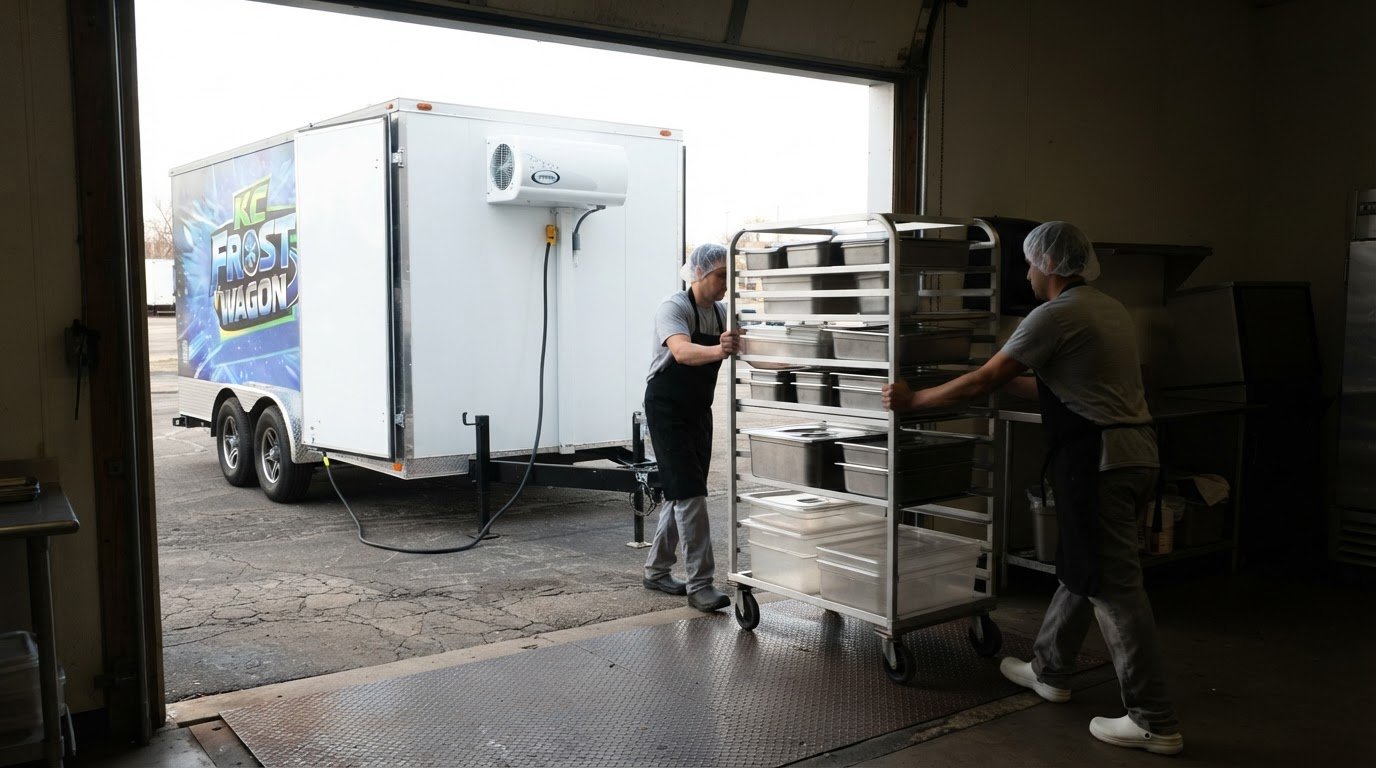
Cold storage works best when it matches what you need to keep cold and how your operation runs. For temporary cold storage in Independence, MO, choose based on whether you need cooler or freezer space, the products you’re storing, and how staff will access them during service or an event.
It helps to plan capacity before a refrigeration breakdown, busy catering schedule, wedding, or festival puts pressure on your team. This guide covers how to estimate usable space, plan loading, and distinguish cooler storage from freezer storage, so you can prepare with fewer surprises.
You’ll also find practical uses for different storage needs, from commercial backup refrigeration to event cold storage. The guidance is relevant to Independence and the Kansas City metro, including Lee’s Summit, Overland Park, Olathe, Lenexa, Shawnee, Leawood, Blue Springs, Liberty, and Prairie Village.
Key Takeaways
- Estimate storage needs by considering the amount of product, its packaging, and the access space your team needs during service.
- Compare 12×6 and 16×6 trailer sizes to match cold storage to your event or commercial operation.
- Choose cooler or freezer storage based on the temperatures your products require, and consider whether you need both functions.
- Plan delivery, setup, pickup, and power options around your site and schedule to keep operations running smoothly.
- Explore temporary cold storage options for restaurant backup, catering, weddings, and festivals across Independence and the Kansas City metro.
Freezer storage capacity
Freezer capacity is more than the space a unit appears to offer. Usable room depends on the products, packaging, loading pattern, and access staff need. Individually wrapped portions stack differently from bulky bakery boxes or catering trays. Start with an inventory of what must remain frozen, then group items by package shape and how often staff will retrieve them.
Next, consider the busiest point in your schedule. A restaurant covering a freezer outage may need room for several stock categories, while a wedding caterer may need access to prepared dishes and backup ingredients. Leave practical space between product groups so staff can find and reach items without shifting the entire load. Packing too tightly can make retrieval difficult, even when the inventory appears to fit.
- List the inventory: Include boxed entrees, packaged meat, desserts, and any other frozen products.
- Sort by package: Separate stackable cases from irregular trays or oversized boxes.
- Plan retrieval: Keep frequently used items accessible during restaurant service or event setup.
- Allow for changes: A flexible layout helps accommodate deliveries and changing menus.
For example, a caterer preparing a reception can group frozen entrees by menu item and leave the next service pull accessible. A festival food vendor might group sealed ingredients by booth or service period. These examples turn an inventory list into a workable loading plan. They don’t establish a fixed case count, since packaging dimensions and stacking arrangements affect usable space.
Freezer storage and blast freezing serve different purposes. Freezer storage holds products that are already frozen. Blast freezing is a separate rapid-freezing process, not another name for storing frozen inventory. If a kitchen needs to freeze freshly prepared food, include that processing requirement in the plan. Don’t assume a temporary freezer performs blast freezing.
For temporary cold storage in Independence, MO, match the space to the actual load rather than estimating from floor area alone. Share the product types, packaging, expected deliveries, and retrieval pattern when arranging a rental. These details help determine whether a freezer trailer suits normal service, a short-term equipment disruption, or an event schedule. They also help keep frozen inventory organized and accessible.
Container sizes and capacity
A container’s outside dimensions don’t tell the whole capacity story. Interior walls, door openings, shelving, and the shape of stored products affect usable space. For example, identical cases may fit differently when one load includes broad catering trays. Treat the listed footprint as a starting point, then plan around the actual interior and your work routine.
Measure the largest items that need to enter the trailer, including packaging, carts, and equipment that will stay inside. Then consider the access route from the delivery point to the storage area. A trailer may fit at the site but still cause problems if staff can’t move cases through the entrance or reach products without blocking the aisle.
- Group products: Sort cases, trays, and containers by shape and stacking needs.
- Map access: Identify the entrance, working aisle, and frequently used product areas.
- Allow for deliveries: Reserve room for incoming stock, not only the first load.
- Match the site: Consider placement, vehicle access, and the route staff use during service.
For a Kansas City caterer, wedding storage may need room for plated components and packaged ingredients. A restaurant managing a refrigeration interruption may need a layout that keeps food categories easy to locate. In both cases, grouping products gives staff a clearer path than filling every available space at once.
Capacity also depends on timing. A festival organizer receiving supplies in stages needs room for later deliveries. A restaurant moving stock from an affected unit may need temporary space for a wider mix of products. Share the expected load pattern, packaging, and access needs when arranging a rental to match the trailer’s usable space to the job.
Site conditions matter in Independence as much as interior dimensions. The delivery location needs room for the trailer and a route that lets staff reach it during the event or workday. A narrow service area, busy loading zone, or distant entrance can affect placement. Plan the location alongside the product list, especially when catering teams and venue staff share an access route.
For temporary cold storage in Independence, MO, describe the load using real examples rather than a rough guess. A list of case sizes, trays, delivery timing, and access needs gives the provider useful planning details. If your team is mapping container capacity for a Kansas City event or commercial site, discuss your storage layout.
When planning for a Kansas City event or commercial site, confirm how the planned placement supports loading and staff access throughout the storage period. KC Frost Wagon storage containers can be kept on-site for 24 hours a day, seven days a week. That availability can help coordinate access with event service and changing delivery needs, but it does not replace a workable layout. Keep frequently needed products reachable, preserve the route into the container, and leave room for stock arriving later. Before delivery, make sure local food-service requirements are met and the team understands where the container will sit and how it will be used. A capacity plan works best when the load, movement through the entrance, and daily access are considered together.
Cold storage solutions
For Independence businesses, temporary cold storage can mean mobile refrigerated or freezer space placed near the work. The right setup depends on inventory, power, site access, and the products’ handling requirements.
Availability, Power, Access, and Security
Compare the rental window with your event or repair schedule, including setup and pickup. Ask how the unit receives power at the site and whether generator options suit the location. A restaurant loading area, wedding venue, and festival ground can each present different access needs.
Check the proposed placement against delivery routes, staff traffic, and the path used to move products. Consider who needs access during service and what security arrangements the rental includes. For example, a caterer may need staff access throughout event setup, while a restaurant may need a clear path for restocking during normal operations.
Power planning should account for the site’s available connection and any backup arrangement. A warehouse with an accessible power source differs from an outdoor event location. Share the intended placement and operating schedule so the storage plan accounts for access and power together.
Rental Requirements and Terms
Rental requirements typically center on the requested dates, delivery location, intended use, and the space or temperature needs of stored products. Deposits and minimum rental terms depend on the rental agreement and duration. Review how the agreement handles delivery, setup, pickup, and any changes to the scheduled period.
For a wedding in Independence, storage may be needed through venue setup and event service. A restaurant managing equipment failure may need a different rental period. Share the schedule, site details, and inventory type when arranging a rental, so the plan reflects the actual job.
Before signing, make sure the agreement clearly describes the rental period, payment arrangements, access expectations, and pickup plan. These details help prevent confusion when a festival schedule shifts or a commercial repair takes longer than expected. No single deposit or minimum term applies to every rental arrangement.
Local Options and Provider Services
In Independence and the Kansas City metro, mobile cooler and freezer trailers provide temporary storage for events and commercial use. KC Frost Wagon delivers, sets up, and picks up its trailers within the Kansas City metro area. Plan for arrival, placement, loading, and removal. Businesses in Lee’s Summit, Overland Park, Olathe, Lenexa, Shawnee, Leawood, Blue Springs, Liberty, and Prairie Village can also arrange event or backup storage.
Before storing food, medicine, or other temperature-sensitive items, identify the product, its required conditions, the load, site access, and power plan. Food and medicine can have different handling needs, so don’t assume one temperature suits every load. For food service, follow the applicable product-specific handling requirements.
For a warehouse or event site, describe the goods and how staff will access them. This helps determine whether cooler or freezer space fits the task. Delivery placement and pickup timing should match site operations, especially when festival teardown or restaurant service uses the same access route.
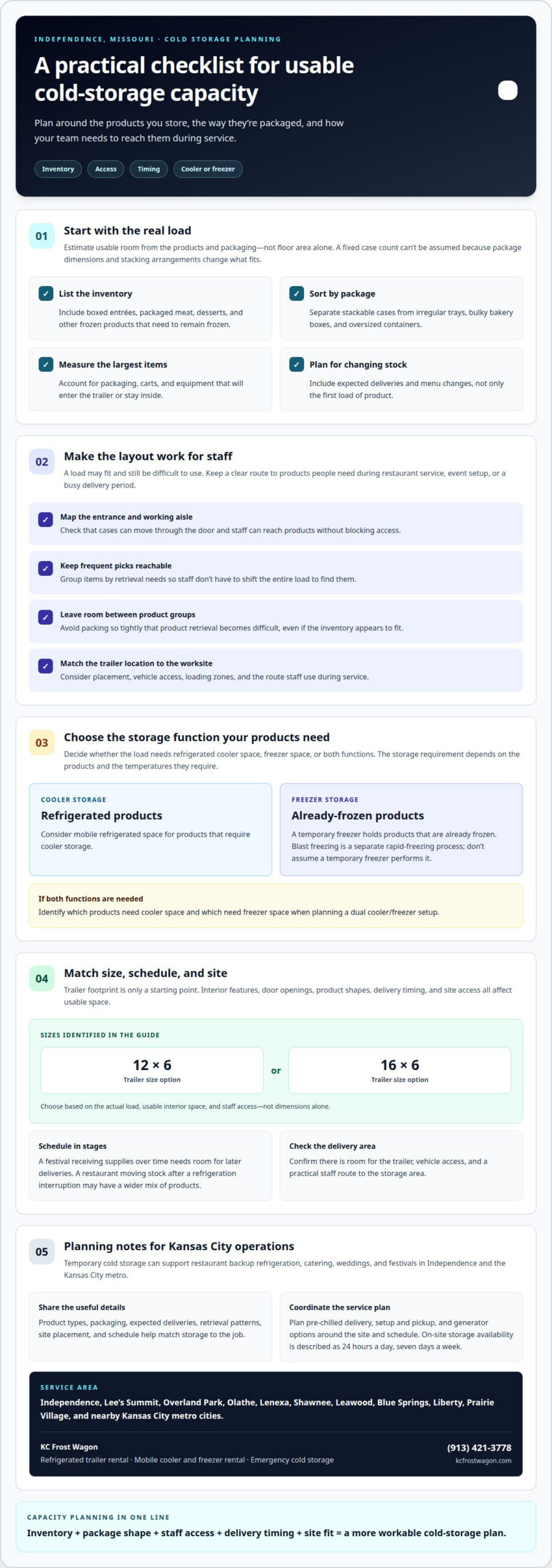
Common uses for different unit sizes
The right trailer size depends on the job, not just the type of business. A restaurant replacing an overloaded freezer has different needs from a festival vendor receiving scheduled deliveries. Compare product volume, package shapes, loading patterns, and staff access before choosing. Stacked food cases need a different layout from catering trays staff retrieve individually.
A smaller trailer may suit a focused task, such as holding backup ingredients for a restaurant menu or storing a caterer’s dessert trays before service. It may also work at a wedding site where one team needs a dedicated area for selected items. Keep products organized and accessible rather than filling the space without a plan.
- Restaurant backup: Store selected frozen or refrigerated inventory during an equipment interruption.
- Catering service: Separate prepared dishes and ingredients by menu or service sequence.
- Wedding setup: Keep reception food grouped for the catering team’s loading and service flow.
- Festival operations: Organize supplies by booth, delivery, or planned service period.
A larger trailer can support a broader product mix or a busier loading schedule. A festival organizer may need space for supplies, while a commercial kitchen may need room for several inventory categories during repairs. Capacity alone doesn’t determine fit. The layout must also leave staff a workable path to the products they need.
For a Kansas City-area wedding, plan storage around the catering timeline. Items arriving before venue setup should remain accessible without blocking products needed later. At a restaurant, separate packaged meat, prepared dishes, and ingredients so staff can find each group during service. A clear layout helps teams use the space efficiently.
Loading order matters in both trailer sizes. Put products needed first where staff can reach them, and group later-use items by service or delivery. A festival team can organize stock by booth, while a caterer can group trays by meal period. Account for the access route, especially when several workers share the storage area.
To choose a size, describe the job in practical terms: what products are involved, how they arrive, and how often staff retrieve them. A restaurant backup may need a different arrangement from a multi-day event with staged deliveries. In Independence, matching trailer size to inventory and loading needs helps prevent cramped access and wasted space.
ke sure local food-service requirements are part of the plan. A Temporary Food Service Permit application in Independence, Missouri, must include a completed application, verification of business license, and the fee, and be mailed or delivered to Independence Municipal Commons at 20201 E Jackson Drive. This administrative step is separate from estimating the space needed, so teams should account for both when preparing an event or temporary operation.
Treat that figure as a comparison point when assessing a trailer, while matching the space to inventory, access, and delivery timing.
What temporary cold storage options are available in Independence, MO?
Independence businesses can choose mobile cooler or freezer storage for event or commercial use. The practical option depends on the products, site, and whether staff need nearby access. A caterer staging reception food at a venue may benefit from on-site storage. A restaurant managing an equipment outage may need temporary capacity near its loading area.
Mobile cooler storage suits products that need to stay chilled, while freezer storage is intended for products that must remain frozen. These functions aren’t interchangeable. A festival organizer storing chilled ingredients and frozen stock should plan for each product’s requirements rather than assume one storage environment suits both.
- Mobile cooler space: Consider it for chilled catering ingredients or restaurant products.
- Mobile freezer space: Consider it for frozen inventory during an event or equipment disruption.
- Warehouse storage: Consider off-site space when products don’t need to remain beside the work area.
- Combined needs: Plan distinct storage conditions for chilled and frozen products.
On-site mobile storage keeps products near a restaurant, venue, or festival work area. This can simplify loading and access during service, especially when staff move food between storage and preparation areas. Placement still matters. A trailer away from the loading route can add unnecessary movement for a catering crew preparing dishes before a wedding reception.
Warehouse storage is a different arrangement: products are held away from the event or business site. That can suit inventory staff don’t need beside a kitchen or festival booth. The tradeoff is distance. A restaurant receiving stock throughout service may find off-site storage less convenient than a trailer near its usual loading area.
For Independence events, match the storage plan to the schedule and products. A wedding planner may need food accessible during venue setup and service. A festival organizer may need room for deliveries and a clear route between storage and vendor areas. A restaurant facing refrigeration trouble may prioritize quick staff access to inventory. Each situation calls for a suitable placement and access plan.
Before arranging temporary storage, identify whether the load needs chilling, freezing, or separate conditions. Then consider where delivery can place the unit, how staff will access products, and whether power is available at that location. These details help align storage with the work instead of choosing by container size alone.
For a site in Independence or a nearby Kansas City metro city, discuss your temporary cold storage needs and the event or commercial setup you’re planning.
KC Frost Wagon
KC Frost Wagon helps Independence businesses plan temporary cold storage for restaurant needs, catering, weddings, and events. Its refrigerated trailer rentals include 12×6 and 16×6 cooler/freezer units for different site layouts and storage needs. Delivery can be pre-chilled, with setup and pickup arranged around the job. Generator options and cooler/freezer use can support different site requirements.
For a restaurant facing refrigeration trouble, KC Frost Wagon provides 24/7 emergency refrigeration response. It also supports Kansas City metro events and nearby cities, including Lee’s Summit, Overland Park, and Olathe. Share your location, schedule, and storage needs to discuss a rental. Call (913) 421-3778 or contact KC Frost Wagon for a quote and availability.
Plan your next storage move
Turn your cold-storage needs into a clear operating plan. For temporary cold storage in Independence, MO, identify what needs chilling or freezing, when it must arrive, and how your team will move products during service. Include the delivery location, access route, and power plan. These details help shape a practical setup for a restaurant, catered event, wedding, or festival.
KC Frost Wagon serves the Kansas City metro and nearby cities. Share your location, schedule, and storage needs to discuss a refrigerated trailer rental for your operation. A clear plan can help your team prepare for an event or respond to an unexpected refrigeration disruption with fewer loose ends.
Contact KC Frost Wagon today to discuss your cold-storage needs and take the next step with confidence.
Frequently Asked Questions
What sizes and temperature ranges are available for temporary cold storage units?
KC Frost Wagon offers cooler and freezer configurations; the available product details identify these uses rather than numeric operating temperature ranges. Choose based on the storage requirements of your products. For example, a restaurant planning frozen inventory should share its required storage conditions when arranging a rental, so the appropriate configuration can be discussed for the job.
Can businesses rent refrigerated trailers or mobile walk-in coolers in Independence, MO?
Yes. Businesses in Independence can rent refrigerated trailers for temporary commercial or event storage. The units are portable rentals, not permanent walk-in installations. They can help restaurants, caterers, wedding planners, and festival organizers manage temporary storage needs at a work or event site. Service covers the Kansas City metro, including Independence and nearby communities such as Lee’s Summit, Blue Springs, and Liberty.
What food safety and temperature rules apply to temporary cold storage in Missouri?
Follow the applicable product-specific handling requirements. Food and medicine may have different needs, so don’t assume one temperature suits every load. In Independence, groups, organizations, and individuals operating a food booth at a temporary event must obtain a Temporary Food Service Permit, with the application received at least five business days before the event.

