
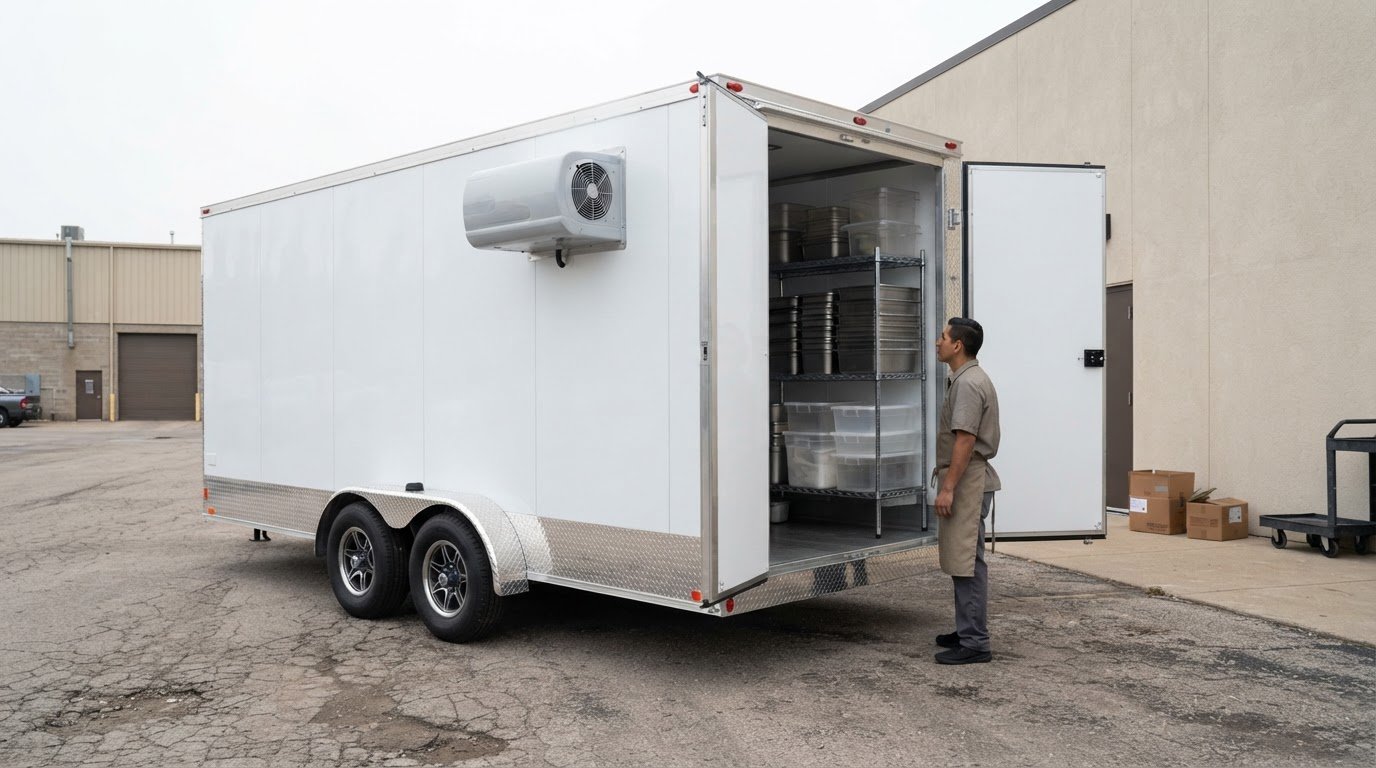
A refrigeration failure can put a restaurant’s, caterer’s, or event organizer’s food inventory at risk before repairs are complete. Emergency food storage rental in Lenexa can provide temporary refrigerated or freezer space during an outage, helping keep food cold and limit spoilage while you focus on getting operations back on track.
The immediate need is dependable cold storage at the right location. For businesses in Lenexa and across the Kansas City metro, a mobile cooler or freezer trailer can provide backup during equipment breakdowns or power outages.
Here’s what to consider: the type of storage your inventory needs, the site’s access and layout, and how delivery, setup, and pickup work. KC Frost Wagon rents refrigerated trailers for commercial kitchens and events in Lenexa, Overland Park, Olathe, Lee’s Summit, and other Kansas City metro communities.
Key Takeaways
- Temporary refrigerated or freezer storage can help protect food inventory when a commercial unit fails or power is interrupted.
- Plan cold storage around the food you need to move, the space available on site, and whether you need cooler or freezer capacity.
- Pre-chilled delivery, setup, pickup, and generator options can simplify the logistics of a temporary storage solution.
- Dual cooler/freezer use can help accommodate different storage needs for restaurant operations, catering, and events.
- For a quote and availability in Lenexa and the Kansas City metro, call KC Frost Wagon at (913) 421-3778.
Emergency refrigeration and equipment outages
A sudden refrigeration failure can quickly disrupt a workday. A walk-in cooler may stop holding its usual temperature after an equipment problem, and a power outage can affect several storage areas at once. A clear plan helps protect inventory while the issue is addressed.
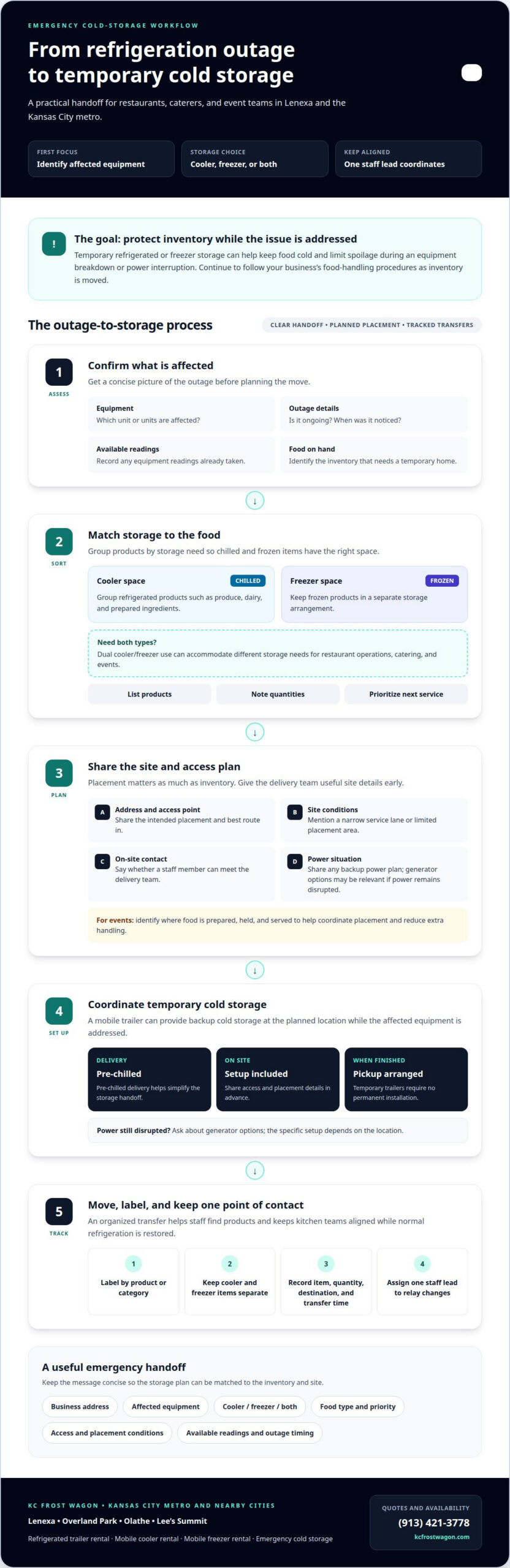
Start by identifying which units are affected, what food is inside, and whether the outage is ongoing. Note when staff first noticed the problem and any temperature readings already recorded. This gives the repair team and temporary cold-storage provider useful context.
Next, identify whether the inventory needs cooler or freezer storage. Chilled ingredients and frozen products require separate storage arrangements. A caterer holding frozen desserts and prepared ingredients, for example, may need both types of space. A restaurant with refrigerated produce and dairy has a different requirement. Grouping items by storage need helps staff avoid placing products in the wrong environment.
For emergency food storage rental in Lenexa, site details matter as much as inventory. The delivery location could be behind a restaurant on a tight service lane, beside a catering kitchen, or near a festival food area. Share the intended placement and access conditions early so delivery and setup can be planned around the site.
When an unexpected outage hits, communicate a concise handoff. Include the business address, the affected equipment, the type of food, and the immediate access conditions. Mention whether staff can meet the delivery team and point out any access restrictions. If the site has a backup power plan, share those details too. Generator options may be relevant when power remains disrupted, while the specific setup depends on the location.
- Identify whether the affected inventory needs cooler space, freezer space, or both.
- Share the delivery address and the best access point.
- Describe the outage, including whether it affects one unit or several.
- Provide any available equipment readings and the time staff noticed the problem.
- Explain site conditions, such as a narrow lane or limited placement area.
Seasonal demand can add pressure. A summer wedding, outdoor festival, or busy holiday service may leave little room to rearrange food storage. In those situations, the event lead should identify the locations where food is prepared, held, and served. That map helps coordinate delivery and reduces extra handling between the kitchen and temporary storage.
A mobile trailer is most useful when its placement works for the operation. Share a clear destination and practical access details, and tell staff which products belong in each storage area. KC Frost Wagon delivers, sets up, and picks up its trailers, which require no permanent installation. Continue to follow your business’s food-handling procedures as inventory is moved.
Once temporary storage is in place, assign one staff lead to coordinate transfers and communicate changes. A restaurant shift manager, for example, can relay which inventory has moved and whether the outage continues. One point of contact helps keep kitchen staff and the delivery team aligned while normal refrigeration is restored.
Keep the site plan focused on food storage and the trailer’s access and placement. In Lenexa, items manufactured for outdoor use and in working condition may be stored outside; examples include outdoor play equipment, patio furniture, barbecue grills, doghouses, lawn ornaments, garden hoses, and sprinklers.
These examples can help staff identify which non-food items fit that description when considering the available space. Keep the distinction clear in the handoff: the listed outdoor-use items may be stored outside when they are in working condition, while the affected chilled or frozen food still needs the appropriate temporary storage.
Food inventory protection and spoilage reduction
Protecting inventory starts with knowing what needs to move. A restaurant may have produce, dairy, prepared sauces, and frozen ingredients in one affected area. A wedding caterer may hold plated components, desserts, and backup ingredients in separate locations. Group products by storage need to plan transfers without mixing unlike items.
Before moving food, make an inventory snapshot. Record product names, quantities, current locations, and which items are needed first. A catering team might separate tonight’s dinner components from stock for a later event. This makes it easier to prioritize access and track what has moved.
Keep cooler and freezer inventory separate. Label containers and storage zones by category when a business has both types of products. A bakery, for example, can distinguish refrigerated fillings from frozen dough, making items easier to locate when service resumes.
Plan the order of access, too. Put items needed for the next service where staff can reach them easily, and group less urgent stock separately. A restaurant preparing lunch can prioritize those ingredients while keeping later-use inventory together. Follow the business’s existing food-handling procedures throughout each transfer.
Include access in the plan. Placing temporary storage near a kitchen may shorten trips for restaurant staff; a festival team may need a practical route between storage and food-preparation stations. Consider guest seating, public-facing service areas, and entrances when choosing a location so staff can move products without disrupting service.
Use a simple record as inventory moves. A designated staff member can note each item, quantity, destination, and transfer time. If a caterer moves trays of prepared food, the record helps the next shift locate them and gives managers a clearer view of remaining stock.
- Group products by cooler or freezer storage needs.
- Separate inventory for the next service from later-use stock.
- Mark each container with a clear product or category label.
- Record transfers so staff can find items and update counts.
Keep the storage area organized as inventory changes. Return products to their assigned zones and update the record when stock moves. At a wedding venue, keep dinner ingredients separate from late-event refreshments. At a restaurant, organized containers make it easier for the next shift to find what it needs.
Temporary cold storage supports the next step, but clear inventory practices still matter. When managers know what is stored, where it is housed, and what the operation needs forward, they can make calmer decisions about service and purchasing. For a Lenexa operation, discuss a temporary cold-storage plan that fits the site and inventory.
Before moving food, record product names, quantities, current locations, and priority items. Group cooler and freezer products separately, label containers by product or category, and keep next-service items easy to reach. Follow existing food-handling procedures and record each transfer’s item, quantity, destination, and time.
Kansas City metro service area, including Lenexa
Lenexa businesses need cold-storage support that fits local sites. A restaurant near 87th Street faces different access conditions than a wedding venue outside downtown. Kansas City metro locations range from commercial kitchens to outdoor festival grounds. Delivery planning starts with the exact address and site layout.
Lenexa is a useful base for businesses serving nearby communities. A caterer may prepare food in Lenexa and serve an event in Overland Park. A restaurant group may need temporary backup at one kitchen while another location stays open. Share each address to help coordinate placement and inventory movement.
For a Kansas City event, access can matter as much as distance. A venue may have a narrow service lane, shared loading area, or active public entrances. A festival site may have temporary fencing and scheduled vendor access. These details help determine where a trailer can be placed and how staff will reach it.
Outdoor events add another layer. A wedding planner may need cold storage near a catering tent, while keeping guest pathways clear. A festival organizer may have to account for vendor spaces, public circulation, and nearby equipment. Mention outdoor placement conditions early, including uneven ground or patio furniture that could restrict access.
Weather and seasonal schedules also shape planning across the metro. A summer event in Lee’s Summit may have a different layout from an indoor reception in Olathe. Choose a storage location that supports food transfers without disrupting service, and identify whether the inventory needs cooler or freezer space.
A flexible site plan helps if the first placement will not work. A restaurant’s delivery entrance could be blocked by a scheduled supplier, or a venue might shift its service area before guests arrive. Identify an alternate accessible location and share it alongside the primary placement.
- Provide the street address and the business or venue name.
- Describe gate access, loading areas, and any site restrictions.
- Identify whether placement is indoors or outdoors.
- Explain the route between storage and food-preparation areas.
- Share event timing or operating needs that affect access.
Nearby cities have different operating needs. Overland Park restaurants may need to keep a service entrance clear. Olathe caterers may coordinate storage with a separate prep kitchen, while Lee’s Summit festival teams may plan around vendor setup. Clear site notes help tailor delivery and placement to each location.
During an emergency, a concise location handoff saves confusion. Give the site contact’s name, the best arrival point, and directions from the street. At a hotel, identify the loading entrance rather than the public lobby. At a private venue, explain which gate leads to the catering area. These examples help crews reach the intended setup point.
Local planning means understanding the working space at each address. A compact restaurant lot may have little room beside the building, while an event site may have more open ground but stricter traffic flow. Businesses across the Kansas City metro should plan around each site’s access and placement needs.
Whether your need is in Lenexa, Kansas City, Overland Park, Olathe, or Lee’s Summit, share the address and access details first. Add the business or event schedule, storage needs, and preferred placement. KC Frost Wagon serves the Kansas City metro, including these communities.
Lee’s Summit festival teams can also check local property rules when planning temporary storage. In Lenexa, Kansas, a temporary storage container may be kept on a property for up to 30 days in a calendar year. Outdoor building materials for a home or lawn improvement project that does not require a building permit may be stored for up to 30 days, and dumpsters may remain on a driveway for 30 days or while a building permit is active. These limits can help teams coordinate storage when projects overlap.
Preferred language
Clear communication keeps an emergency handoff focused. If a Lenexa restaurant has a manager, kitchen lead, and delivery contact coordinating an outage, choose one person to communicate the request. Use familiar terms for cooler space, freezer space, access, and timing.
State your preferred language when arranging support. This helps set expectations without assuming everyone uses the same language. A kitchen manager, for example, can handle the call and relay the plan to staff in the team’s usual language.
Use specific descriptions instead of shorthand. “The walk-in stopped cooling” gives more context than “the unit is down.” “Frozen items are in the left reach-in” points staff to a particular location. Plain wording reduces confusion between the person reporting the issue and the team coordinating the response.
A useful handoff can follow a consistent order:
- Name the business and street address in Lenexa.
- Identify the affected cooler or freezer by location.
- Describe whether the inventory needs cooler space, freezer space, or both.
- Share the best contact person and preferred language.
- Explain the delivery entrance or other access detail.
Use consistent terms across calls, messages, and staff notes. If one employee calls a space “the prep cooler” and another calls it “the back unit,” clarify that they mean the same equipment. A label such as “kitchen prep cooler” gives everyone a shared reference.
For a wedding caterer, communication may involve a planner, venue manager, and kitchen crew. The planner can identify the venue contact, while the kitchen lead explains the food-storage categories. A short written handoff can record the agreed location, contact person, and cooler or freezer needs, reducing repeated explanations during setup.
Restaurants with multilingual teams can keep internal labels simple and consistent. Use matching labels on containers and a shared inventory sheet, identifying contents or storage categories clearly. Staff can then discuss the same items without relying on informal nicknames or assumptions.
For an outdoor festival, identify who can answer questions at the gate and direct the delivery team after arrival. A contact name, access point, and preferred language for the conversation make the handoff clearer. If the primary contact is busy, name a backup who knows the site.
Keep the first message focused on the essentials: the Lenexa address, equipment problem, storage type needed, and a reachable contact. Then add site directions or event context. This order helps the response team understand the request quickly.
For emergency coordination in Lenexa, call to discuss your cold-storage needs at (913) 421-3778. Share the preferred language, site contact, and storage need in direct terms. Those details help keep the conversation clear while your team manages the outage.
KC Frost Wagon
KC Frost Wagon provides fast emergency refrigeration response for Lenexa businesses facing equipment trouble. Refrigerated trailer rental offers temporary cold storage, with 12×6 and 16×6 cooler/freezer trailer options for different inventory needs.
Share the delivery location, access details, and whether your food needs cooler or freezer storage. Pre-chilled delivery, setup, pickup, and generator options can support the site’s needs. Service covers the Kansas City metro, including Overland Park, Olathe, Lee’s Summit, and nearby cities.
For a quote and availability, contact KC Frost Wagon about your cold-storage needs.
Put your cold-storage plan in motion
A refrigeration outage is easier to manage when the next steps are clear. Create a brief continuity plan for your Lenexa operation: name the response contact, identify a possible trailer placement, and decide how staff will keep inventory records current. A simple plan helps the team move from uncertainty to coordinated action.
For emergency food storage rental in Lenexa, prepare a concise request that explains your business or event, the immediate storage need, and the best way to reach your on-site contact. Clear information helps move the conversation toward a practical arrangement for your operation. It also gives your team a defined next step instead of leaving each shift to improvise.
Whether you’re protecting restaurant stock or preparing for a catered event, you can take that next step with Contact KC Frost Wagon. A clear plan starts the conversation and helps your team move forward with confidence.
Frequently Asked Questions
Are there emergency food storage units for rent in Lenexa, Kansas?
Yes. Lenexa businesses can rent temporary refrigerated trailers from KC Frost Wagon for an outage. The company serves Lenexa and nearby Kansas City metro communities, including Olathe and Overland Park. A trailer can provide backup for a restaurant during repairs or additional refrigerated holding space for a caterer. Share the Lenexa address and operating details when arranging a rental.
What types of emergency food storage are available to rent near Lenexa?
Options include refrigerated trailer rentals for cooler or freezer storage, depending on the inventory. Each trailer can connect to a dedicated 120 V outlet and is offered with or without a generator. For example, a restaurant can describe its available power connection and whether it needs chilled ingredients, frozen stock, or both. Those details help shape a setup suited to the site.

