
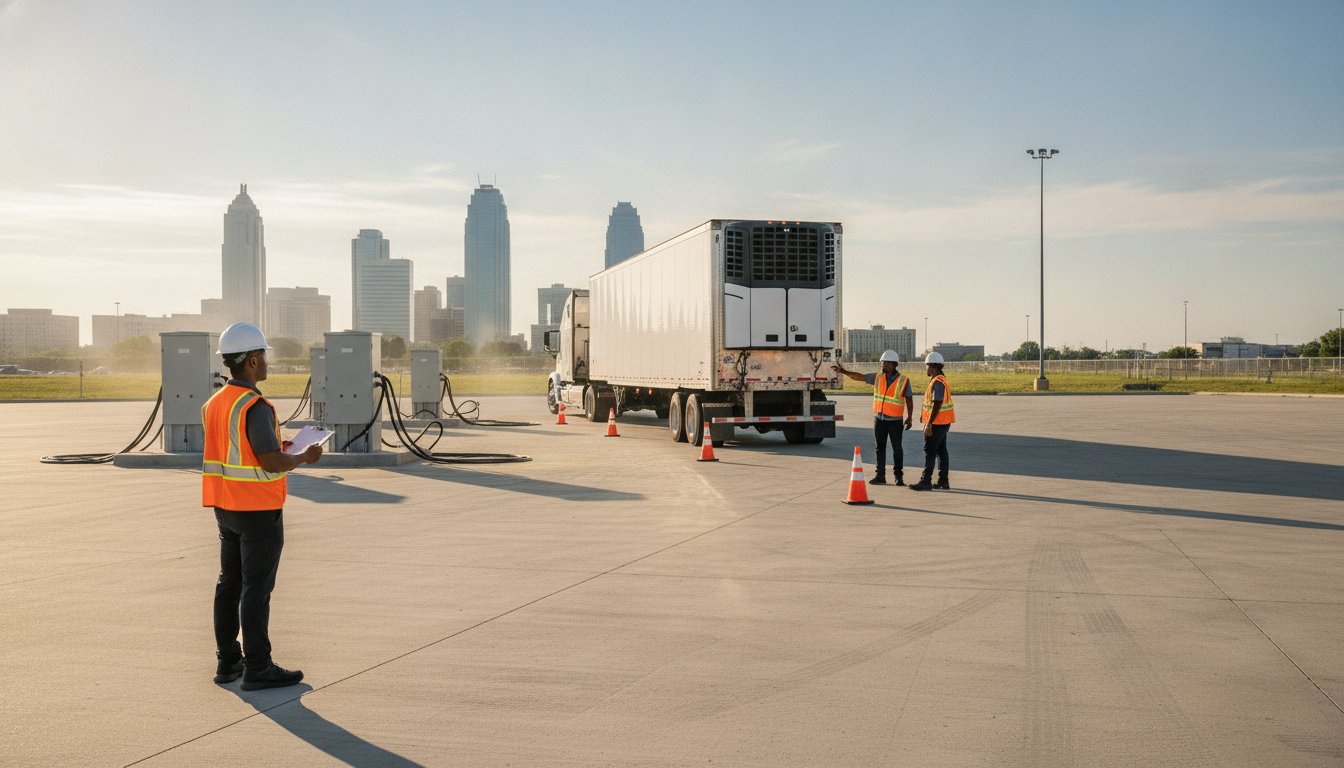
Imagine the catering truck is pulling up. The Kansas City sun is beating down. Your backup cooling arrives, but it won’t fit in the narrow alley. That’s a nightmare scenario that ruins inventory and spikes stress. Understanding the refrigerated trailer delivery requirements before the driver pulls in is the difference between a chilled success and a total meltdown. You shouldn’t be the one scrambling for an extension cord while the ice melts.
We agree that you have enough on your plate without worrying about electrical phases or tight turn radiuses. You need this setup to be fast and reliable so you can focus on your guests or your kitchen. This guide will teach you exactly how to prepare your site for a seamless delivery and immediate cooling. We’re providing a clear checklist of site needs, explaining those confusing plug types, and even covering power alternatives like generators for remote spots. You’ll gain the confidence to handle the logistics like a pro so your inventory stays crisp and cold from the moment we arrive.
Key Takeaways
- Measure your footprint. You need enough clearance for both the trailer and the tow vehicle, especially in tight Kansas City alleys.
- Lock down your power. Identify your plug type and secure a dedicated circuit to prevent tripped breakers and ensure consistent cooling.
- Master the refrigerated trailer delivery requirements to ensure your unit starts chilling the second it hits the ground.
- Clear the path. Move dumpsters, cars, and equipment before the driver arrives to keep the setup fast and stress free.
- Prepare for remote sites. Learn when to use a generator to keep your inventory crisp when a standard outlet isn’t available.
Why Refrigerated Trailer Delivery Requirements Matter
A refrigerated trailer is only as effective as the site it lands on. You can rent the most powerful unit available, but if the ground is soft, the power source is wrong, or the access lane is blocked, that trailer becomes an expensive problem instead of a solution. Understanding refrigerated trailer delivery requirements isn’t a formality. It’s the foundation that determines whether your inventory stays cold or your event turns into a crisis.
Think about what’s actually at stake. Perishable inventory, catering stock, restaurant overflow, event beverages — these aren’t replaceable on short notice. A trailer that can’t reach temperature fast enough because of a power issue or a unit that sits unlevel and drains inefficiently puts everything you’ve stored at risk. The equipment is only half the equation. The site you prepare is the other half.
The Cost of Poor Preparation
Improper power sources are the most common culprit behind equipment strain. Plugging into an undersized circuit forces the compressor to work harder, which shortens its lifespan and slows the cooldown process. An unlevel surface creates a second problem: refrigeration units rely on proper drainage and refrigerant flow, and even a slight tilt can compromise both. Understanding basic refrigerated container specifications clarifies why these physical and electrical conditions matter so much before the unit ever arrives.
Then there’s access. A driver who can’t safely maneuver a trailer into your site will refuse the delivery. That’s not a policy. It’s a safety call. Blocked alleys, low-hanging branches, and parked vehicles all create delivery refusals that leave you without cold storage at the worst possible moment.
Meeting Local Safety Standards
Kansas City metro fire and safety codes require clear emergency exit paths at both commercial properties and event venues. A trailer positioned incorrectly can block those routes and create a compliance issue that shuts down your operation entirely. Cable management matters too. Power cords running across walkways at an outdoor event are a trip hazard and a liability. Proper site prep means routing cables safely, securing them flat, and keeping foot traffic areas clear. These aren’t optional details. They’re the difference between a smooth setup and a dangerous one.
A prepared site protects your inventory, protects your guests, and keeps the delivery moving fast. The Ready-for-Anything team at KC Frost Wagon is built to move efficiently, but even the best crew needs a site that’s ready to receive them.
Physical Space and Access Requirements
Space is the first thing to solve. Before you confirm a delivery date, walk your site and measure it honestly. A refrigerated trailer delivery requirement that catches people off guard isn’t the electrical setup or the surface grade. It’s the raw footprint. You need room for the trailer itself plus the tow vehicle, and both have to move together. That combination is longer than most people expect.
Our drivers are skilled at maneuvering in tight spots, but physics doesn’t negotiate. A blocked alley in the Crossroads, a low-hanging utility line in Westport, or a narrow service entrance in Independence can stop a delivery cold before the trailer ever drops. Walk your site before we arrive. Look up, look around, and look down.
Measuring for 6×12 and 6×16 Trailers
The 6×12 trailer is the more compact option, making it the right call for tight restaurant back lots or event spaces with limited staging areas. The 6×16 gives you significantly more interior capacity, which suits catering operations and large event overflow. For either unit, plan your clearance this way:
- Total length with tow vehicle: Budget at least 35 to 40 feet of straight clearance for the combined rig during delivery and unhitching.
- Door swing clearance: The rear doors need a minimum of 4 to 5 feet of open space behind the trailer for full swing and practical loading access.
- Vertical clearance: The cooling unit mounted on the nose of the trailer adds height above the trailer box itself. Confirm that any overhead obstruction, including tree branches, awnings, or alley overhangs, clears at least 9 feet from ground level.
- Side buffer: Leave at least 18 inches on each side of the trailer for ventilation and safe access.
If you’re unsure whether your site meets these numbers, reach out to the KC Frost Wagon team before delivery day. A quick site conversation saves everyone time.
Surface and Leveling Needs
The surface under your trailer matters more than most renters realize. Refrigeration compressors depend on proper refrigerant flow and drainage, and both are sensitive to tilt. A surface that’s off-level by even a few degrees can strain the compressor over time and reduce cooling efficiency from the first hour of operation.
Here’s how common surfaces stack up:
- Concrete or asphalt: The best option. Firm, stable, and usually level enough. Check for significant slope before confirming the spot.
- Compacted gravel: Acceptable if it’s dense and well-graded. Loose gravel shifts under weight and can create an unlevel situation after the trailer settles.
- Grass or turf: Risky. Soft ground compresses under a loaded trailer, and wet grass after a Kansas City summer storm can cause the unit to sink and tilt. Use plywood sheets or ground protection panels if grass is your only option.
Sloped parking lots in areas like Liberty or Independence are common. If your lot drains toward a curb, identify the flattest row before the driver arrives and mark it clearly. Leveling blocks can compensate for minor grade, but the driver needs to know the plan before they back in. Proper ground conditions are a core part of the refrigerated trailer delivery requirements that protect both the equipment and your inventory from the moment the unit is set.
One more thing to check: weight capacity. A loaded 6×16 freezer trailer puts significant concentrated weight on a small footprint. Older asphalt with subsurface cracking or deteriorated concrete near drainage grates can crack or sink. If your surface looks questionable, flag it. We’d rather adjust the placement than deal with a trailer that’s shifted overnight. Reviewing OSHA electrical safety standards alongside your physical site prep is also smart practice, since surface conditions directly affect how safely power cables can be routed from the trailer to your power source.
Electrical and Power Requirements
Space and surface prep get your trailer on the ground. Power keeps it running. This is the refrigerated trailer delivery requirement that most renters underestimate until the breaker trips and the compressor goes silent. Getting the electrical side right before the driver leaves is non-negotiable.
Start with one simple rule: the circuit your trailer plugs into should do nothing else. No shared outlets. No daisy-chained power strips. No extension cords running through a kitchen where other equipment is already drawing load. A dedicated circuit means the trailer’s compressor gets clean, consistent power from the moment it starts cycling. That matters most during the first hour, when the unit is working hardest to pull down temperature.
Amperage and Voltage Basics
Standard household outlets run at 110V and 15 to 20 amps. That’s enough for a lamp or a phone charger. It is not enough for a refrigeration compressor under load. A 6×16 freezer trailer typically requires a 30-amp, 220V dedicated circuit to operate efficiently and maintain target temperatures without straining the system.
The gap between what a standard outlet provides and what a cooling unit needs is where problems start. Plugging into an undersized circuit forces the compressor to draw more current than the line can safely carry. That trips breakers, overheats wiring, and in worst cases, damages the unit’s motor. Thin extension cords compound the problem. Resistance increases with cord length, which means voltage drops before it even reaches the trailer. A 50-foot, 10-gauge cord is a very different tool than a 100-foot, 16-gauge cord from a hardware store. Never use the latter for high-draw cooling equipment.
Before delivery day, locate your electrical panel, identify the available circuit amperage, and confirm the plug type at your access point. If you’re unsure whether your setup qualifies, call an electrician or reach out to the KC Frost Wagon team. We’d rather troubleshoot this before the truck rolls than after.
Generator Setup for Events
Remote Kansas City venues, outdoor festival grounds, and rural event sites often have no reliable shore power at all. That’s where a generator becomes the plan, not the backup.
Sizing matters here. A refrigeration compressor draws significantly more wattage at startup than it does during steady operation. Plan for a generator with enough surge capacity to handle that initial spike without stalling. As a working baseline, budget for a generator rated at least 5,000 to 6,000 running watts for a trailer unit, with higher surge capacity available for the startup draw.
Inverter generators are the better choice for sensitive cooling equipment. They produce cleaner, more stable power with less harmonic distortion than conventional open-frame generators. That consistency protects the compressor’s electronics and keeps the unit cycling correctly over a long event. Conventional generators work, but they’re harder on the equipment over time.
Fuel planning is equally critical. A generator that runs dry at midnight takes your cold storage with it. Calculate your expected runtime, add a buffer, and keep reserve fuel on site.
If you’re facing a situation where your facility’s power has already failed and you need cold storage immediately, the 24/7 Emergency Refrigeration service is built for exactly that scenario. Power outages don’t keep business hours, and neither does the response.

The Delivery Day Checklist
Everything you’ve planned comes down to this moment. The driver is en route. Your window to fix problems is closing fast. Running through a tight checklist in the hour before arrival is the difference between a smooth drop and a scramble. These refrigerated trailer delivery requirements aren’t bureaucratic boxes to tick. They’re the last line of defense between your inventory and a very expensive afternoon.
Start with the obvious stuff that’s easy to forget. Move the cars. Roll the dumpsters. Shift the event equipment staging that crept into the access lane overnight. Walk the path the driver will take from the street to your drop point and remove anything that wasn’t there when you originally measured the space. Catering setups shift. Event vendors park where they shouldn’t. A clear path at 8am doesn’t guarantee a clear path at noon.
Then test your power source before the driver arrives. Plug in a high-draw appliance or use a circuit tester to confirm the outlet is live and delivering the correct voltage. A dead outlet discovered after the driver unhitches the trailer wastes everyone’s time and delays your cooldown window significantly.
Assign a single point of contact for the delivery. One person. One phone that stays on. That person knows where the drop spot is, has the gate code or loading dock key ready, and can make decisions without running to find someone else. Confusion at the handoff slows setup and frustrates drivers who are running a tight schedule.
Final Site Walkthrough
Do one last visual sweep thirty minutes before the estimated arrival. Look up for overhead obstructions, including tree branches that may have shifted, temporary event structures, or string lights someone hung across the access lane. Check the ground. If it rained overnight in the KC metro, soft spots can appear in areas that looked solid the day before. Confirm the surface is dry, stable, and ready to hold weight without shifting once the trailer settles.
Communication with Your Driver
Generic addresses don’t always work in places like Olathe or Overland Park, where large commercial properties have multiple entrances. Text your driver the specific gate, entrance name, or landmark they should use. Confirm the orientation of the trailer doors before they back in. Do you need the rear doors facing your kitchen entrance, your tent, or your loading dock? That detail shapes how the driver positions the unit, and changing it after unhitching is a significant delay.
For the full rental process from booking to final setup, How to Rent a Refrigerated Trailer walks through every step with the same level of detail. Once the unit is set and plugged in, expect a pull-down period before loading your inventory. A trailer starting at ambient temperature needs time to reach its target range. Load too early and you’re warming the unit from the inside. Give it the time it needs, and your inventory stays protected from the first item in to the last item out.
Ready to confirm your site and lock in your delivery? Reach out to the KC Frost Wagon team and we’ll walk through your specific setup before the driver ever leaves the lot.
KC Frost Wagon: Your Ready-for-Anything Partner
Most cold storage rental companies operate a dispatch board. You call, they route a driver, and you hope the unit shows up on time. KC Frost Wagon works differently. This is a local, owner-operated service built specifically for the Kansas City metro, which means the team knows the difference between a loading dock in the Crossroads and a narrow service lane in Olathe. That local knowledge isn’t a marketing line. It’s the reason deliveries happen on schedule and setups go smoothly.
Our 6×12 and 6×16 trailers are sized for real commercial sites, not just wide-open warehouse lots. Both units feature ground-level entry, which makes loading fast and practical whether you’re moving sheet pans from a catering truck or restocking beverage inventory at a festival. When you’ve already walked through the refrigerated trailer delivery requirements and prepped your site, the driver arrives ready to assist with leveling and initial power-up so the unit reaches temperature as fast as possible.
Emergency and Event Specialization
Walk-in coolers fail without warning. When yours does, the clock starts immediately. KC Frost Wagon’s 24/7 emergency response is built for exactly that moment, whether it’s a restaurant on the Country Club Plaza losing cold storage on a Friday night or a catering company in Lee’s Summit facing a compressor failure the morning of a 300-person event. You get cold storage on site fast, not a callback during business hours.
On the event side, Kansas City weddings and outdoor festivals have specific demands that a generic freight carrier can’t meet. Venue access windows are tight. Setup timelines don’t flex. The team understands those pressures and tailors the delivery around your schedule, not the other way around. That’s the practical value of working with a local partner instead of a national platform that treats your event like a line item in a routing algorithm.
Next Steps to Secure Your Trailer
Getting started is straightforward. Here’s how to move quickly:
- Share your site details. Describe your drop location, surface type, and power access when you request a quote. The more specific you are upfront, the faster the team can confirm your setup.
- Consult on power and space. If anything from this guide raised a question about your circuit, your clearance, or your surface, bring it to the conversation. The team will work through it with you before the driver leaves the lot.
- Lock in your date. Availability moves fast around major Kansas City events and summer catering season. Don’t wait until the week before.
You’ve done the work to understand what a successful delivery looks like. Now put that preparation to use. Book your refrigerated trailer today and let the KC Frost Wagon team handle everything from the drop to the first degree of cooling.
Your Cold Storage Is Ready When You Are
Site prep isn’t paperwork. It’s the work that keeps your inventory safe from the moment the trailer drops. You now understand the refrigerated trailer delivery requirements that separate a smooth setup from a costly delay: clear access, a level surface, a dedicated circuit, and a single point of contact ready when the driver arrives.
Three things make the difference on delivery day. Measure your footprint before you confirm the date. Verify your power source before the driver leaves the lot. Clear the path so setup moves fast. Do those three things and the rest falls into place.
KC Frost Wagon brings local KC metro expertise, ground-level loading for practical access, and 24/7 emergency support when the situation can’t wait until morning. Your inventory doesn’t get a second chance once the temperature climbs.
Don’t leave cold storage to chance. Secure your cooler or freezer trailer rental now and get a partner who’s ready before you even need to ask.
Frequently Asked Questions About Refrigerated Trailer Delivery Requirements
What kind of electrical outlet do I need for a refrigerated trailer?
You need a dedicated 30-amp, 220V outlet, not a standard household plug. Standard 110V outlets at 15 to 20 amps can’t sustain a refrigeration compressor under load. The circuit should serve the trailer exclusively, with nothing else drawing from the same line. If you’re unsure what your panel supports, check with an electrician before delivery day, not after the driver arrives.
Can the trailer be placed on grass or dirt?
Grass and dirt are risky surfaces, but they’re not automatic dealbreakers. The real concern is stability under load. Soft ground compresses once a loaded trailer settles, which can create a tilt that strains the compressor and reduces cooling efficiency. If grass is your only option, lay plywood sheets or ground protection panels beneath the trailer footprint to distribute the weight and keep the unit level throughout your rental period.
How much space does a 6×16 freezer trailer actually take up?
The trailer box itself is 6 feet wide and 16 feet long, but that’s only part of the picture. The cooling unit mounted on the nose adds length at the front, and you’ll need at least 4 to 5 feet of clear space behind the rear doors for practical loading access. Factor in 18 inches of buffer on each side for ventilation. Total combined rig length during delivery runs 35 to 40 feet, so plan your access lane accordingly.
Do I need to provide my own extension cords for the delivery?
Don’t assume a standard hardware store cord will work. If an extension cord is needed to reach your power source, it must be rated for the amperage your trailer draws. A long, thin-gauge cord creates resistance that drops voltage before it even reaches the unit, which forces the compressor to work harder. Use a heavy-duty, 10-gauge cord at minimum, and keep the run as short as possible. Confirm cord requirements with the KC Frost Wagon team before delivery day.
Can I run the refrigerated trailer off a portable generator?
Yes, and for remote sites it’s often the best plan. Size matters significantly here. Budget for a generator with at least 5,000 to 6,000 running watts, plus enough surge capacity to handle the compressor’s startup spike, which draws considerably more than steady-state operation. Inverter generators produce cleaner, more stable power than conventional open-frame models and are easier on the unit’s electronics over a long event. Keep reserve fuel on site so a dry tank doesn’t take your cold storage offline at midnight.
What happens if my site isn’t perfectly level?
Even a few degrees of tilt can compromise refrigerant flow and drainage inside the unit, which reduces cooling efficiency and puts extra wear on the compressor from the first hour of operation. Minor grade can be corrected with leveling blocks, but the driver needs to know the situation before backing in so they can plan the approach. Flag any slope in your site when you book so the team arrives prepared rather than improvising on the spot.
How much clearance is needed for the delivery truck to drop the trailer?
Meeting refrigerated trailer delivery requirements starts with straight-line clearance. Budget at least 35 to 40 feet of unobstructed space for the combined tow vehicle and trailer during the backing and unhitching process. Vertical clearance is equally important: the cooling unit on the trailer nose means you need a minimum of 9 feet of overhead clearance along the entire approach path. Low branches, awnings, and alley overhangs are the most common surprises, so look up when you walk your site.
Does someone need to be on-site when the trailer is delivered?
Yes, and it should be one specific person with decision-making authority, not whoever happens to be nearby. That person needs to know the confirmed drop location, have access to any locked gates or loading areas, and be reachable by phone from the moment the driver departs. They should also confirm door orientation before the trailer is backed in, since repositioning after unhitching costs significant time. Designate your point of contact before delivery day and make sure they’re available for the full arrival window.

