
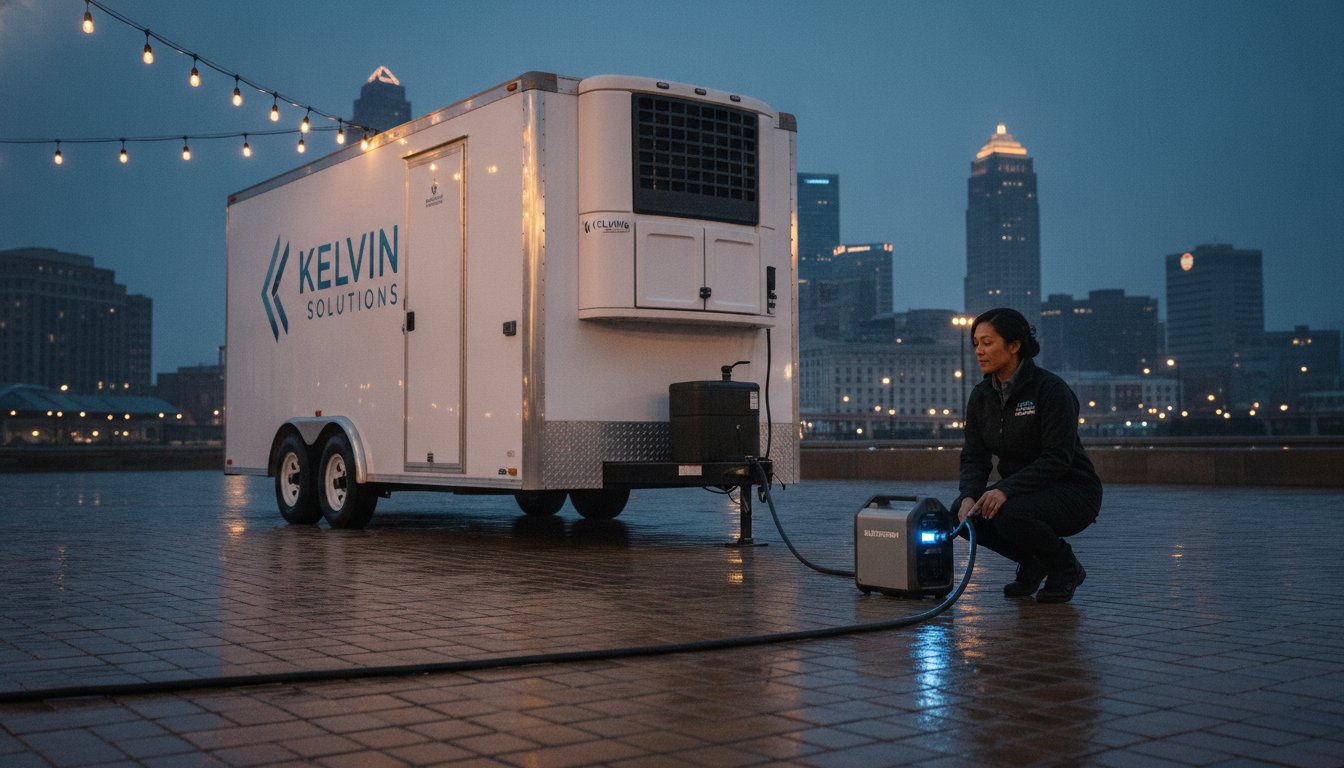
Last summer, a local caterer in Kansas City watched $5,000 in prime rib slowly thaw because a generator “nuisance tripped” at midnight. It wasn’t a mechanical failure. It was a simple misunderstanding of starting watts. You’ve worked too hard on your inventory to let a power mismatch ruin your event or emergency backup plan. It’s stressful to stand in front of a control panel wondering if your setup will actually hold through the heat of the night.
This guide simplifies the complex refrigerated trailer generator requirements you need to know for 2026. You’ll master the exact wattage and cord specs required to keep things frozen without risking a total equipment shutdown. We’ll break down the difference between starting and running loads, explain why the right extension cord is your best insurance policy, and show you how to choose a generator that won’t quit when you need it most. Get ready to build a fail-safe power setup that protects your bottom line and your peace of mind.
Key Takeaways
- Master the interaction between amps, watts, and volts to prevent nuisance tripping during high-demand cooling cycles.
- Identify the specific refrigerated trailer generator requirements for 2026 to keep your inventory safe at any remote site.
- Learn why standard 110V/15-amp compatibility makes mobile refrigeration accessible without specialized electrical upgrades.
- Use our site setup checklist to prevent compressor failure by ensuring perfect trailer leveling and power testing.
- Know exactly when to switch from shore power to a generator to maintain 24/7 cooling reliability during an emergency.
Understanding Refrigerated Trailer Power: Amps, Watts, and Volts
Power isn’t a mystery; it’s physics. To keep your inventory frozen, you have to master the relationship between volts, amps, and watts. Think of voltage as the pressure pushing electricity through the wires. Amperage is the volume of that flow. Wattage is the final result of the work being done. When you’re calculating refrigerated trailer generator requirements, missing just one of these variables can lead to a warm trailer and a ruined day. You need a setup that handles the pressure without breaking a sweat.
Don’t mistake these commercial units for the small 12V portable coolers you’d take on a camping trip. Those use simple thermoelectric plates or tiny motors. Professional trailers utilize industrial mechanical refrigeration systems designed to hold food-safe temperatures even in the sweltering Kansas City humidity. These systems require a stable, high-amperage connection that a simple car battery or a cheap portable power station just can’t provide. You’re moving heat out of a massive space. That takes real muscle.
The compressor is the heart of the unit. It doesn’t run constantly. Instead, it cycles on when the internal temperature rises and shuts off once the goal is met. This cycling creates a fluctuating power demand. On a 100-degree afternoon in Independence, your unit will cycle frequently. Every time it kicks on, it demands a sudden, sharp intake of energy. If your power source is already strained, this is exactly when the breaker will trip. Your power setup must be ready for these peak moments, not just the quiet ones.
Starting Watts vs. Running Watts
Compressors are heavy lifters. They need a massive “kick” of energy to start the motor from a dead stop. This is the difference between “running watts,” what it needs to stay cold, and “starting watts,” the burst needed to begin. Surge wattage is the peak power required for 1-3 seconds during compressor startup. If your generator only covers the running watts, it’ll stall the moment the cooling cycle begins. You need that extra overhead to handle the surge every single time.
Converting Amps to Watts for Site Planning
Math saves events. Use the simple formula: Amps x Volts = Watts. Most standard outlets provide 120 volts. If your trailer is rated for 15 amps, you’re looking at 1,800 watts of draw. Locate the electrical data plate on the trailer frame to find these exact numbers. Never max out your power source. Always plan for 20% “headroom” in your capacity. This buffer ensures that heat-induced resistance or long cord runs don’t starve the compressor. Understanding these refrigerated trailer generator requirements ensures your setup stays cold, no matter how hard the sun beats down.
Commercial Trailer Specs: The 110V Plug-and-Play Advantage
Most people assume they need a massive industrial hookup to run a freezer. They don’t. KC Frost Wagon trailers use a standard 110V/15-amp NEMA 5-15 plug. That’s the same three-prong outlet you have in your kitchen or garage. This accessibility means you can set up a cooling station in a parking lot, behind a restaurant, or at a backyard wedding without hiring an electrician. Understanding these refrigerated trailer generator requirements allows you to skip the expensive electrical upgrades and focus on your event.
Modern engineering has changed the game. In the past, mobile cold storage often required “industrial” 220V power or noisy diesel engines. Today, high-efficiency compressors allow our 6×12 and 6×16 units to maintain sub-zero temperatures on a standard circuit. While the 6×16 has more cubic feet to cool, the electrical footprint remains remarkably similar to the 6×12. This shift toward electric efficiency aligns with broader industry trends, such as the CARB TRU Regulations, which push for cleaner, zero-emission technology in transport refrigeration.
If you’re looking for a refrigerated trailer rental Kansas City businesses trust, verify your outlet’s capacity before the unit arrives. A quick check now prevents a crisis later.
The Necessity of a Dedicated Circuit
You can’t share. A refrigerated trailer needs its own “lane” on the electrical highway. If you plug into a circuit that’s already powering a coffee maker, a toaster, or even high-intensity lights, you’re asking for a blackout. This “nuisance tripping” usually happens at the worst possible time, like in the middle of a dinner rush or a wedding reception. Find a dedicated circuit at your venue by checking the breaker box or using a simple circuit tester.
Extension Cord Safety: Gauge Matters
Don’t reach for that thin orange cord in the garage. Those are for leaf blowers, not freezers. Heavy-duty refrigeration requires 10-gauge or 12-gauge outdoor-rated cords. Using a thin cord causes a voltage drop, which starves the compressor and generates heat. Keep your runs under 50 feet. Anything longer increases resistance, which can fry the motor. Meeting these refrigerated trailer generator requirements is about safety as much as it is about cooling performance.
Powering Your Mobile Freezer: Generators vs. Shore Power
Choosing between a wall outlet and a roaring engine depends entirely on your location. Shore power is the gold standard. It’s quiet. It’s cost-effective. It’s reliable. If you’re hosting an event at a venue in Overland Park or a country club in Leawood, you likely have access to a stable electrical grid. Plugging into a building’s power is the best way to ensure 24/7 cooling without the hassle of refueling. It removes the variables of mechanical failure and fuel logistics from your plate.
Sometimes, the grid isn’t an option. Festivals, remote construction sites, and emergency disaster zones require a portable solution. When the power goes out across Kansas City, a generator becomes your inventory’s only lifeline. You can’t just grab any unit from the local hardware store and hope for the best. Understanding the specific refrigerated trailer generator requirements is what separates a successful event from a total loss. You need a machine that can handle the relentless cycling of a commercial compressor.
The type of generator matters as much as the size. Standard portable generators can produce “dirty” power with inconsistent voltage. Modern refrigeration units use sensitive digital control boards. These boards don’t like spikes. We strongly recommend inverter generators. They provide clean, stable sine-wave power. They’re also significantly quieter, which your guests or neighbors will appreciate. If you’re running 24/7 during an outage, plan your fuel logistics carefully. Most portable units need a top-off every 8 to 12 hours. Don’t let the tank run dry at 3:00 AM.
Sizing Your Generator Correctly
Sizing is where most people make a critical mistake. You have to account for the startup surge, not just the running load. We recommend a 6000W minimum generator for our commercial trailers. This provides the “kick” needed to start the compressor even in high heat. If you plan to run lights, pumps, or registers on the same circuit, you’ll need even more headroom. Reliable brands like Honda or Generac are industry favorites for a reason. They don’t quit when the demand peaks. Following these refrigerated trailer generator requirements ensures your setup is fail-safe.
Shore Power Best Practices
Before your 6×16 freezer trailer for rent arrives, perform a power audit. Don’t assume an outlet is active or dedicated. Talk to the venue’s facility manager or event electrician. They can secure a clean power drop and verify that the circuit isn’t shared with heavy kitchen equipment. We always suggest using a high-quality surge protector. It’s a simple layer of defense against unstable voltage in older buildings or temporary event setups. Verify your amperage early so we can plug in and start cooling the moment we drop the trailer.
Site Setup Checklist: Ensuring 24/7 Cooling Reliability
Preparation beats panic. Every single time. Before our team pulls into your driveway or venue, you need a plan. A solid site setup ensures your equipment performs at peak efficiency from the moment it’s plugged in. A pre-rental power audit is your first step. Don’t just look at the outlet; test it. Use a multimeter or a simple plug-in tester to confirm you’re getting a full 110V-120V. Meeting these refrigerated trailer generator requirements starts with the source.
Leveling is non-negotiable. A tilted trailer is a ticking time bomb for the cooling system. If the unit isn’t level, compressor oil can’t circulate properly. This leads to friction, heat, and eventually, total equipment failure. We provide the leveling jacks; you provide the flat ground. Next, give the condenser room to breathe. It needs at least three feet of clearance for proper airflow. If you box it in, the heat it removes from the trailer has nowhere to go. It will overheat and shut down. Monitor the temperature closely during the first two hours. This is the “pull-down” phase. It’s when the unit works the hardest to reach your set point. If the numbers aren’t dropping steadily, check your power source immediately.
Need to secure your setup now? Book your refrigerated trailer rental today and let us handle the heavy lifting.
The ‘Kansas City Heat’ Factor
Kansas City summers don’t play fair. When temperatures hit 95°F or higher in Independence or Blue Springs, your trailer’s electrical draw spikes. The hotter the air, the harder the compressor works to move heat out. Strategic placement is your best defense. Park in the shade of a building or under trees to minimize direct sun exposure on the trailer’s roof and walls. Also, pre-cool your inventory. Putting warm pallets of soda or meat into a cold trailer forces the unit into an endless cycle. Load cold, stay cold. It’s the most efficient way to maintain refrigerated trailer generator requirements without overworking the motor.
Emergency Power Failure Protocols
If the lights go out, don’t freeze up. Follow this 3-step reset: flip the trailer power switch to “Off”, reset the breaker at the source, and wait two minutes before flipping the trailer back “On”. This prevents a surge from damaging the control board. Remember the “4-hour rule.” According to food safety standards, most inventory remains safe for four hours if the doors stay shut. If the outage lasts longer, you need a backup. Don’t wait for the ice to melt before calling for emergency refrigeration rental support. We’re ready to intervene before your inventory becomes a total loss.
KC Frost Wagon: Plug-and-Play Cold Storage Solutions
Technical specs matter, but your primary goal is simple. You want your inventory to stay cold. We provide the muscle and the expertise to make that happen without the technical headache. Our 6×12 and 6×16 refrigerated trailers are engineered for maximum efficiency. They run on standard 110V power. This means you don’t need a specialized electrician or a massive industrial power drop to keep your products frozen. We’ve designed our fleet to be the ultimate “plug-and-play” solution for the Kansas City metro area.
We don’t just drop off a trailer and disappear. Our “No-Hassle” setup process includes a full power verification. We check your outlet’s voltage. We verify the amperage. We ensure your site meets all refrigerated trailer generator requirements before we leave. If you’re running off a generator, we’ll help you confirm the wattage is sufficient for that critical startup surge. Our service area stretches from St. Joseph down to the Lake of the Ozarks. Whether you’re in the heart of the city or at a remote event site, we bring the cold to you.
Emergencies don’t follow a schedule. That’s why we offer 24/7 expert support. If a storm knocks out power in Lee’s Summit or a compressor fails at your restaurant in Overland Park, we are just a phone call away. You get peace of mind knowing that a “Ready-for-Anything Expert” is managing your cold storage logistics while you handle your business.
Why Local Businesses Trust Our Setup
Reliability isn’t just a buzzword; it’s our track record. Last summer, a popular restaurant in Liberty faced a total inventory loss during a 48-hour blackout. We arrived within two hours. We set up a 6×16 unit, verified their backup refrigerated trailer generator requirements, and saved over $10,000 in perishable stock. Our ground-level units are a favorite for catering teams. They offer easy access without the steep ramps or dangerous lift gates found on traditional reefer trucks. You can move product in and out quickly, which keeps the cold air where it belongs. Learn how to rent a refrigerated trailer with our streamlined, three-step process designed for busy professionals.
Ready to Secure Your Cold Storage?
Don’t wait for a crisis to find a solution. Booking your trailer is fast and straightforward. We’ll walk you through your site’s specific power needs and schedule a delivery that fits your timeline. Our professional team handles the leveling, the connection, and the initial temperature pull-down. We verify everything so you can focus on your event or your recovery. Ready to get started? Contact KC Frost Wagon for a quote and secure your fail-safe refrigeration today.
Lock In Your Cold Storage Strategy
Mastering your power setup is the difference between a successful event and a logistical disaster. You now understand how to balance starting and running watts to avoid nuisance tripping. You know that a dedicated circuit and the right gauge extension cord are non-negotiable for 24/7 reliability. Most importantly, you’ve seen how simple refrigerated trailer generator requirements can be when you use the right equipment. Knowledge is your best insurance policy against the Kansas City heat.
Don’t leave your inventory to chance. We provide standard 110V plug-and-play trailers that eliminate the need for complex electrical work. Our team is ready to intervene with 24/7 emergency service across the entire KC Metro. Whether you’re planning a wedding in Lee’s Summit or facing a breakdown in Overland Park, we handle the technical details so you can stay focused on your guests or your business. We’re the local partner you can count on when the stakes are high.
Get a Quote for Your Portable Freezer Rental and secure your peace of mind today. You’ve got the plan. Now get the gear that won’t quit on you. We’re ready when you are.
Frequently Asked Questions
Can I run a freezer trailer on a standard 110V household outlet?
Yes, you can. Our 6×12 and 6×16 trailers are specifically designed to run on a standard 110V/15-amp circuit. This makes them a true plug-and-play solution for most homes and businesses in Kansas City. Just make sure the outlet is grounded and not shared with other high-draw appliances like coffee makers or microwaves.
What size generator do I need for a 16-foot freezer trailer?
You need a generator with a minimum of 6000 starting watts. While the running wattage is much lower, the compressor requires a massive burst of energy to kick-start the cooling cycle. Meeting these refrigerated trailer generator requirements ensures your unit won’t stall or trip the generator’s internal breaker during the initial startup surge.
Will a 100-foot extension cord work for my portable freezer?
No, we don’t recommend using a cord that long. A 100-foot run causes a significant voltage drop, which starves the compressor and can lead to permanent motor damage. Stick to a heavy-duty 10-gauge or 12-gauge outdoor-rated cord and keep the total length under 50 feet to maintain a safe, steady flow of power.
Why does my freezer trip the breaker every time it starts up?
This is usually caused by “starting watts” exceeding the circuit’s capacity. Compressors require a sudden peak of energy for 1-3 seconds to begin the cooling cycle. If your circuit is already powering other equipment, or if the wiring is too thin for the distance, the sudden demand will trip the breaker to prevent a fire.
How much electricity does a commercial freezer trailer use per day?
Usage varies based on the ambient temperature and how often the doors are opened. On a mild day, the unit cycles less frequently and uses minimal power. In the peak of a Kansas City summer, the compressor works harder to fight the heat, which naturally increases the total daily energy consumption to maintain food-safe temperatures.
Can I run a portable freezer on a GFCI outlet?
You can, but it’s prone to “nuisance tripping.” GFCI outlets are designed to detect tiny electrical leaks, and the massive motor inside a refrigeration compressor can sometimes trigger a false alarm. For maximum reliability, we recommend using a standard dedicated outlet to avoid an unexpected power loss while you’re away.
What happens to the power draw when the trailer is empty vs. full?
A full trailer is more energy-efficient because the frozen product acts as a “thermal battery.” Once your inventory is at the set temperature, it helps hold the cold inside. An empty trailer is filled with air that escapes every time you open the door, forcing the compressor to cycle more often to cool the new, warm air.
Is it safe to run a freezer trailer in the rain or snow?
Yes, our units are fully weather-rated for outdoor use. However, you must keep the electrical connection points dry to prevent shorts. Use a weather-rated cover for the plug and keep all cords out of standing water. Following these refrigerated trailer generator requirements keeps your equipment running safely through any Kansas City storm.

