
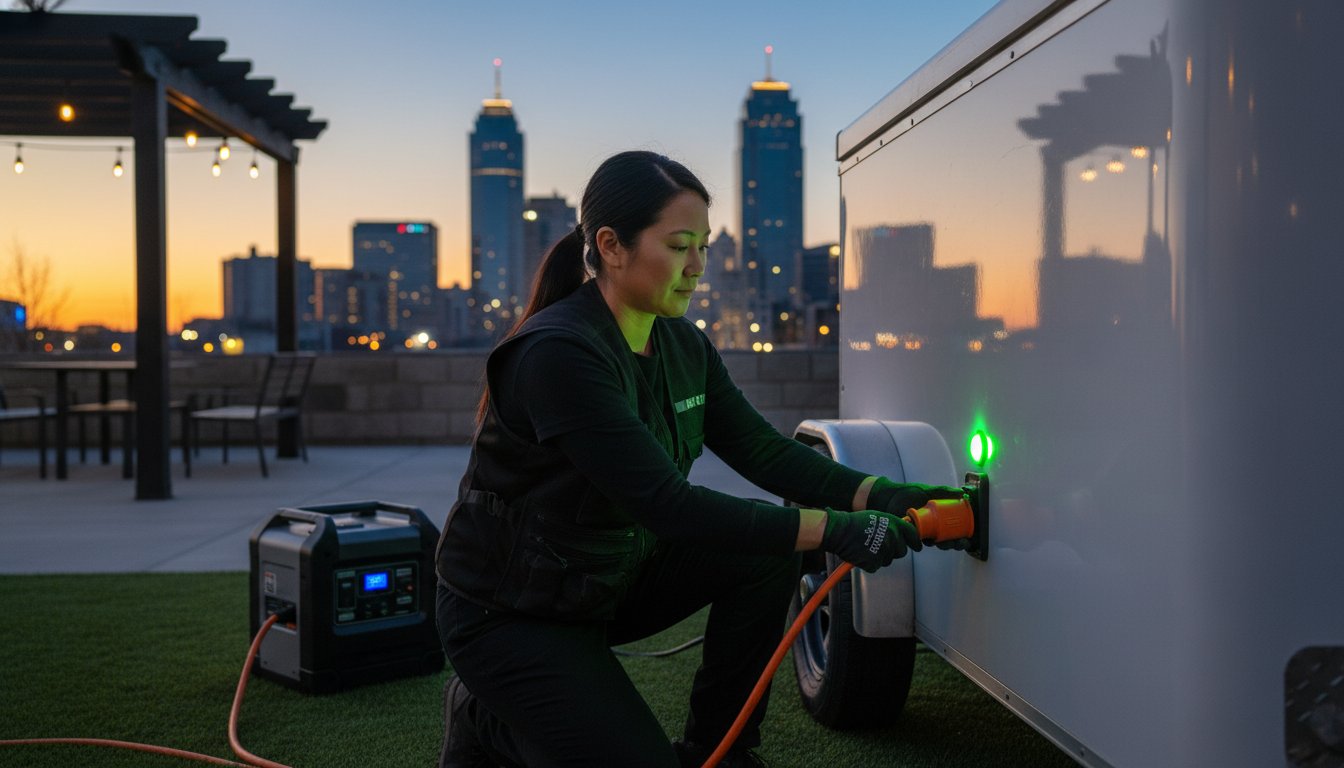
Your standard wall outlet might look reliable, but it’s often the hidden point of failure that costs a business thousands in lost inventory. Most people assume if it plugs in, it’s good to go. That’s a dangerous gamble when you’re managing a 6’x16′ freezer trailer full of high-value product. Understanding portable freezer power requirements is the difference between a successful event and a logistical nightmare. You’ve worked too hard on your inventory to let a simple circuit overload ruin everything.
We agree that electrical specs can feel like a foreign language. You shouldn’t have to be an electrician to keep your steak frozen or your ice solid. This guide promises to simplify the volts, amps, and watts into a clear plan for your next setup. We’ll show you how to handle the massive startup surge that can be ten times the normal running wattage. You’ll get a full breakdown of dedicated 15 and 20-amp circuits, the latest 2026 NEC updates for outdoor GFCI protection, and a checklist to ensure your power source is rock solid before the first pallet arrives.
Key Takeaways
- Master the relationship between volts, amps, and watts to protect your inventory from sudden equipment failure.
- Learn why a dedicated circuit is the only way to meet portable freezer power requirements and avoid nuisance tripping during compressor cycles.
- Choose the right generator by understanding the need for clean power with low total harmonic distortion.
- Stop voltage drop from damaging your motor by selecting the proper gauge extension cord for every event layout.
- See how our mobile trailers are optimized for standard 110V outlets to make your setup fast and worry-free.
Understanding the Basics: Volts, Amps, and Watts for Freezers
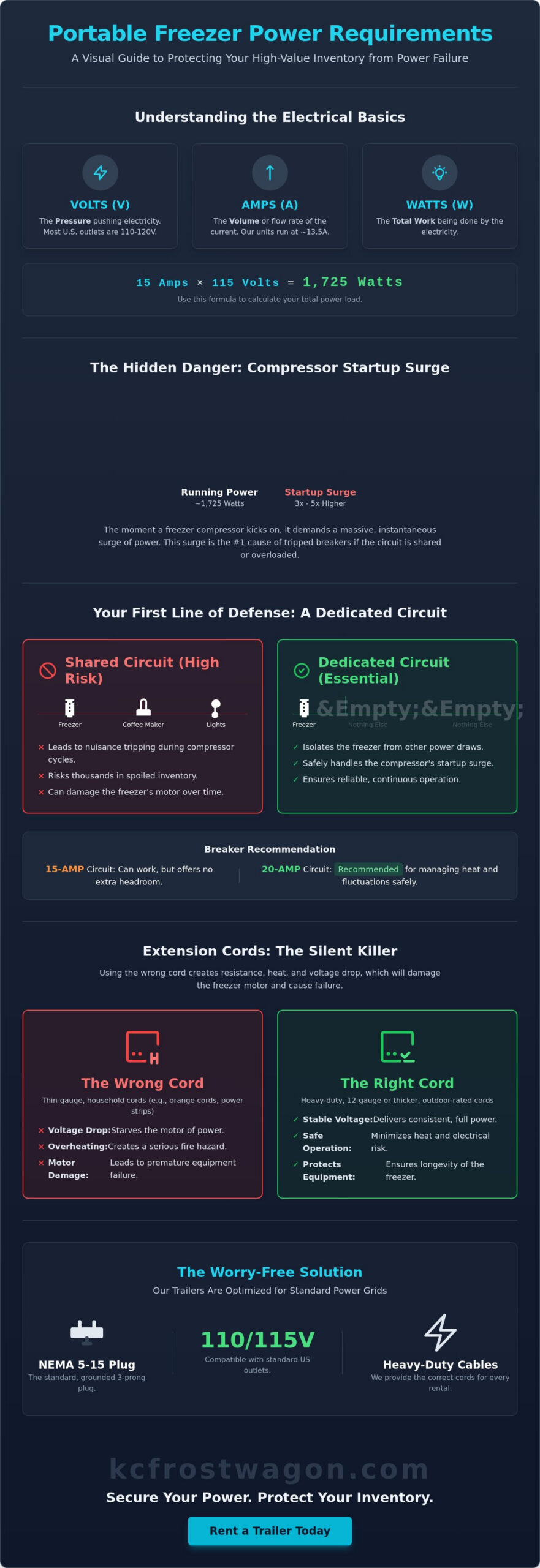
You need cold storage. You need it now. Before you plug in that 6’x12’ cooler/freezer refrigerated trailer, you have to understand the electrical heartbeat of the unit. Electricity follows a simple logic. Think of it like water in a pipe. Voltage is the pressure pushing the current. Amperage is the volume of flow. Watts represent the total work being done. Most commercial-grade trailers are designed for the standard 110V/115V American power grid. This makes them versatile, but it doesn’t mean they’re low power. They’re heavy-duty machines that demand respect.
Commercial units rely on complex refrigeration principles to keep your inventory frozen in 90-degree heat. This process requires a massive initial surge of energy. While a unit might only draw 13.5 amps while running, it can spike significantly higher the moment the compressor kicks on. This surge is why a dedicated circuit is non-negotiable. If you share a breaker with a coffee maker or a string of lights, you’re asking for a blown breaker and spoiled food. Meeting portable freezer power requirements starts with ensuring your power source is stable and isolated.
The 110V Standard: Plug and Play?
Most of our trailers use a NEMA 5-15 plug. This is the standard three-prong plug you find in any Kansas City warehouse or event space. It looks simple. It feels familiar. Don’t let that fool you. You cannot “cheat” the system with a standard household power strip or a thin orange extension cord. These shortcuts create resistance, heat, and eventual power failure. Always verify your outlet is properly grounded before connecting. A floating ground can fry sensitive digital controllers and leave you with a warm trailer. We provide the heavy-duty cables you need; stick to them for total peace of mind.
Calculating Your Total Power Load
Want to know exactly what’s happening? Use the formula: Amps x Volts = Watts. If your trailer draws 15 amps on a 115V line, it’s pulling 1,725 watts. You can find these specifics on the unit’s data plate, usually located near the compressor housing. Be aware that temperature settings change the game. Running the unit as a cooler (35°F) requires less effort than running it as a deep freezer (-10°F). Lower temperatures mean the compressor works longer and harder. Understanding these portable freezer power requirements helps you plan your site layout without the fear of a midnight power crash. It keeps your inventory frozen and your event moving.
Circuit Requirements: Why a Dedicated Line Matters
A dedicated circuit is your first line of defense against a refrigeration disaster. In the world of portable freezer power requirements, “dedicated” means exactly one thing: your freezer is the only device drawing power from that specific breaker. Why does this matter? Commercial refrigeration units don’t pull a steady, low stream of power. They operate in cycles. When that compressor kicks on, it demands a massive, sudden gulp of electricity. If you’ve shared that circuit with a toaster, a microwave, or even high-efficiency LED lights, you risk a nuisance trip. The breaker sees the sudden spike and shuts everything down to prevent a fire. Your freezer stops. Your inventory begins to thaw.
Identifying shared circuits in a commercial kitchen or event space is critical. Many buildings are wired with multiple outlets linked to a single 15-amp breaker. You might plug into an empty wall, but if the refrigerator in the next room is on the same line, you’re headed for trouble. For long-term rentals, we always recommend a 20-amp breaker. While a 15-amp circuit can technically handle the load, a 20-amp circuit provides the extra headroom needed to manage heat and fluctuations safely. You can check ENERGY STAR freezer consumption data to see how modern units are getting more efficient, but efficiency doesn’t change the physics of the initial startup surge.
The Compressor Surge Explained
Compressors are the heart of the refrigeration cycle. They require roughly three times more power to start than they do to run. When a motor is “starved” for amperage during this split second, it generates excessive heat. This heat degrades the motor windings over time. Most inventory loss doesn’t happen during the busy lunch rush. It happens at 2 AM when the kitchen is silent, the compressor surges to maintain temperature, and it finally trips a shared breaker. By the time you arrive at 8 AM, thousands of dollars in product could be ruined. This is why we insist on a clean, dedicated line for every 6’x16′ Cooler/Freezer Trailer we deliver.
Testing Your Site Before the Trailer Arrives
Don’t guess. Test. A simple three-light circuit tester costs less than ten dollars and can save your entire event. Plug it into your intended outlet to ensure the wiring is grounded and the polarity is correct. If you’re setting up at Kansas City festival grounds, coordinate early with the site electricians. They need to know your specific portable freezer power requirements to allocate the right drop. Mapping your power grid is a vital step when planning for a short term freezer rental. If you aren’t sure if your site is ready, our team at KC Frost Wagon can help you verify your electrical needs before we drop the unit.
Running on a Generator: Portability vs. Stability
Planning an outdoor event in Kansas City? You need a generator that doesn’t just run, but purrs. Standard construction generators are fine for power saws. They’re often a death sentence for commercial freezers. You need “Clean Power.” This means Total Harmonic Distortion (THD) under 5%. Anything higher acts like dirty fuel in a luxury car. It wears down components. It causes glitches in digital thermostats. When you calculate portable freezer power requirements for a generator, size matters. A 2000W unit is the absolute floor for a 6×12 trailer. Research shows a generator shouldn’t run at more than 80% of its rated capacity for long-term stability. A 2000W unit gives you just enough headroom to keep things moving.
Fuel management is your next hurdle. A generator that runs out of gas at midnight is just a heavy paperweight. Your inventory is on the line. Most portable units provide 8 to 12 hours of run time on a single tank. If you’re managing a major festival, you need a refill schedule. Don’t wait for the low-fuel light. A sudden shutdown while the compressor is under load can cause electrical back-feeding. This damages the very equipment you’re trying to protect. Keep your fuel fresh and your eyes on the gauge.
Inverter Generators: The Gold Standard
Inverter generators are the superior choice for refrigeration. They throttle up and down based on demand. This keeps voltage rock-solid. Sensitive digital thermostats require this stability to function without error codes. Plus, they’re quiet. If you’re hosting a wedding or a quiet corporate event in Overland Park, you don’t want a mechanical roar in the background. For a 6×16 freezer trailer for rent, we recommend a high-output inverter unit. It provides the muscle needed for the surge without the headache of noise complaints.
The Risks of Construction-Grade Power
Construction-grade power is risky for cold storage. These units often suffer from voltage “sag” during heavy loads. This drop in pressure burns out expensive refrigeration relays and capacitors. For emergency commercial use, we recommend a 3500W minimum generator. This extra capacity ensures the unit survives the massive startup surge we discussed earlier. Always ground your generator. Kansas City weather is unpredictable. A properly grounded unit is essential for safety in damp outdoor environments. Meeting your portable freezer power requirements with the right generator ensures your stock stays frozen and your reputation stays intact.
Extension Cords: The Silent Killer of Portable Freezers
The wrong extension cord is a silent killer. It doesn’t always trip the breaker immediately. Instead, it slowly chokes the life out of your refrigeration unit. This happens through a process called voltage drop. As electricity travels through a wire, it meets resistance. The longer the wire, the higher the resistance. By the time the power reaches your trailer, the voltage might have dropped from 115V to 105V or lower. This “starves” the motor. It forces the compressor to run hotter and work harder to maintain temperature. Mastering these portable freezer power requirements is the only way to protect your inventory from a slow-motion disaster.
Thick wires are your best friend. In the world of electrical gauges (AWG), lower numbers mean thicker copper. Thicker copper allows for better flow and less heat. You should never, under any circumstances, daisy-chain multiple extension cords together. Every plug connection creates a point of high resistance and a potential failure point. We also see a common mistake at Kansas City events: leaving the cord coiled up. A coiled cord under heavy load acts like an induction heater. It traps heat within the loops. In extreme cases, the insulation can melt, leading to a short circuit or a fire. Lay your cords flat. Keep the path clear.
Choosing the Right Gauge (AWG)
For distances under 50 feet, 12-gauge (12/3) cords are the industry standard. They provide the necessary muscle to handle the massive startup surge without a significant drop in pressure. If your power source is 100 feet away, you must step up to a 10-gauge (10/3) cord. Standard 16-gauge household cords, often called “zip cords,” are for lamps and small fans. They will cause an immediate equipment failure on a commercial freezer. Don’t risk your inventory on a cheap wire. If you need a reliable setup without the guesswork, rent a refrigerated trailer from KC Frost Wagon and we’ll ensure you have the right gear for the job.
Proper Cord Placement and Safety
Kansas City humidity and sudden summer rain showers are real threats to your electrical stability. Always keep your electrical connections off the ground. Use waterproof cord covers to shield plugs from moisture. At high-traffic festivals or outdoor weddings, safety is paramount. Use heavy-duty cord ramps to prevent tripping hazards and to stop vehicles from crushing your lines. During the first hour of operation, perform a physical check. The cord should remain cool to the touch. If it feels warm, you have a gauge problem. Shut it down. Swap the cord. Meeting portable freezer power requirements isn’t just about the outlet; it’s about the entire path the power takes to your unit.
KC Frost Wagon: Optimized for Kansas City Power Grids
KC Frost Wagon knows Kansas City. We’ve navigated the power quirks of the West Bottoms and the high-demand circuits of Overland Park. Your event shouldn’t be a gamble. Our trailers are engineered to meet portable freezer power requirements on the standard 110V/15-amp circuits found in almost every local venue. This design eliminates the need for costly electrical overhauls or specialized industrial outlets. We focus on accessibility because we know that in a crisis, simplicity is your best friend. You have enough to worry about; your power source shouldn’t be on that list.
Power fluctuations are a reality in the KC metro area. Our units feature built-in protection to handle minor dips and spikes without shutting down. This technology guards the compressor and keeps your temperature stable, even when the local grid fluctuates. We provide more than just a trailer. We provide a shield for your high-value inventory. Whether you’re dealing with a sudden equipment failure or planning a massive celebration, our goal is to remove the logistical burden from your shoulders. We’re the local experts who understand that cold storage is about more than just a plug; it’s about reliability.
Ready-to-Plug Solutions
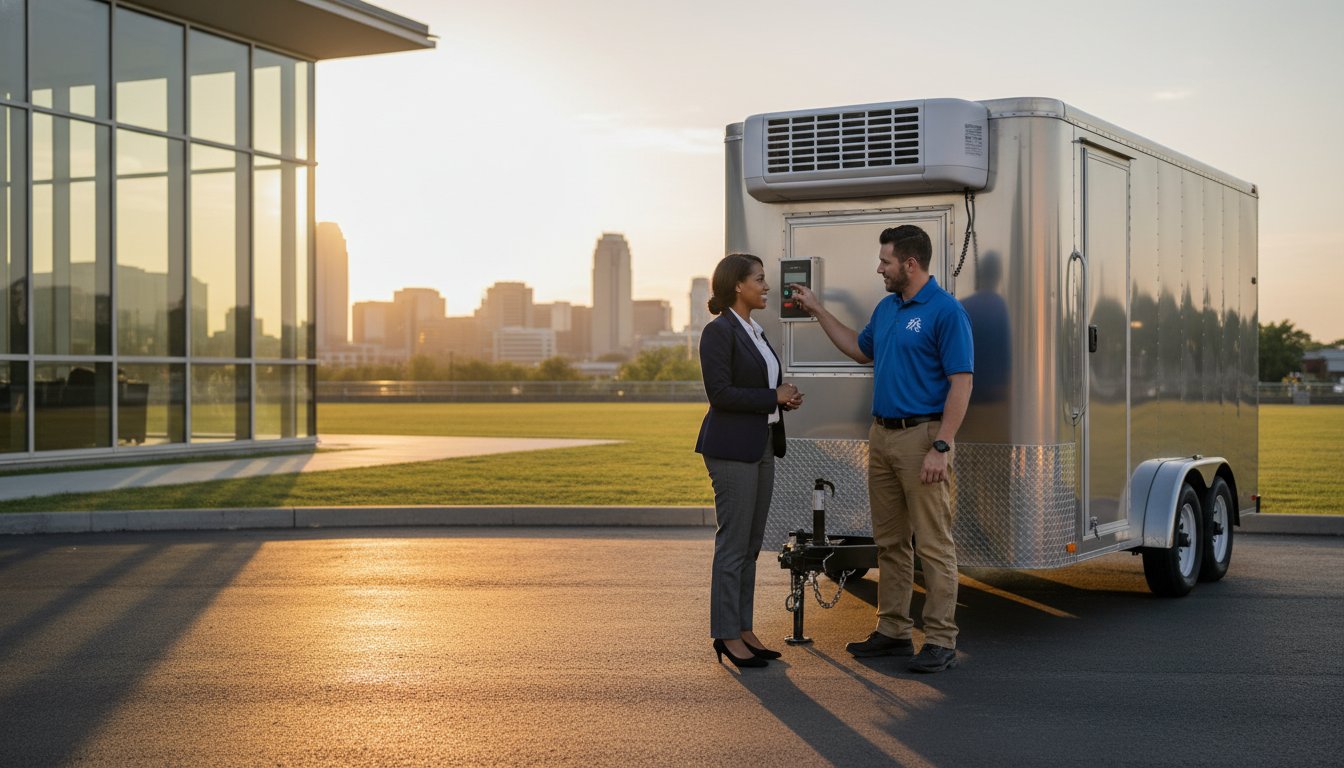
We don’t leave your success to chance. Every rental arrives with the exact heavy-duty power cord required for that specific unit. You won’t have to hunt for a 12-gauge wire or worry about the voltage drop we discussed earlier. Our delivery team performs a complete on-site walkthrough to ensure your power source is stable and your settings are perfect. Choosing the best portable freezer rental means choosing a local partner who stays until the job is done right. We’re neighbors helping neighbors, and we take that responsibility seriously.
Emergency Power Planning
When a main cooler fails, every minute counts. We specialize in cold storage solutions for business that bridge the gap between disaster and recovery. Our team can coordinate generator-integrated setups for sites without reliable shore power. We understand the urgency of a restaurant shutdown. That’s why we offer 24/7 support and immediate emergency refrigeration dispatch. Don’t let a power failure ruin your week. Contact us the moment you see a temperature rise. We’re ready for anything, so you don’t have to be. Our local expertise ensures your portable freezer power requirements are met with precision and speed.
Secure Your Cold Chain with Confidence
Success starts with a solid foundation. You now have the blueprint to handle surges, calculate wattage, and avoid the silent killers like voltage drop. Don’t let electrical uncertainty put your inventory at risk. Understanding portable freezer power requirements is the ultimate safeguard for your business or event. You’ve done the hard work of planning; now let us handle the technical details of the cooling.
Why leave your refrigeration to chance? We deliver peace of mind along with our trailers. Every setup includes the correct heavy-duty cords and a full on-site walkthrough from local Kansas City experts who know the grid. If trouble strikes at midnight, our 24/7 emergency support is just a phone call away. We’re ready to intervene so you can focus on your priorities. Get Your Reliable Freezer Trailer Rental Today and keep your event running cold. You’ve got this, and we’ve got your back.
Frequently Asked Questions
Can I plug a freezer trailer into a standard 110V wall outlet?
Yes, you can. Our trailers are designed to run on standard 110V/115V American power outlets using a NEMA 5-15 plug. You must ensure the outlet is on a dedicated circuit to handle the initial compressor surge without tripping the breaker. This makes setup simple for almost any Kansas City venue or business.
What happens if the power goes out while I have a freezer rental?
Keep the door shut. Our trailers feature high-density insulation that maintains safe temperatures for several hours even without power. If the outage lasts longer, you’ll need a backup generator or a relocation plan. We offer 24/7 support to help you manage emergency refrigeration during prolonged local outages.
How many amps does a 6×16 freezer trailer actually pull?
A 6’x16′ trailer typically draws about 13.5 amps during its normal running cycle. However, meeting portable freezer power requirements means planning for the startup surge, which can be much higher. We recommend using a 20-amp breaker whenever possible to provide the necessary headroom for long-term stability.
Do I need a special permit for a generator in Kansas City?
Most temporary events don’t require a permit for small, portable generators. If you’re planning a large-scale festival or using industrial-sized power units, you should check Kansas City’s specific noise ordinances and fire codes. Our team can help you coordinate a generator-ready setup that stays compliant with local regulations.
Can I run my portable freezer on a battery power station like a Jackery?
No, consumer-grade battery stations usually can’t handle the massive startup surge of a commercial compressor. While they might power a small camping cooler, they’ll fail to start a professional 6’x12’ or 6’x16’ trailer. You need a stable AC power source or a high-output inverter generator to keep your inventory frozen.
Why does my circuit breaker keep tripping when the freezer starts?
Your circuit is likely shared with other appliances. When the compressor kicks on, it demands a sudden spike in amperage that pushes the total load past the breaker’s limit. Move the unit to a dedicated line where no other devices are plugged in to stop the tripping immediately.
How far can I run an extension cord for a refrigerated trailer?
Keep your distance under 50 feet using a 12-gauge heavy-duty cord. If you must reach 100 feet, you have to upgrade to a thicker 10-gauge cord to prevent voltage drop. Exceeding these distances or using thin household cords will starve the motor of power and lead to equipment failure.
Is it safe to run a freezer trailer during a Kansas City thunderstorm?
Yes, it’s safe as long as the unit is properly grounded and your connections are protected. Use waterproof cord covers for all plug points and ensure no electrical connections are sitting in standing water. These simple precautions keep your portable freezer power requirements stable even during heavy Missouri rain showers.







Leave A Comment