
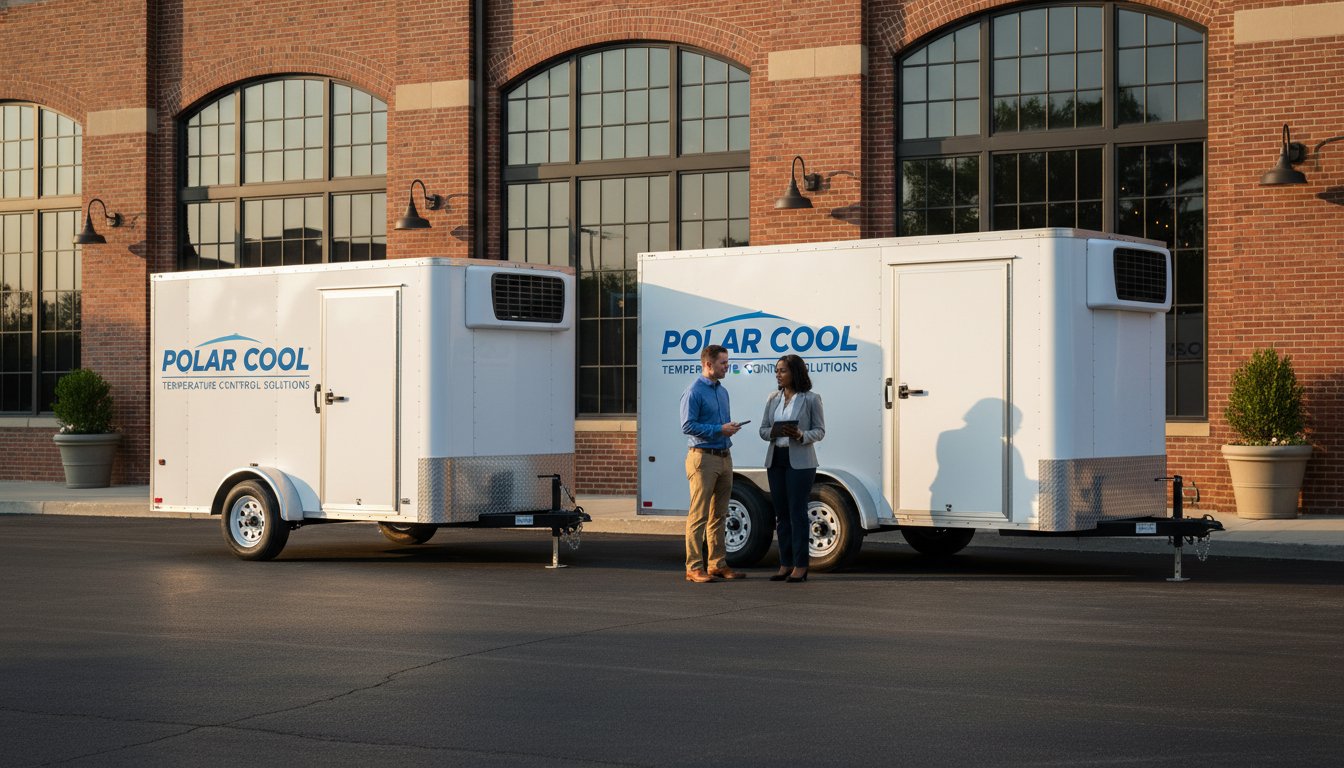
Last Saturday, a local KC caterer discovered their venue’s loading zone was three feet too narrow for a standard reefer truck. With 500 steaks arriving in an hour, the panic was real. You don’t want to find out your equipment is too big or too small when the clock is ticking. Understanding refrigerated trailer sizes is the difference between a successful service and a total loss. Whether you’re facing a cooling crisis or planning a major festival, the right unit must protect your inventory while fitting your site footprint perfectly.
We understand that every inch of space matters when you’re managing a busy event or a restaurant breakdown. It’s frustrating to pay for extra air or, worse, realize your trailer won’t clear the driveway. This guide gives you the exact dimensions and capacities you need to make an informed decision. We’ll break down the differences between our 12-foot and 16-foot units so you can order with total confidence. You’ll learn how to maximize your storage, meet local health codes, and keep your inventory at a safe 41 degrees without any guesswork.
Key Takeaways
- Compare refrigerated trailer sizes to ensure you only pay for the cold storage you actually need.
- Master the math of interior capacity to see how many pallets or loose boxes fit inside 12-foot and 16-foot units.
- Measure your site accurately by accounting for hitch length, motor clearance, and overhead obstacles before delivery.
- Match your specific business needs to the right unit, whether you’re saving restaurant inventory or chilling delicate floral arrangements.
- Navigate tight Kansas City locations with confidence by choosing towable units designed for ground-level access.
Understanding Refrigerated Trailer Sizes: Portable vs. Semi-Trailers
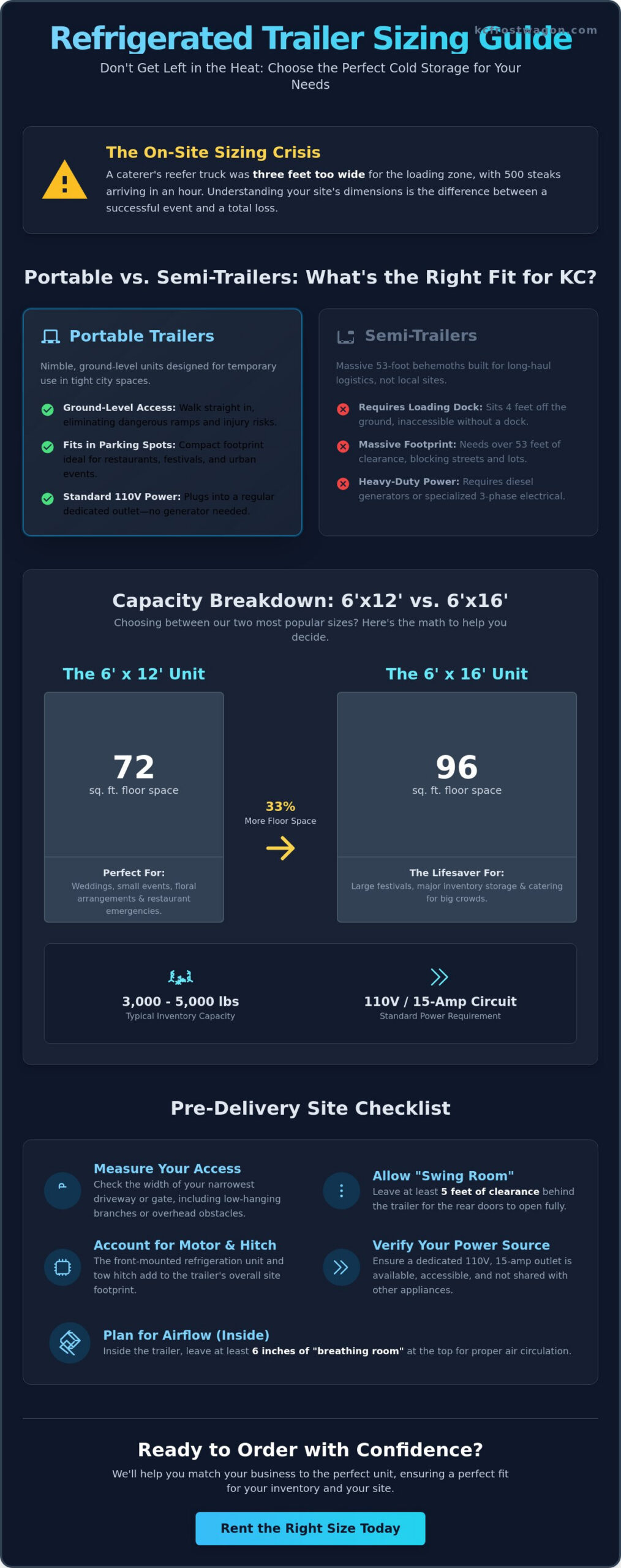
Choosing between refrigerated trailer sizes starts with understanding the difference between a massive semi-truck and a nimble portable unit. Most people hear the word “reefer” and picture a 53-foot behemoth hauling produce across the country. While a Refrigerator truck is essential for long-haul logistics, it’s often a liability for a local Kansas City business. These large trucks require loading docks, heavy-duty power, and massive amounts of clearance that simply don’t exist in a standard parking lot or behind a restaurant.
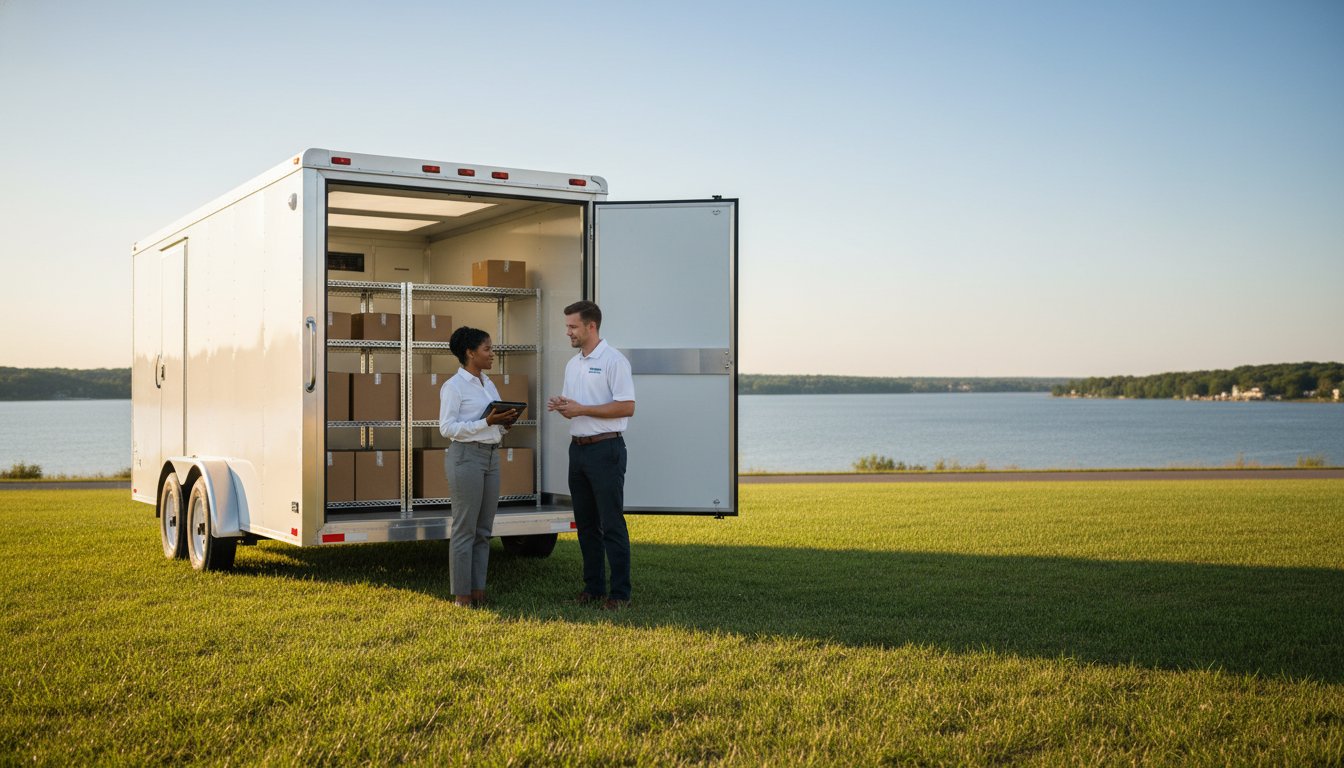
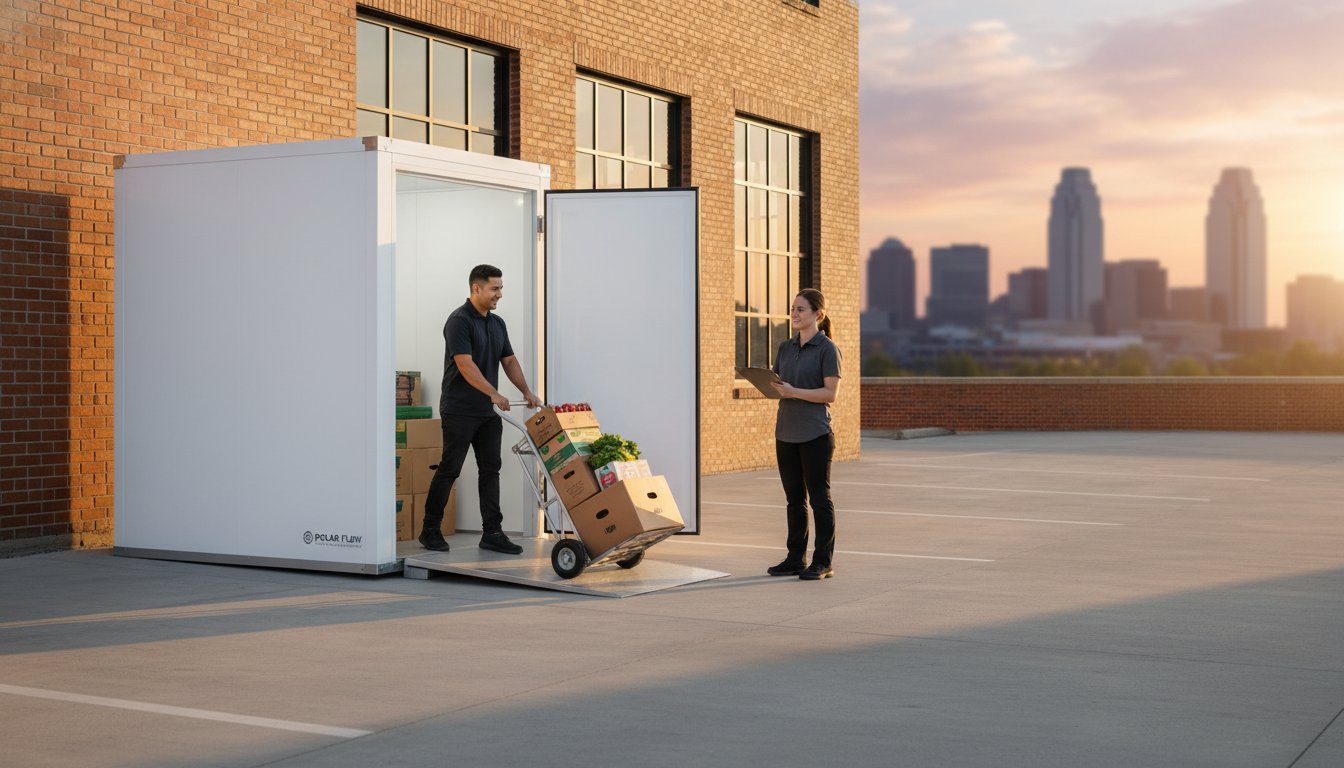
Portable refrigerated trailers are different. These are ground-level, towable units designed specifically for temporary use on-site. They offer the same cooling power as their larger cousins but in a footprint that actually makes sense for our local streets. For small businesses and event planners, the sweet spot usually lands between 12-foot and 16-foot units. These sizes provide enough volume to save a walk-in freezer’s worth of inventory without requiring a commercial driver’s license or a massive staging area. They sit directly on the pavement, making them accessible to anyone with a hand truck.
The Footprint Factor: Why Size Matters On-Site
Space is a luxury in crowded KC areas like the Country Club Plaza or the Crossroads District. If you’re hosting a festival or dealing with an emergency breakdown, you can’t afford to block off an entire street. A 12-foot trailer fits comfortably into a single standard parking space. However, you have to look beyond the box dimensions. You must account for the “swing room” needed for the rear doors and the space for the refrigeration motor at the front. If you don’t leave at least five feet of clearance behind the unit, your staff won’t be able to reach the inventory. We always recommend measuring your narrowest access point, including driveways and low-hanging branches, before the delivery truck arrives.
Portable vs. Dock-Height: Which Do You Need?
Safety is the biggest reason a walk-in freezer trailer rental beats a dock-height unit for most local applications. Dock-height trailers sit four feet off the ground. Unless you have a loading dock, your team will be forced to use steep, slippery ramps or expensive lift gates to move heavy crates and kegs. This is a recipe for workplace injuries and broken inventory. Ground-level units eliminate this risk entirely. Your staff can walk straight in and out with ease, which speeds up service during a high-stakes event. When you’re choosing between refrigerated trailer sizes, remember that ease of access is just as important as total cubic feet.
- Portable Units: Ground-level access, fits in parking spots, runs on standard 110V power.
- Semi-Trailers: Requires a loading dock, needs 53 feet of clearance, uses diesel or 3-phase power.
Comparing 6’x12′ vs. 6’x16′ Trailers: A Capacity Breakdown
Choosing between the two most common refrigerated trailer sizes feels like a guessing game until you see the math. It’s not just about the length of the box. It’s about how many layers of inventory you can safely stack while maintaining airflow. A 6’x12′ unit provides roughly 72 square feet of floor space, while the 6’x16′ model jumps to 96 square feet. That extra four feet of length translates to nearly 30% more storage volume. If you’re tight on space, the smaller unit is easier to maneuver; if you’re feeding a crowd, that extra length is a lifesaver.
Temperature control is a legal necessity for any professional operation. The FDA’s rule on sanitary food transportation emphasizes that maintaining the cold chain is critical for preventing spoilage. Whether you’re moving loose boxes or stacked pallets, your storage strategy must allow for consistent air circulation. Most of these trailers can handle between 3,000 and 5,000 pounds of inventory. However, you should never pack them to the ceiling. Leave at least six inches of “breathing room” at the top so the refrigeration motor can push cold air to the back of the unit.
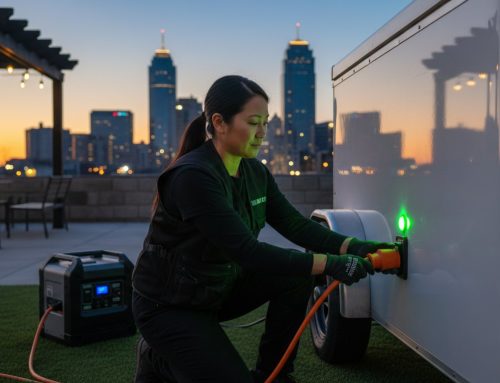
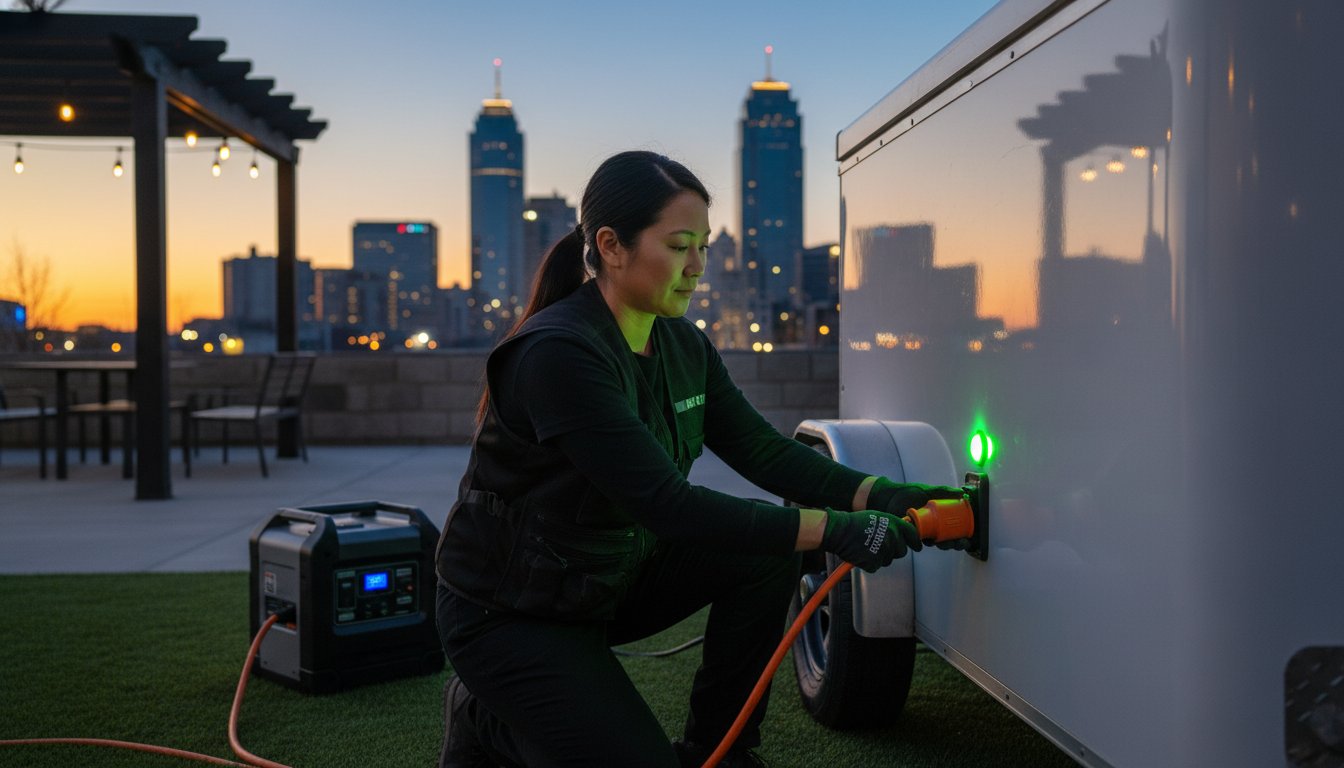
Powering these units is simpler than you might think. Both sizes typically run on a standard 110V/15-amp circuit. You don’t need a specialized industrial hookup or a loud, smelly diesel generator. Just plug it into a dedicated outlet and you’re ready to go. If you’re unsure about your site’s electrical capacity, we can help you verify your setup before delivery.
The 6’x12′ Cooler: Perfect for Weddings and Small Events
A 6’x12′ unit is the gold standard for a wedding cooler rental Kansas City planners rely on. It easily holds enough floral arrangements, tiered cakes, and catering trays for a guest list of up to 200 people. You can fit approximately 80 to 100 cases of beer or soda with room to spare for ice. It’s compact enough to tuck into a driveway or behind a garden tent without becoming an eyesore. It’s the ultimate “peace of mind” insurance policy for your big day.
The 6’x16′ Freezer: High-Volume Commercial Solutions
When a restaurant’s walk-in fails, every minute counts. The 6×16 freezer trailer for rent is the heavy hitter for commercial crises. This size can accommodate up to three standard pallets if loaded carefully. It’s also the favorite for multi-day festivals where you need to store dozens of half-barrel kegs or hundreds of bags of ice. The extra length prevents your staff from having to play “inventory Tetris” every time they need to reach a specific crate. If you’re managing a high-volume site, this extra space is worth every inch.
Need help deciding which unit fits your specific inventory list? Check out our options for refrigerated trailer rental Kansas City to find your perfect match.
Logistics and Setup: Will It Fit Your Site?
Delivery day shouldn’t be a day of surprises. Navigating a tight alley in Independence or a narrow residential drive in Mission requires precision. While we’ve discussed interior refrigerated trailer sizes, the exterior footprint is what determines if the unit can actually reach your door. Our delivery drivers are experts at threading the needle, but they need a clear path and a solid plan to get your cold storage exactly where it needs to be.
Placement is the backbone of successful Cold Chain Logistics. You need a surface that’s level and stable. Asphalt or concrete is always the safest bet. If you’re planning to set up on grass for a backyard event, remember that a fully loaded trailer can weigh several thousand pounds. A little rain can turn a lawn into a mud pit, making it impossible to retrieve the unit without property damage. Always choose high, dry ground and check for underground utilities if you’re parking on unpaved surfaces.
The “Ghost” Dimensions: Clearance and Hitch Space
Don’t measure just the box. You must add 4-5 feet to the trailer length to account for the tongue, hitch, and the refrigeration motor mounted on the front. Vertical clearance is just as vital. Low-hanging tree branches, building awnings, or event tents can snag the top of the unit. For a 16-foot unit, you should plan for a total footprint of at least 21 feet in length and 10 feet in width to allow for safe maneuvering and door access.
Power and Placement Logistics
Most portable units need a standard 110v 20-amp circuit to run efficiently. Distance from the power source is a major factor in performance. The longer the extension cord, the more voltage you lose, which can cause the motor to struggle in the Kansas City summer heat. We recommend staying within 50 feet of your outlet whenever possible. If you’re hosting a quiet event like a wedding ceremony, place the trailer behind a building or a natural barrier. This muffles the hum of the motor while keeping your refreshments ice-cold and ready for the reception.
Industry Sizing Guide: Matching Your Business to a Unit
Every industry has a different “cold” requirement. A florist’s needs are worlds apart from a BBQ pitmaster’s. When you’re looking at refrigerated trailer sizes, you have to consider the height of your inventory and how often your staff will be opening the doors. If you’re a florist in Overland Park, you need vertical clearance for tall arrangements and shelving to prevent crushing delicate petals. A 12-foot trailer offers the perfect height for buckets without wasting floor space you don’t need.
Restaurants face a different challenge. If your main walk-in fails, you aren’t just storing boxes; you’re saving your profit margin. A standard 6’x12′ unit typically handles the contents of a medium-sized commercial cooler. However, if you’re a high-volume steakhouse, the 16-foot model is a safer bet to ensure proper airflow around dense proteins. Festivals and large-scale caterers have to think about turnover. If you’re serving thousands at a KC event, you need a unit dedicated to ice storage and another for prepared meals to keep your workflow moving fast.
Emergency Scenarios: Rapid Sizing for Crisis
In a crisis, you don’t have time for a tape measure. A quick rule of thumb is to estimate your walk-in’s square footage and add 20% for “breathing room.” This ensures you don’t overpack the unit and kill the cooling cycle. Remember that refrigerated trailer rental cost often reflects the size and duration of the rental. If you’re only saving high-value items like seafood or expensive cuts of meat, a smaller unit might be the most cost-effective way to weather the storm until repairs are finished.
Scaling Up: When One Trailer Isn’t Enough
Huge events like the American Royal require a “divide and conquer” strategy. Using one massive truck is often less efficient than using two portable trailers. Why? Because you can place one near the prep station and another near the serving line. This setup reduces the distance your staff has to walk, keeping them productive and the food safe. You can even run one unit as a dedicated cooler and the other as a deep freeze. This flexibility is why many local businesses prefer multiple refrigerated trailer sizes over a single large reefer.
Ready to secure the perfect unit for your next big project? Browse our mobile cooler rental Kansas City options to get started today.
Renting the Right Size with KC Frost Wagon
Stop guessing and start cooling. When your inventory is on the line, you need more than just a box on wheels. You need a partner who knows the difference between a minor overflow and a total refrigeration catastrophe. Finding the right refrigerated trailer sizes for your specific location shouldn’t be a headache. We provide expert sizing consultations to ensure you get exactly what you need. No more paying for empty space. No more realizing too late that your trailer won’t clear the gate.
Our “Ready-for-Anything” guarantee means you get a unit that is scrubbed clean, mechanically sound, and perfectly sized for your site. We don’t just drop a trailer and leave. We ensure it’s positioned for maximum efficiency and staff safety. Whether you’re facing a midnight compressor failure or a high-stakes wedding in the heat of July, we respond with the urgency your business deserves. Our 24/7 emergency response team is built to move fast so your perishables stay frozen and your drinks stay crisp.
Why Local KC Expertise Matters
Kansas City isn’t a one-size-fits-all metro area. A delivery to a sprawling corporate campus in Olathe is a different beast than navigating a tight, brick-lined alley in Independence. We know the loading zones in Overland Park and the narrow residential drives in Mission. This local knowledge prevents delivery delays and property damage. If you’re in Lee’s Summit or Blue Springs, you can count on a driver who understands the terrain. We’ve seen every site constraint imaginable. We use that experience to guide you toward the best refrigerated trailer sizes for your specific footprint, ensuring the doors swing wide and the power stays on.
Get Started with Your Rental
Booking your cold storage should be the easiest part of your day. We’ve streamlined our process to handle both planned events and split-second emergencies with equal precision. You don’t have to navigate a complex corporate call center to get answers. You get direct access to experts who can translate your pallet count into the perfect trailer length. We offer flexible rental terms that grow with your business, from a single day of ice storage to months of commercial backup. We handle the heavy lifting and the logistics so you can focus on your guests or your customers. Don’t let a cooling crisis freeze your operations.
Ready to secure your storage? Contact KC Frost Wagon for a sizing quote today!
Ready to Lock in Your Cold Storage?
Choosing between refrigerated trailer sizes shouldn’t feel like a gamble. You now know that a 12-foot unit is the hero for weddings and small floral shops, while the 16-foot trailer is the heavy hitter for restaurant crises and massive festivals. Getting the footprint right ensures your staff can work safely without blocking local traffic or narrow Kansas City driveways. Whether you’re planning months in advance or reacting to a sudden equipment failure, the right dimensions protect your bottom line.
We’re here to take the logistics off your plate. Our team provides 24/7 emergency response across the entire KC Metro area. We deliver clean, modern 6×12 and 6×16 units that are ready to plug in and perform. You focus on your guests or your kitchen; we’ll handle the temperature. Don’t let a broken walk-in or a summer heatwave derail your success. Your inventory is too valuable to leave to chance. Let’s get your cooling sorted today.
Secure Your Refrigerated Trailer in Kansas City Now
Frequently Asked Questions
How much can a 6×12 refrigerated trailer actually hold?
A 6×12 unit holds roughly the same volume as a medium-sized commercial walk-in cooler. You can comfortably fit 80 to 100 cases of beverages or enough catering trays to feed 200 guests. It’s designed to carry between 3,000 and 5,000 pounds of inventory. Just remember to leave space for airflow so your items stay at a consistent temperature.
Will a 6×16 freezer trailer fit in a standard parking space?
The trailer box fits within a standard space, but the total footprint will likely overhang. A typical parking spot is about 18 feet long. Since a 16-foot unit requires roughly 21 feet of total length to account for the hitch and motor, you should plan on using two spots. This ensures our drivers have enough room to maneuver and park safely.
Do I need a special power outlet for these refrigerated trailer sizes?
No, you don’t need industrial power for the refrigerated trailer sizes we provide. All our units run on a standard 110V/15-amp or 20-amp dedicated circuit. This makes them perfect for residential driveways or event venues. Just make sure your outlet is within 50 feet of the trailer to prevent power loss that could strain the cooling system.
Can these trailers be used as both a cooler and a freezer?
Yes, our trailers are dual-purpose and highly flexible. You can adjust the digital thermostat to maintain a steady 41 degrees for fresh produce or drop it below zero for deep-freeze storage. This versatility allows you to switch functions between events or even mid-weekend if your storage needs change. It’s the ultimate “ready-for-anything” solution.
How much height clearance is needed for a portable refrigerated trailer?
You need approximately 9 feet of vertical clearance for a safe delivery. Always look up before you choose a spot. Low-hanging tree limbs, building eaves, and parking garage entrances are common obstacles. If you’re placing the unit under an event tent, ensure the canopy is high enough so the refrigeration motor can vent heat properly without melting the fabric.
Is a 16-foot trailer too heavy for my driveway?
Most standard concrete driveways handle the weight easily. However, a fully loaded 16-foot unit can reach over 5,000 pounds. We recommend avoiding soft grass or thin asphalt during the peak of a Kansas City summer. A level, solid surface is the best way to prevent the trailer from sinking or shifting once it’s full of heavy inventory.
What is the difference between interior and exterior dimensions?
Interior dimensions measure your actual storage space, while exterior dimensions determine your site footprint. When we say 6×12 or 6×16, we’re talking about the usable box inside. You must add 4 to 5 feet to that length to account for the front-mounted motor and the trailer tongue. Knowing both numbers ensures your inventory fits inside and the unit fits on-site.
How do I know if I need a 12-foot or 16-foot unit for my wedding?
The 12-foot unit is the gold standard for weddings with up to 200 guests. It handles the cake, floral arrangements, and bar stock perfectly. If your guest list exceeds 250 or you’re responsible for storing hundreds of pounds of ice for a summer reception, go with the 16-foot unit. The extra space prevents your catering team from struggling with a cramped cooler.




Leave A Comment