
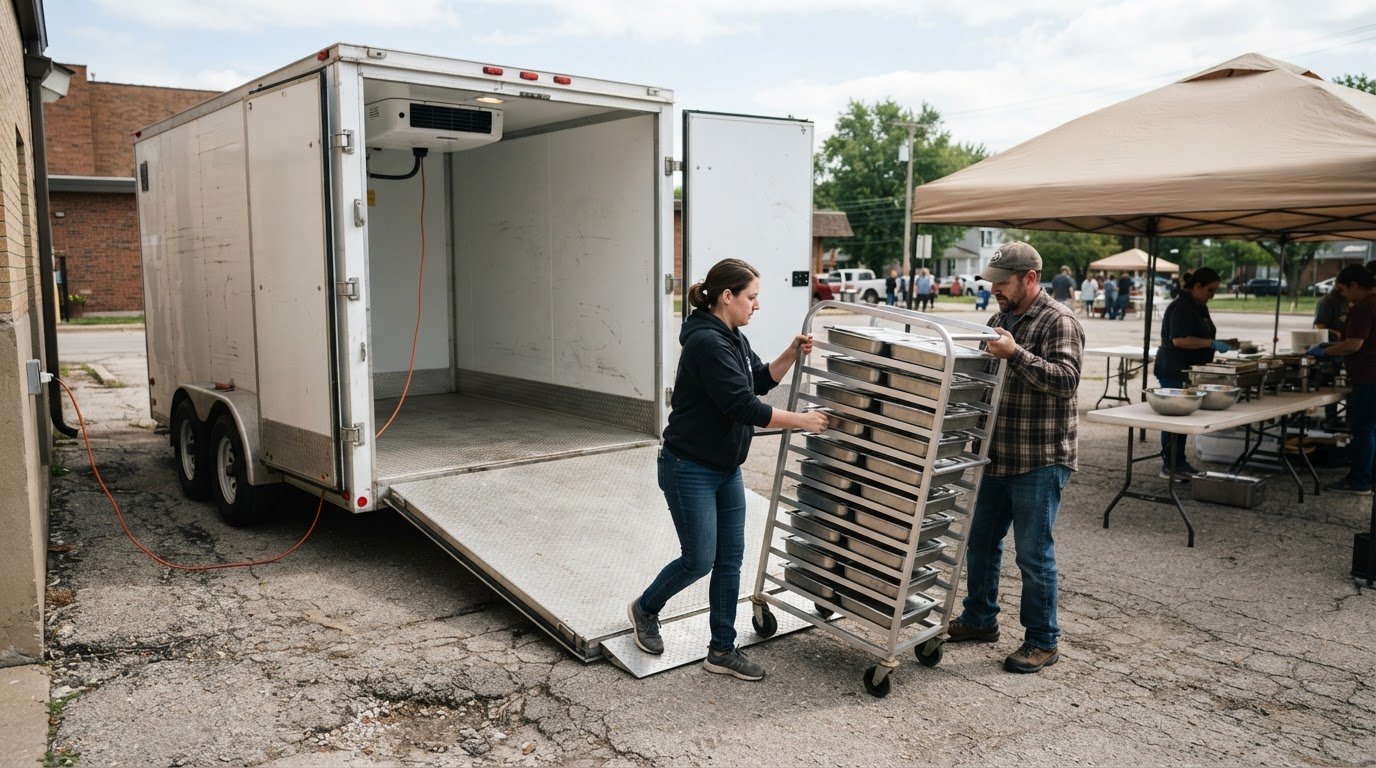
The right cold-storage plan for a nonprofit event in Kansas City depends on what needs to stay cold and where it needs to be during the event. Nonprofit event cold storage in Kansas City may mean using a venue’s existing facilities or arranging temporary, temperature-controlled storage at the event site.
Food, beverages, and other temperature-sensitive items need a clear storage plan before event day. This guide compares fixed facilities with temporary event storage and explains what to consider when choosing between them. You’ll learn how refrigerated and freezer storage can support events in Kansas City, Overland Park, Olathe, Lee’s Summit, and nearby metro communities, and when mobile cold storage may better suit the site and schedule. The aim is to help your team plan reliable storage and stay focused on the people and purpose behind the event.
Key Takeaways
- Choose storage based on what needs to stay cold, how much space the event requires, and how close it needs to be to food service.
- Plan refrigerated storage around your event schedule and site logistics so delivery, setup, and pickup fit the day.
- Review venue requirements and applicable food-safety guidance when planning temporary cold storage.
- Compare trailers, walk-in coolers, and fixed facilities by their fit for your event, available space, power, and access.
- KC Frost Wagon offers event cold storage with 12×6 and 16×6 cooler/freezer refrigerated trailers for Kansas City-area events.
Temperature-controlled storage
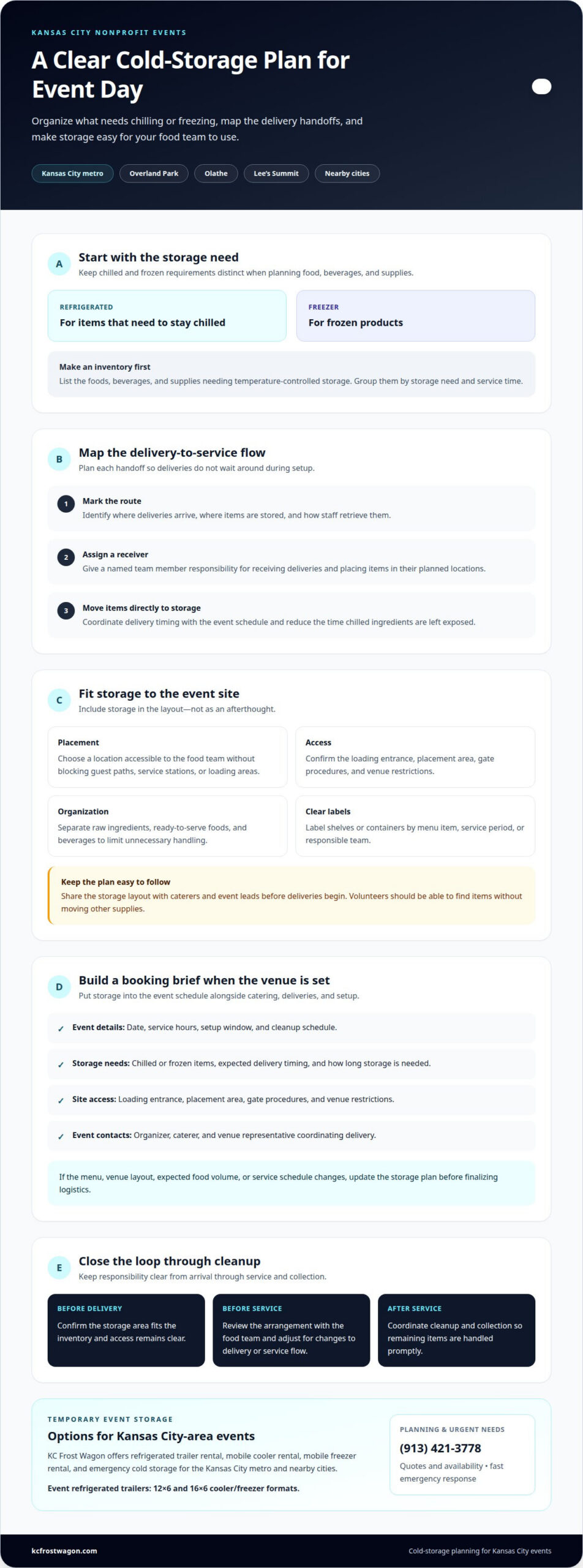
Temperature-controlled storage supports food handling during delivery, setup, service, and cleanup. For a Kansas City nonprofit event, plan each handoff, from the caterer’s kitchen to the serving area. Refrigerated storage is for items that need to stay chilled; frozen products need freezer storage. Keep those requirements distinct when planning menus, deliveries, and storage space.
Transport and storage risks include temperature changes, spoilage, and contact between foods that should be kept separate. A long unloading period on a warm event site, for example, can leave chilled ingredients exposed. Reduce handling problems by mapping the route, assigning someone to receive deliveries, and moving food directly into the appropriate storage area.
Start with an inventory. List the foods, beverages, and supplies that need temperature-controlled storage, then group them by storage needs and service time. A nonprofit serving prepared meals may need separate space for ingredients awaiting preparation and finished dishes awaiting service. A festival serving packaged beverages may need a different layout and access plan.
- Plan the flow: Identify where deliveries arrive, where items are stored, and how staff retrieve them.
- Separate categories: Keep raw ingredients, ready-to-serve foods, and beverages organized to limit unnecessary handling.
- Assign responsibility: Give a named team member the job of receiving deliveries and placing items in their planned locations.
- Coordinate timing: Align delivery windows with the event schedule so food isn’t left waiting during setup.
For nonprofit event cold storage in Kansas City, the site matters as much as the menu. A downtown venue, a community hall in Overland Park, and an outdoor gathering in Lee’s Summit each present different delivery routes and storage options. Include storage in the event layout. Keep it accessible to the food team without blocking guest paths, service stations, or loading areas.
Make the storage plan practical for everyone working the event. Label shelves or containers by menu item, service period, or responsible team. For instance, a volunteer should be able to find beverages without moving catering ingredients. Share the layout with caterers and event leads before deliveries begin.
Temperature-controlled storage also supports smoother service. When teams know where items belong, they can retrieve supplies promptly and avoid repeatedly opening containers or moving products. For weddings, fundraisers, and community meals, document who receives each delivery, where it goes, and when it is needed. Those simple steps create a clearer handoff from arrival to service.
A practical plan should also account for the equipment serving the storage area and who will check that it is ready before deliveries arrive. The Holganix project in Kansas City includes a 120,000-square-foot cooler retrofit. For an event, confirm that the planned storage space fits the inventory, that access remains clear, and that the receiving team knows where each category belongs.
Before service, review the arrangement with the food team and adjust it if the delivery sequence or service flow changes. Keep frequently needed items within easy reach while minimizing movement of other foods. After service, coordinate cleanup and collection so remaining items are handled promptly and the storage area stays clear. Defined roles and an accessible layout help the team follow the plan through each handoff.
When to Book Refrigerated Storage in Kansas City?
Plan refrigerated storage once your Kansas City event date and venue are set. The right lead time varies with the event calendar, the amount and type of food, the storage period, and the venue’s access rules. Starting with those details gives storage a place in the wider schedule alongside catering, deliveries, and setup.
A nonprofit holding a Saturday meal in a community hall, for example, may plan differently from a festival at an outdoor site in Olathe. The hall may have a defined loading area and a short setup window. The festival may need storage near food service, with access coordinated around site operations. In both cases, confirming the date and location helps organizers plan delivery and placement before finalizing other event logistics.
Prepare a booking brief as soon as the venue is chosen. Include:
- Event details: Date, service hours, setup window, and cleanup schedule.
- Storage needs: Chilled or frozen items, expected delivery timing, and how long storage is needed.
- Site access: Loading entrance, placement area, gate procedures, and any restrictions from the venue.
- Event contacts: The organizer, caterer, and venue representative coordinating delivery.
These details help identify timing conflicts early. A wedding venue in Kansas City may have a tight loading schedule, while a community event in Lee’s Summit may have a separate setup period. Share the schedule with the catering lead and venue contact to coordinate food arrival, storage setup, and who will direct delivery on site.
Update the plan when key details change. A revised menu can shift the balance between chilled and frozen storage, while a new venue layout can change placement or access routes. If the event expands, revise the expected food volume and service schedule before finalizing logistics. Clear updates keep storage arrangements aligned with the event, not an outdated draft.
For a last-minute equipment failure or a power interruption, the schedule changes from event planning to urgent response. Identify what needs cold storage, where it is located, and the destination site. For planned events across Kansas City, Overland Park, and nearby cities, share your event schedule and storage needs to discuss a quote and timing.
What permits or food safety rules apply to temporary event cold storage in Kansas City?
Requirements for temporary event cold storage depend on the event location and food-service arrangement. A fundraiser in Kansas City may involve different local processes from one in Overland Park or Lee’s Summit. Distinguish permission to place equipment at a venue from rules for preparing, storing, and serving food. These are related planning questions, but they are not automatically the same approval.
Start by identifying who is responsible for the food. A nonprofit serving meals prepared by a caterer has a different setup from an organization preparing food itself. Whether food is sold, donated, packaged, or served ready to eat can also affect applicable requirements. Record the event address, menu, food-service roles, and storage arrangement, then use those details when discussing requirements with the venue and relevant local officials.
Next, clarify the venue’s process. A community hall, park, festival site, and private event space may each set conditions for equipment placement and access. The venue contact can explain its approval process, including where temporary equipment may go and how delivery access works. Keep venue permission separate from food-handling requirements: approval to use a site does not establish that every food-service requirement has been met.
For food-safety planning, assign the caterer or food lead responsibility for the handling plan. Cover receiving, storage organization, access during service, and what staff should do if equipment or power stops working. A meal program, for example, can assign one person to receive prepared dishes and another to coordinate service. Clear responsibility helps staff respond consistently during a busy setup.
- Identify the location: Record whether the event is in Kansas City, Olathe, or another municipality.
- Describe the food operation: Note who prepares, transports, stores, and serves each menu item.
- Separate approvals: Track venue permission for equipment separately from food-service requirements.
- Document responsibility: Name the event lead and food lead for delivery, storage, and service decisions.
For a nonprofit event in Kansas City, don’t assume one venue’s process applies across the metro. A festival at a public site may require different coordination from a catered reception in a private hall. Share the event details with the venue and food-service lead early so open questions are clear while there is still time to adjust the site plan or responsibilities.
Keep the final plan with the event schedule. Include the venue’s placement instructions, the food team’s handling plan, contact roles, and steps to take if storage is interrupted. A written plan gives organizers, caterers, and volunteers a consistent reference on event day.
Comparing Trailers, Walk-in Coolers, and Cold Storage
For a Kansas City fundraiser, the right storage option depends on location, access, and how food moves during service. A refrigerated trailer brings temporary cold storage to the event site. A walk-in cooler offers fixed storage where one is already installed. A commercial cold-storage facility keeps products off-site, adding a transport step before food reaches the venue.
A trailer may suit an outdoor festival in Lee’s Summit or a wedding venue in Olathe when storage needs to be near food preparation or service. Because it is mobile, placement must be part of the site plan. Account for the delivery route, available space, and staff access to stored items. The venue’s loading area and event layout can determine whether a trailer fits the operation.
A walk-in cooler may work well at a community hall or commercial kitchen that already has suitable equipment. Staff can move ingredients from the cooler to nearby preparation areas without arranging off-site transport. A venue without a walk-in cooler does not offer that option. Even when one is available, consider whether its capacity, access, and separation of food categories suit the event menu.
A commercial cold-storage facility may make sense when food needs to stay at a separate location before delivery. A caterer preparing meals in Kansas City, for example, might store them at a facility before arranging transport to a nonprofit event in Overland Park. This adds coordination: align facility access, pickup timing, transportation, and the venue’s receiving schedule.
- Choose a trailer when storage needs to be at the event site and the venue can accommodate delivery and placement.
- Use an existing walk-in when the venue has one that fits the menu and service workflow.
- Consider off-site storage when the food operation already relies on a commercial facility and can coordinate transport.
Compare options by tracing one menu item from delivery to service. For a catered meal, note where ingredients arrive, where they are stored, and how the food team retrieves them. If storage is off-site, include the trip to the venue. If it is on-site, map the route between storage and preparation or serving areas. This can reveal awkward handoffs before event day.
Consider whether the event needs chilled storage, freezer storage, or both. A fundraiser serving prepared dishes and frozen items has different needs from a beverage-focused festival. Match the arrangement to the menu and workflow, then confirm the venue’s access and placement constraints. This helps Kansas City organizers choose a practical setup without assuming every event needs the same kind of cold storage.
What power, space, and access requirements do event refrigeration units have
For a Kansas City event, plan power, placement, and delivery access together. Even a unit that fits the food plan needs a workable site location and power arrangement. Start with the venue layout, event schedule, and delivery route, then coordinate the refrigeration setup with the venue contact and event lead.
Power needs depend on the specific refrigeration unit and how the site can supply it. Ask the venue to identify available power connections and any restrictions on equipment use. If the event location needs a generator option, include that in the plan. Don’t assume a nearby outlet is suitable; the unit’s requirements and venue supply must match.
An outdoor fundraiser in Lee’s Summit may need a different layout from a reception inside an Olathe hall. The outdoor site may need a designated location for the trailer and its power source. The indoor venue may have limited access near service areas. In either case, record who will coordinate power and who can approve the planned placement.
Space planning should account for more than the trailer’s footprint. Leave a clear route for delivery, setup, food loading, and staff access. Keep the planned location clear of guest routes, food-service stations, and venue operations. A festival organizer can mark the location on the site plan, then review it with the venue and catering teams before setup.
- Map the route: Identify the delivery entrance, turns, gates, and final placement area.
- Review the site: Share the location with the venue contact and confirm access arrangements.
- Coordinate power: Document the available supply or planned generator option with the relevant event contacts.
- Plan daily use: Keep staff access practical without obstructing guests or food service.
Access timing matters, too. A downtown Kansas City venue may schedule deliveries around other event activity, while a community site in Overland Park may have a separate setup window. Add delivery and pickup to the event schedule. Give the driver a site contact who can direct them to the planned location and explain access instructions.
Review the layout again if plans change. If the venue moves a service station or changes the loading entrance, update the trailer location and route. A clear site plan helps nonprofit event volunteers, caterers, and venue staff work from the same arrangement. Share it before delivery, not during a busy setup period.
For an event in Kansas City, Olathe, or nearby cities, share your site layout and discuss power options, or call (913) 421-3778.
KC Frost Wagon: Event cold storage
KC Frost Wagon provides event cold storage for nonprofit events, fundraisers, weddings, and catered gatherings across the Kansas City metro. Its 12×6 and 16×6 cooler/freezer refrigerated trailers arrive pre-chilled, with delivery, setup, and pickup coordinated for your event. Each trailer is available with or without a generator, or can plug into a dedicated 120 V outlet.
For an event in Kansas City, Overland Park, Olathe, Lee’s Summit, or nearby cities, share the date, location, and chilled or frozen storage needs when requesting a quote. If refrigeration fails, KC Frost Wagon also provides fast emergency response for cold-storage needs.
Contact KC Frost Wagon to discuss event storage and request a quote.
Set Your Event Storage Plan in Motion
Assign one event lead to keep the storage plan aligned with the final menu, venue layout, and delivery schedule. That person can coordinate updates among the nonprofit team, caterer, and venue if details change. A clear point of contact helps everyone follow the same plan on event day.
For nonprofit event cold storage in Kansas City, connect the event schedule with the storage arrangement. When requesting a quote, share the event location, date, chilled or frozen storage needs, and site access details. These basics focus the conversation on your event rather than a generic setup.
KC Frost Wagon serves events across the Kansas City metro and nearby cities. Reach out about your plans, whether you’re organizing a community meal, fundraiser, or catered gathering. A practical storage plan can give your team more room to focus on welcoming guests and running the event smoothly.
Contact KC Frost Wagon about your event and take the next planning step with confidence.
Frequently Asked Questions
What cold storage options in Kansas City serve nonprofit events?
Nonprofit events can use a venue’s existing cooler, a commercial cold-storage facility, or temporary refrigerated storage at the event site. The right fit depends on where food is prepared, how it reaches the venue, and whether items need chilled or frozen storage. For an outdoor fundraiser in Liberty or a community meal in Prairie Village, on-site storage can reduce transport between storage and service.
Which Kansas City companies offer refrigerated trucks or trailers for events?
KC Frost Wagon rents refrigerated trailers for event cold storage, serving the Kansas City metro and nearby cities. The trailers provide temporary storage at the venue, while a truck is generally used to transport goods along a route. Explain whether you need to hold food at the event site or move it between locations so the rental request reflects the event’s refrigeration needs.
What temperatures are required for refrigerated and frozen food storage at events?
Required temperatures depend on the food and applicable food-safety guidance for handling it. There isn’t one target for every refrigerated or frozen item. Separate chilled foods from frozen products in the event plan and establish a suitable target for each category before transport. A caterer serving prepared meals and frozen ingredients, for example, should plan storage and handling for each separately.

