
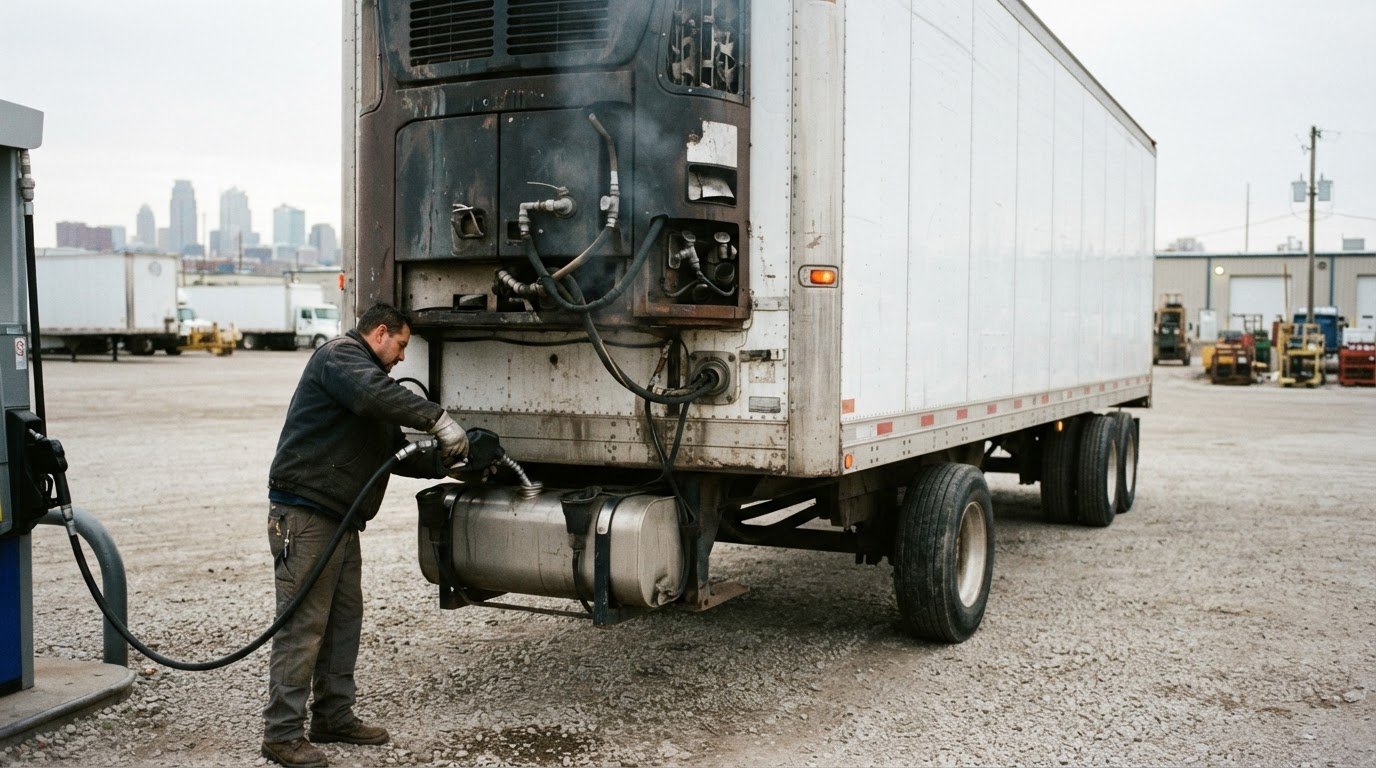
Fuel is only one part of a reefer trailer’s daily operating cost. A refrigerated trailer uses approximately 18 gallons of fuel per 24-hour period on average, but the total depends on fuel price, operating conditions and whether rental is included. To estimate how much it costs to run a reefer trailer per day, separate fuel costs from rental and other operating expenses.
It’s easy to focus on the daily fuel bill, but a reefer trailer’s use can change how much fuel it consumes. Temperature settings, frequent door openings, and operating hours all matter.
This article explains how fuel use affects daily, monthly, and annual costs, and how temperature management and access can influence runtime. You’ll also learn how rental charges fit into the budget when planning cold storage for a restaurant, catering job, or event in the Kansas City metro area.
Key Takeaways
- Separate fuel, rental, and other operating expenses to build a clearer daily budget.
- Estimate fuel use from the unit’s hourly burn rate and actual operating time, not just the calendar day.
- Temperature settings and operating conditions can change how long the reefer runs and how much fuel it uses.
- Frequent door openings can add to refrigeration demand, so plan loading and access to limit unnecessary warm-air exchange.
- Compare daily, weekly, and monthly rental periods to see how rental duration affects the overall cost.
Daily, monthly, and annual reefer fuel costs
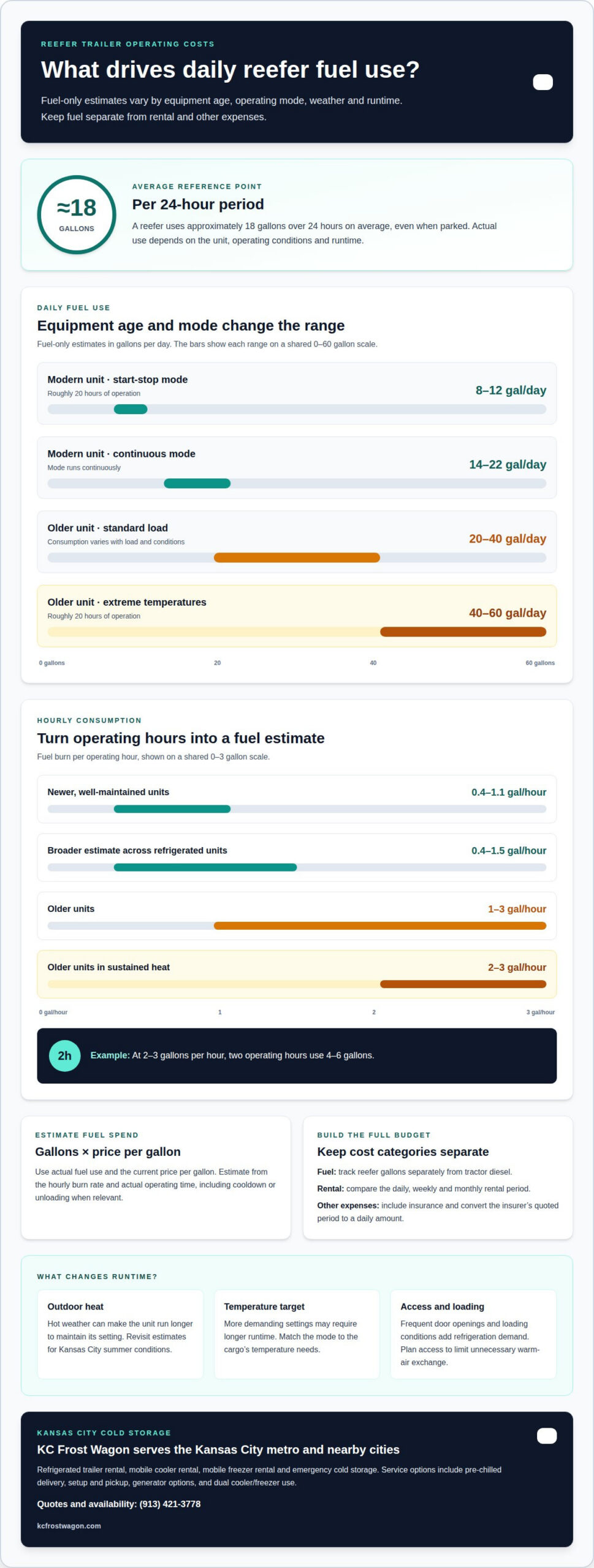
Reefer fuel is a separate operating expense from tractor diesel. To estimate how much it costs to run a reefer trailer per day, multiply the unit’s gallons used by the price per gallon. Actual consumption varies with the unit, operating mode, weather, and maintenance.
These are fuel-only calculations, not rental or insurance costs.
Daily use varies considerably. Modern units in start-stop mode use an estimated 8 to 12 gallons per day when running roughly 20 hours. Modern units in continuous mode use 14 to 22 gallons. Older units on a standard load use 20 to 40 gallons, while older units in extreme temperatures use 40 to 60 gallons.
Monthly and annual projections make those cost differences easier to see.
Track reefer and tractor fuel separately. Although both use diesel, their consumption should be recorded independently. Log reefer gallons and receipts apart from tractor purchases so truck mileage records don’t obscure the refrigeration unit’s use. For example, record the reefer tank level at the start and end of a shift, then compare the change with fuel receipts.
Age and upkeep affect efficiency. Older units may use more fuel, especially in sustained heat. Follow the manufacturer-recommended maintenance schedule to support efficient operation and limit excess consumption. If recorded gallons differ from expectations, check the gauge, receipts, and tank for unexplained changes. A drop alone does not establish theft, but consistent records can help identify a discrepancy.
The provided figures don’t establish a single daily cost for reefer trailer insurance. Premiums depend on factors such as coverage, trailer value, location, and use. For budgeting, convert the insurer’s quoted period into a daily amount.
Reefer fuel consumption per hour
Hourly fuel use turns operating time into a practical refrigeration estimate. Newer, well-maintained refrigerated units typically burn 0.4 to 1.1 gallons per hour. Across refrigerated trailer units, a broader estimate is 0.4 to 1.5 gallons per operating hour. Older units commonly burn 1 to 3 gallons hourly.
How much does reefer fuel cost for a 24-hour idle period versus a loaded trip? A refrigerated unit uses approximately 18 gallons over a 24-hour period on average, even when the trailer is parked. A loaded trip’s reefer fuel cost depends on its actual operating hours and burn rate, including any running time during cooldown or unloading.
Heat can push consumption above a routine estimate. Older refrigerated units in sustained heat can burn 2 to 3 gallons per hour. For example, two operating hours at that rate would use 4 to 6 gallons. The engine must keep removing heat to maintain the set temperature, so outdoor conditions and the trailer’s heat load affect runtime.
Seasonal estimates should account for changing conditions. A mild-weather estimate may understate fuel needs during hot Kansas City summers. Update the expected hourly consumption as conditions change, then multiply it by operating hours. Use a conservative estimate when planning a trip, particularly if a delay could extend operating time.
Diesel and electric refrigeration have different hourly cost inputs. The calculator evaluates standard U.S. pricing models to estimate total daily expenses. These are energy-cost comparisons, not a full equipment or rental budget.
How do electric reefer units compare with diesel units in daily operating cost? Using those average hourly figures, electricity costs less for energy over the same 24-hour runtime at the listed U.S. average utility rates.
For an event or backup plan in Kansas City, Overland Park, or Olathe, match the energy source to the site’s power access and expected runtime. A generator-ready setup can support a location without a convenient electrical connection. To discuss cold-storage needs and request a quote, contact KC Frost Wagon.
Temperature management and runtime
Temperature settings and surrounding conditions affect refrigeration runtime. Runtime, in turn, shapes fuel use and operating costs.
Ambient Temperature and Fuel Use
Ambient temperature is the air temperature outside the trailer. It affects how much heat the refrigeration unit must remove. In hot weather, the unit may run longer to maintain its setting, so a mild-weather estimate may not reflect a Kansas City summer day.
For scale, modern units in start-stop mode use an estimated 8 to 12 gallons daily when running roughly 20 hours. Older units in extreme temperatures use 40 to 60 gallons daily under the same approximate operating schedule. These estimates show why season and equipment age matter when planning runtime and fuel.
Build seasonal estimates around expected operating hours and conditions instead of using one fuel assumption year-round. For example, allow for a refrigeration unit to work harder during a hot outdoor event than in mild conditions. This makes fuel planning more realistic without assuming every day has the same heat load.
Costs by Temperature Setting and Cargo
Operating costs vary with the target temperature and the cargo’s refrigeration needs. A more demanding temperature setting may require longer runtime, while cargo and loading conditions affect how much heat the unit must remove. Fuel use can therefore differ even when operating hours are the same.
Refrigerated trailers can be set to meet different cargo temperature requirements. This range is not a single recommended setting for every load. A load requiring tight temperature control calls for continuous mode, while loads suited to variable temperature control can use the unit’s auto settings. The operating mode should match the cargo requirement, not simply the lowest available setting.
For example, a temperature-sensitive load requiring steady control may keep the unit running continuously, while a load that tolerates variable control may suit an automatic setting. Those choices affect runtime, so compare expected fuel use for each operating mode. Cargo quantity, its starting condition, and how long the trailer stays open also affect the refrigeration workload.
To estimate the effect, identify the required temperature, choose the appropriate operating mode, and estimate the unit’s operating hours under expected conditions. Multiply expected hourly fuel use by those hours. For a Kansas City event in hot weather, use a summer estimate rather than a cooler-season projection. This connects cargo needs and temperature management to a more useful operating budget.
Daily, weekly, and monthly rental prices
Rental charges depend on the rental period and the equipment selected. Compare a quote for the dates you actually need cold storage, since daily, weekly, and monthly periods cover different lengths of time.
There isn’t one rental price that applies to every reefer trailer. The rental price depends on the trailer and rental period, and is provided after a quote request. Trailer size, rental duration, delivery, setup, and pickup can shape the total project cost. Keep those charges distinct from diesel or electricity, which are operating expenses rather than rental fees.
For a one-day need, a daily quote gives a direct figure for that rental period. This may suit a catered event, a festival service window, or a short disruption at a restaurant. If you need cold storage for a Saturday event, compare the quoted rental period with the delivery and pickup schedule. The day of use and the billed rental period may not match exactly.
A weekly quote can be easier to evaluate when a need spans several event days or a temporary kitchen schedule. Divide the quoted weekly amount by the billable days to calculate an equivalent daily rental cost. Then compare it with the daily quote for the same dates and equipment. This clarifies the difference between rental periods without mixing in fuel use.
For a longer project, compare a monthly quote with the expected rental dates. A monthly option may provide a clearer budget for ongoing restaurant operations or extended commercial backup. Calculate the equivalent daily figure using the period covered by the quote, then budget separately for operating fuel, electricity, and the time the unit must remain on site.
Longer-term pricing can differ from short-term pricing, and the rental period matters when comparing the total. A six-month rental typically costs 20-30% less per month than a month-to-month rental. That comparison is useful only when the storage need truly lasts for the longer period; paying for unused time can erase the value of a lower monthly rate.
Make a fair comparison by matching trailer size, rental dates, delivery and pickup needs, and power arrangement. For example, when comparing weekly and monthly rentals for a restaurant, include the full operating window, not just the busiest service days. Keep rental charges separate from refrigeration energy so each option has a clear total.
Kansas City caterers and event planners should match the quote period to setup, event service, and removal dates. This keeps the rental estimate aligned with the actual cold-storage schedule.
Door openings and reefer runtime
Each time the door opens, warmer air enters and adds heat the refrigeration unit must remove. During a busy restaurant shift or catered event, repeated access can extend runtime and increase fuel use. The effect depends on conditions and access patterns, so an estimate based on a closed door may not reflect a service period with frequent loading.
Plan access around the work. Group items by service window, stage the next load nearby, and open the door when staff are ready to move products. For example, a caterer can prepare several trays before opening the trailer instead of making repeated trips for individual items. This keeps the door closed for more of the setup period.
Runtime planning should include more than travel or storage hours. One example allows one hour for cooldown and another hour for unloading with the refrigeration unit running. A separate trip-use example budgets 10 hours for driving, cooldown, unloading, and extra time. These examples show why an operating schedule should include loading tasks and expected delays.
For a realistic estimate, count the hours the unit will run, including when the vehicle is parked. Then account for loading, unloading, and service access. A festival with steady vendor traffic may have a different runtime pattern from a restaurant using temporary storage overnight. Estimate each based on its actual schedule.
Reducing unnecessary openings doesn’t mean slowing service. A clear loading plan helps staff retrieve several items in one opening. Keep frequently used products accessible near the entry, and assign someone to manage retrieval during busy periods. For example, a wedding catering team can group items by course before service begins.
Include door activity in the fuel estimate rather than treating every hour alike. A 10-hour schedule with long closed-door periods differs from 10 hours with repeated service access. The unit’s operating mode, temperature target, outside conditions, and loading routine all affect the final fuel use. Track actual runtime and reefer fuel separately from tractor use to improve future estimates.
For a Kansas City event or restaurant backup plan, match cold-storage runtime to the expected loading schedule. Plan cold-storage needs with KC Frost Wagon for your operating window.
The calculator lists 1,560 total hours of refrigerated-unit use per year, providing an annual-use figure to compare with an operation’s schedule. Comparing planned runtime with tracked use can help refine future estimates when door activity varies.
KC Frost Wagon
KC Frost Wagon helps Kansas City metro restaurants, caterers, and event planners arrange temporary cold storage when regular capacity falls short or refrigeration equipment fails. Refrigerated trailer, mobile cooler, and mobile freezer rentals can support an event schedule, commercial backup, or short-term storage need. Dual cooler/freezer use is available, with pre-chilled delivery, setup, pickup, and generator options.
For event planning or a refrigeration breakdown, KC Frost Wagon provides fast emergency response. Share the dates, storage needs, and site details to plan the rental. Service covers the Kansas City metro and nearby cities, including Overland Park, Olathe, and Lee’s Summit.
For a quote or emergency cold-storage needs, contact KC Frost Wagon at 913-421-3778.
Turn your estimate into a workable plan
A useful operating budget starts with assumptions that match the job, not an ideal day. Before setting your budget, outline the storage period, expected access, temperature needs, and available power. This gives you a practical basis for estimating how much it costs to run a reefer trailer per day in your situation.
For a Kansas City restaurant, caterer, or event team, connect the estimate to the actual schedule. Consider when products arrive, how often staff need access, and how long cold storage must remain available. A clear operating window helps align equipment needs and budget expectations, whether you’re planning ahead or responding to a change.
KC Frost Wagon can help you plan cold storage for the Kansas City metro and nearby cities. Share the intended use, timing, and site details when requesting a quote. You’ll have a clearer path from cost estimate to event or business plan.
Discuss your cold-storage needs with KC Frost Wagon and take the next step with confidence.
Frequently Asked Questions
What is the average daily fuel cost to run a reefer trailer in the US?
At the listed U.S. This is a calculation using those two averages, not a rental charge or a full operating budget. Your actual daily fuel expense changes with the unit’s consumption, operating hours, and the diesel price used for refueling.
How many gallons of diesel does a reefer unit burn per hour or per day?
Reefer fuel use can range from 0.4 to 1.5 gallons per operating hour, while older units commonly use 1 to 3 gallons hourly. A broad daily average is approximately 18 gallons per 24-hour period. For a working estimate, use the unit’s hourly rate and expected runtime. A 10-hour operating schedule, for example, calls for a different fuel allowance than a full day.
What are typical reefer trailer rental rates per day in the US?
Daily rental charges vary by trailer and rental terms, so a single U.S. rate should not be treated as the price for a specific rental. KC Frost Wagon’s rental price is not disclosed here; the quote depends on the rental period and project details. For Kansas City-area event or restaurant planning, distinguish the rental quote from fuel and power expenses.
What is the total daily cost to own and operate a reefer trailer?
There isn’t one total that fits every owner. Build a daily estimate by combining fuel or electricity, insurance, maintenance, and ownership expenses such as financing or depreciation. If the trailer travels, separate these costs from driver or tractor expenses. A parked reefer still uses energy while its unit runs, and a moving load may add transportation costs.
What factors cause reefer operating costs to vary by state or season?
Diesel and electricity prices vary by location, while weather affects how hard the refrigeration unit must work. Hot periods can increase fuel use, and seasonal demand can affect rental terms. For local planning, consider the conditions and operating schedule in Kansas City, Overland Park, Olathe, Lenexa, Shawnee, Leawood, Lee’s Summit, Independence, Blue Springs, Liberty, or Prairie Village rather than relying on one national estimate.

